
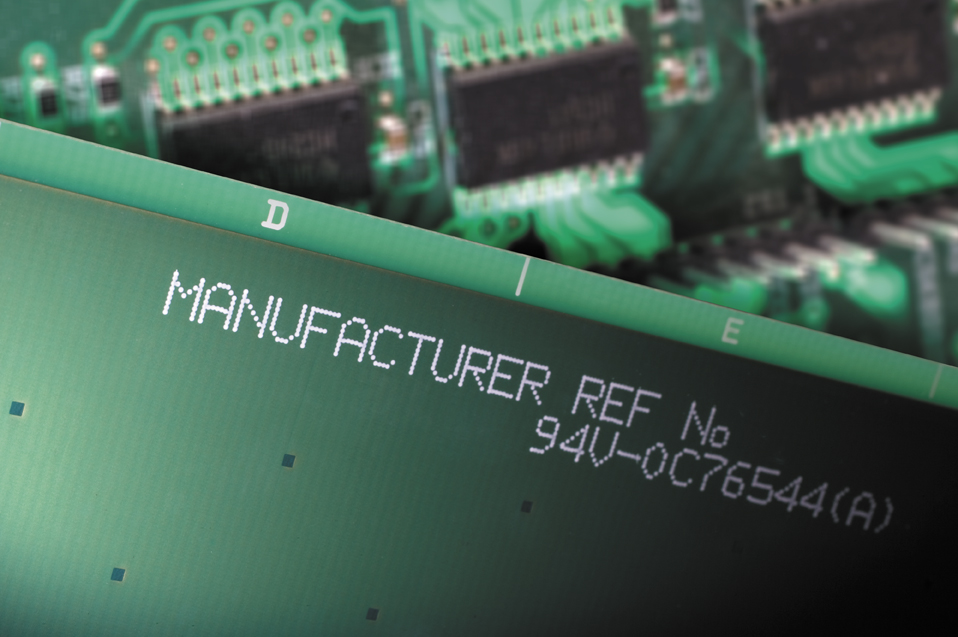
Coding and Marking on Electronics
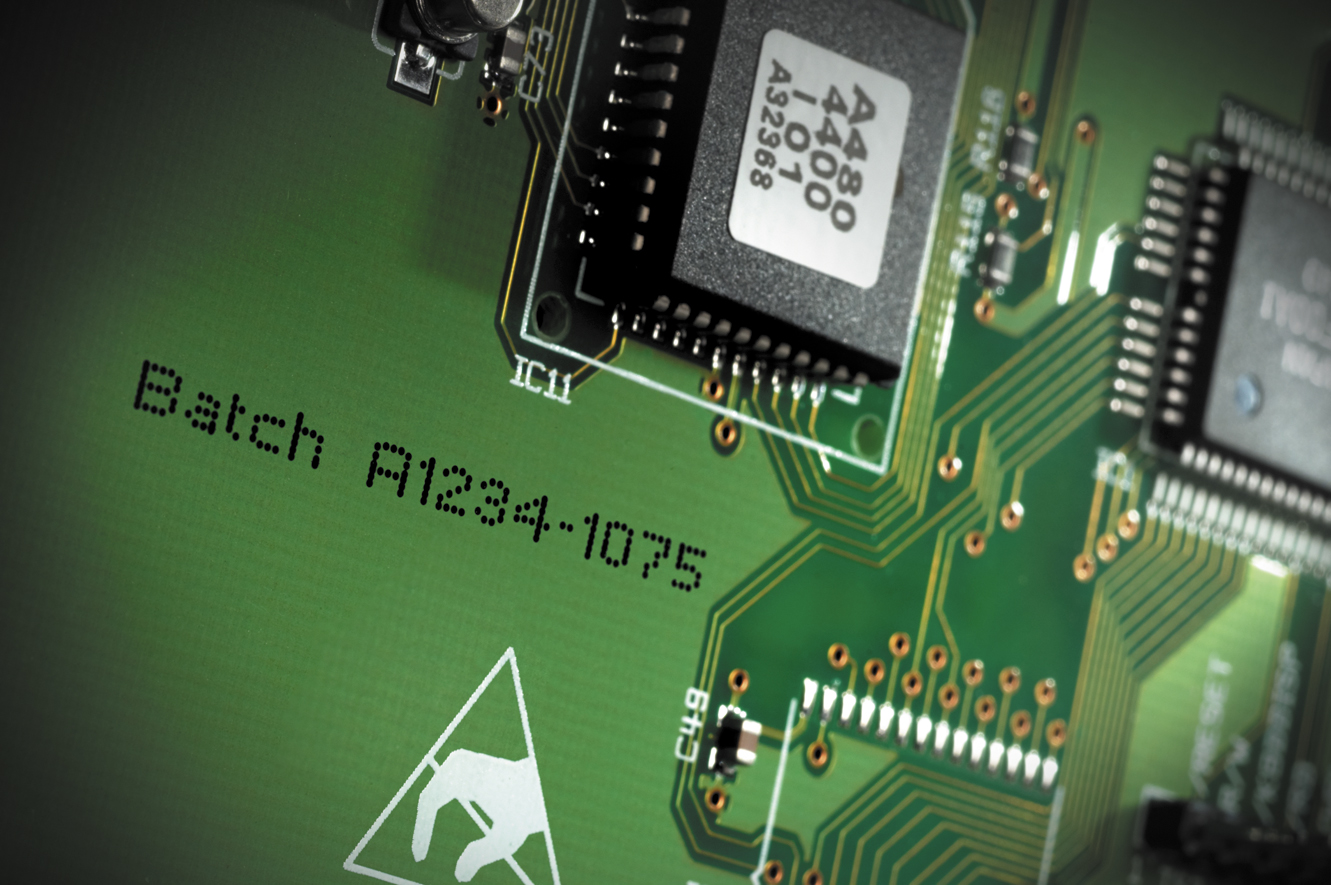
Electronics Product Coding Solutions
Coding and Marking on Electronics
The electronics sector is characterized by the production of complex, delicate items from microchips and capacitors to printed circuit boards (PCBs), electronic housings, and wiring. Each element demands precise, dependable coding to ensure clear traceability and component identification.
Linx understands these challenges and offers an extensive electronics product coding solution. Whether you need permanent or temporary markings, our technologies help drive down production downtime, enhance operational efficiency, and safeguard manufacturing accuracy.
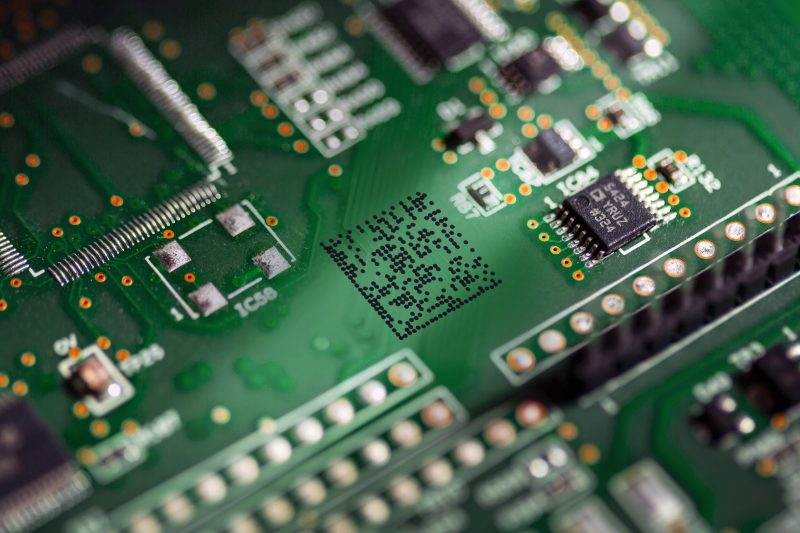
To find out more information and to request your samples with no obligation, click the button below.
Benefits of Coding and Marking on Electronics
- Fine Precision & Compact Marking: Laser models such as the FSL20 & FSL50 deliver ultra-fine spot sizes for marking small areas and dense text or codes essential for electronics components and PCBs.
- Permanent & Durable Codes: Lasers provide longevity with no consumables; CIJ offers fast-drying, high-contrast ink options both maintaining readability and resisting wear during manufacturing, storage, or transport.
- Seamless Integration & Efficiency: Linx systems are built for easy integration into production lines. PrinterNet facilitates quick troubleshooting, message updates, and minimal operator manual intervention.
- Reduced Downtime & Maintenance: Equipment like fiber laser coders (e.g., FSL20/50) offer impressive longevity (laser tube life exceeding 100,000 hours), compact design, and low maintenance needs.
Applications of Coding and Marking on Electronics
- Battery cells and modules: CIJ prints alphanumeric and 2D codes on button cells and casings; laser provides permanent marks on metal or heat-sensitive plastic.
- Chips and integrated circuits (ICs): Laser marking (fiber, CO₂, or UV) for durable marks; CIJ for irregular shapes and high-speed lines.
- Connectors, cables, and plastic parts: CIJ with pigmented inks; UV lasers for crisp, durable coding on plastic wire and cable surfaces.
Printers for Electronics Product Coding Solutions
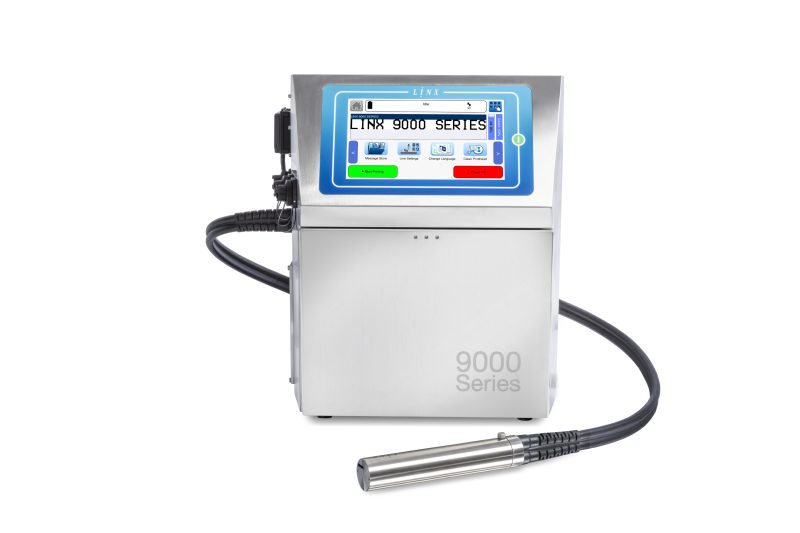
Continuous Inkjet (CIJ) Printers
Best for: Cables, wires, connectors, plastics, irregular surfaces
Why:
- High-speed, non-contact coding
- Flexible inks (including MEK-free, UV-readable, halogen-free)
- Works on flat, curved, or uneven components
- Use case: Printing batch codes or serials on wires, connectors, or housings
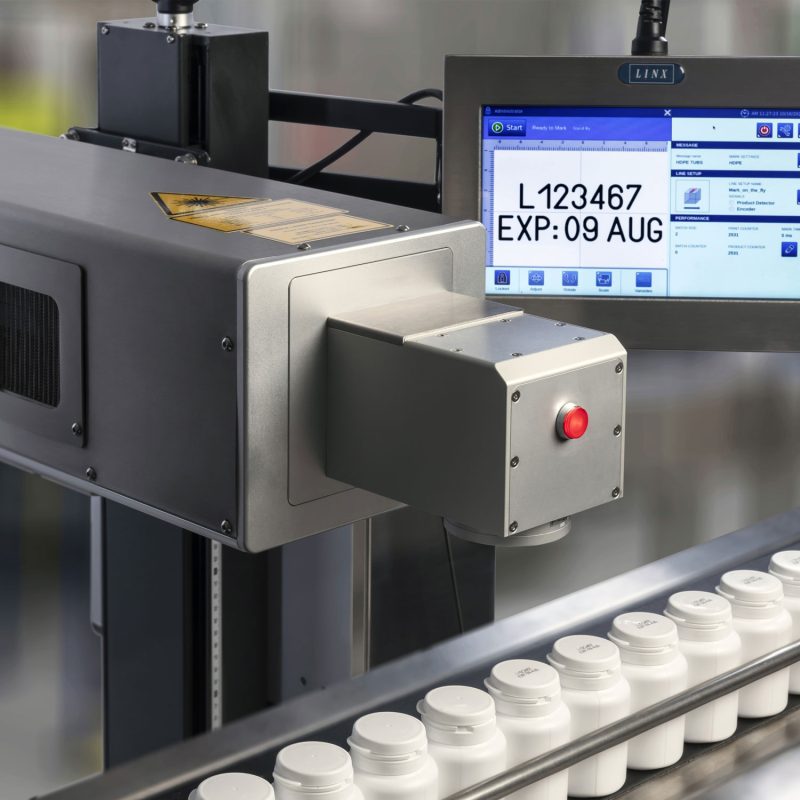
Laser Coders
Best for: Permanent, high-precision marks on metals, plastics, and PCBs
Why:
- Ultra-fine beams (UV or fiber) for tiny, dense codes
- Permanent, tamper-proof, no consumables
- Meets compliance and anti-counterfeit needs
- Use case: Direct part marking (DPM) on IC chips, circuit boards, metal housings
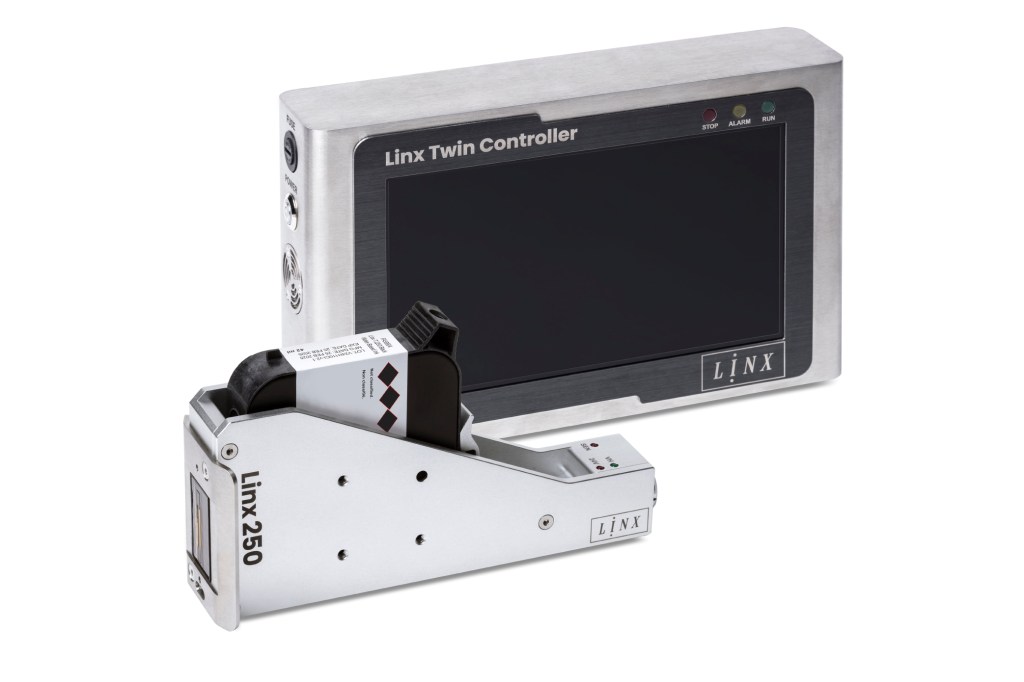
Thermal Inkjet (TIJ) Printers
Best for: Small, high-resolution codes on cartons, labels, and flat components
Why:
- High print quality (up to 600 dpi) for barcodes and QR codes
- Compact, clean, and easy to integrate
- Ideal for lower-volume or precision applications
- Use case: Printing 2D DataMatrix or QR codes on PCB packaging or labels

Large Character Marking (LCM) Printers
Best for: Outer packaging, shipping cases, trays
Why:
- Bold, high-visibility batch codes
- Alternative to labels
- Use case: Printing lot codes or shipping data on cartons for electronic parts
Electronics Coding Inks and Fluids
Supported by Linx’s range of general-purpose black inks, as well as halogen- and MEK-free formulations, these inks offer strong adhesion and clarity across a wide range of electronics materials.
Resources

Inks Brochure
FAQ-Coding and Marking on Electronics
Linx systems are designed to mark a wide range of materials used in the electronics and electrical sectors: including plastic enclosures, metal housings, cables, printed circuit boards (PCBs) and wires. Their print-heads and inks are engineered for fine characters, high resolution, curved surfaces and varied finishes.
When marking electronics and electrical components you will often need to comply with traceability, batch numbering, date codes, possibly regulatory codes (CE / UKCA) etc. Linx systems support variable data, barcodes, QR codes and logos. They help maintain permanent markings on components. You should ensure your ink and marking method is suitable for your environment (e.g., heat, solvent exposure, varnishes).