
Coding & Marking on Glass
Printing on glass containers, such as bottles and jars, as well as other glass products is used in a wide range of industries including food, beverage, cosmetics and pharmaceutical & homewares to mark products with safety or regulatory information.
Printing on glass presents challenges most general coding machines aren’t built for: curved surfaces, wet or dusty environments, small print areas, and high-speed production demands.

Challenges in Glass Marking
Glass is smooth and non-absorbent, so inks cannot soak in like they do on paper or cardboard. This leads to weak bonding, ink sitting on the surface rather than bonding chemically therefore codes can smudge, fade, or be wiped off easily. Because ink remains on the surface, drying is slower, ink can spread or run before it sets. This is particularly problematic on high-speed lines where handling happens immediately after printing.
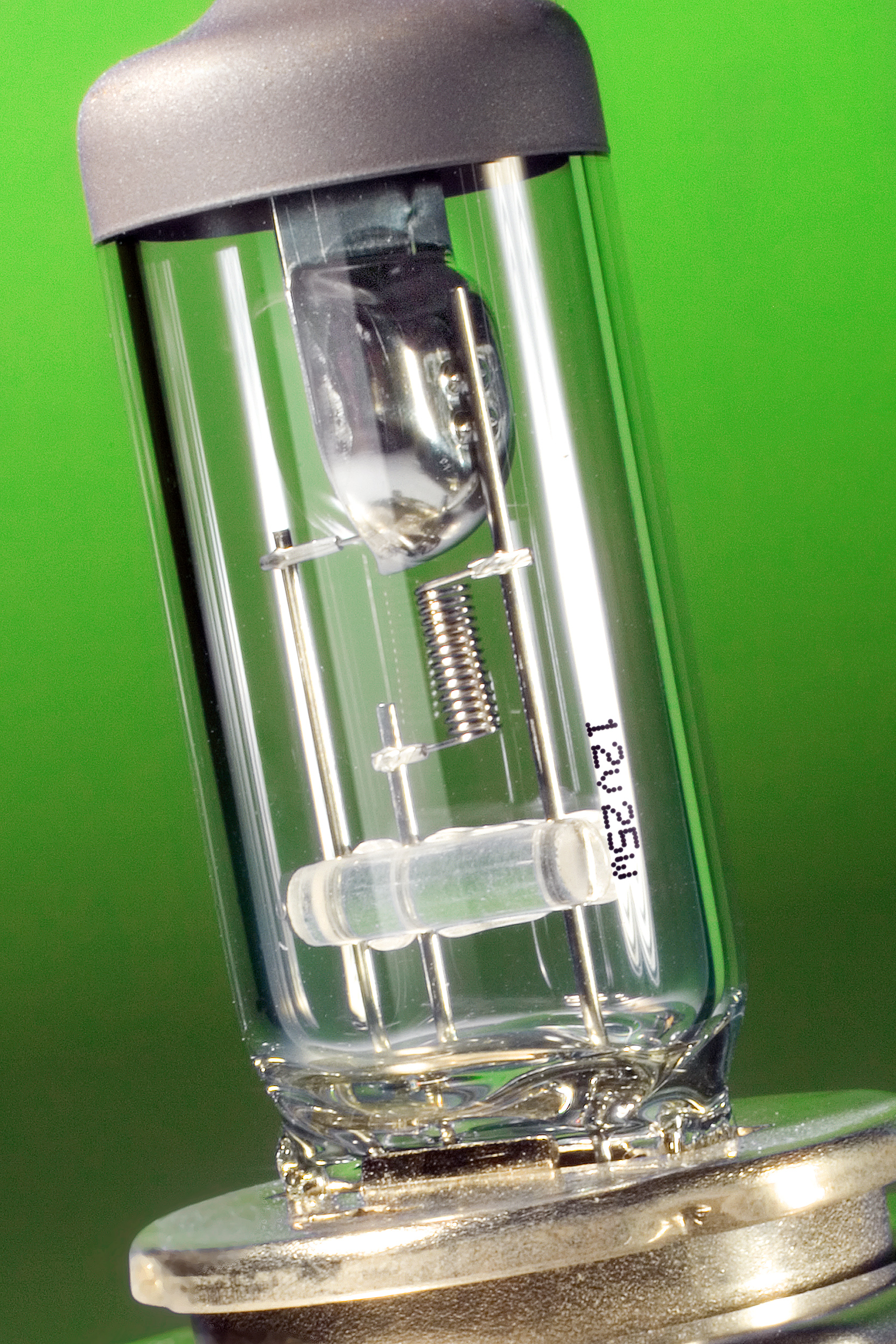
Glass containers (bottles, jars, vials, bulbs) are rarely flat; Cylindrical shapes distort text and barcodes and make it difficult to maintain accurate print positioning. This can affect barcode readability and scan performance, especially for 2D codes
Glass products, such as bottle necks, droppers, jars and bulbs, often have limited areas available for coding. This is especially challenging for: Multi-line data, 2D codes or barcodes and complex regulatory information.
Typical glass production environments (especially beverage and pharma) include condensation, wet or humid conditions, temperature fluctuations. These can prevent ink adhesion and cause blurred or incomplete codes.
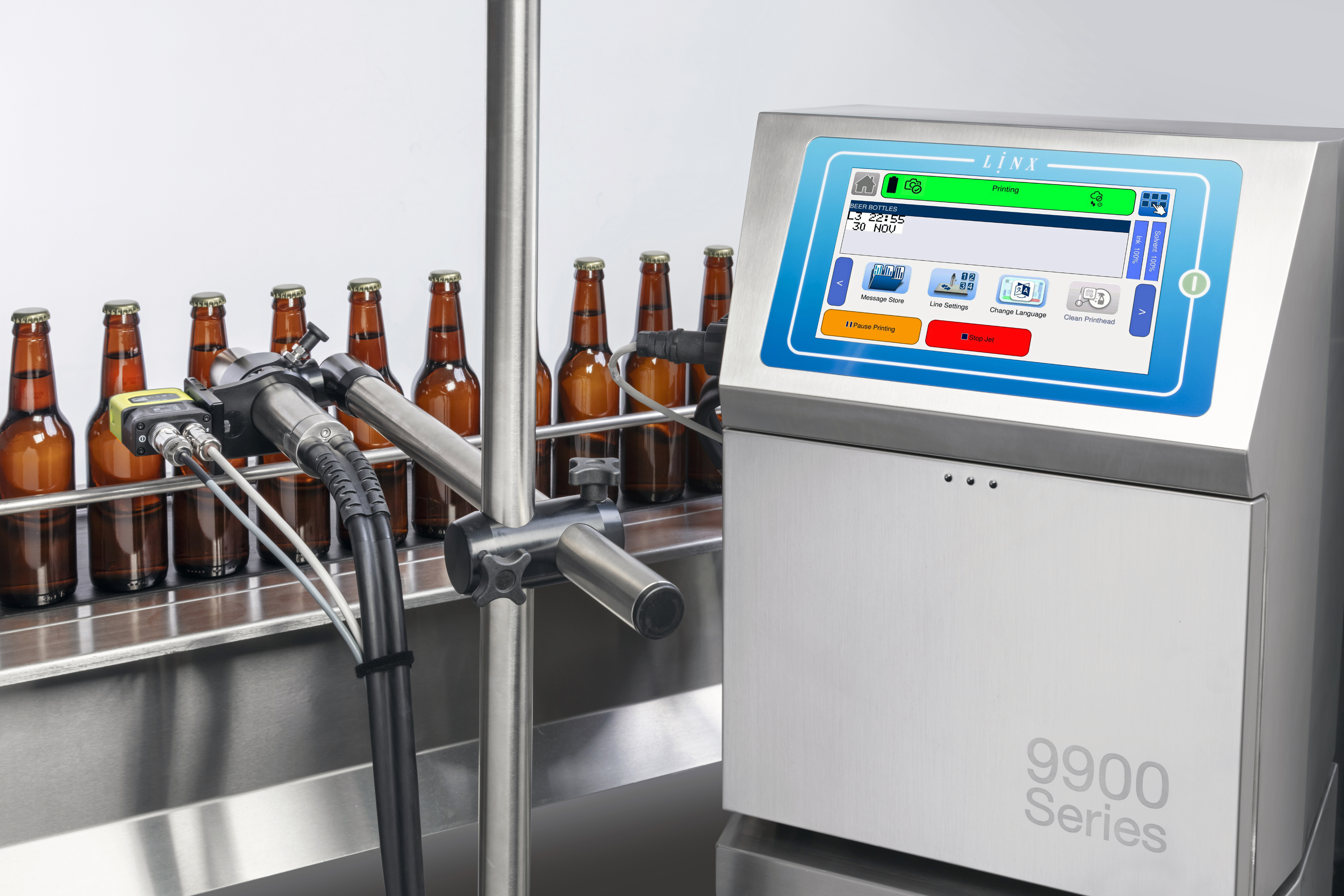
Some glass packaging lines run at very high speeds. Therefore marking systems must print and dry instantly and maintain accuracy at speed.
Achieving both speed and quality is a major challenge.
Glass can be transparent amber, green, or coloured and have different coloured contents which creates difficulty achieving sufficient contrast for legibility and scanning.
Oils, dust, and other residues on glass can prevent proper ink bonding. Marking requires controlled preparation or specialised inks or other technologies such as laser than can code through these residues.
Glass is brittle and some glass products are fragile; a marking system must code without damaging the integrity of the product
What does an Industrial Glass Printer do?
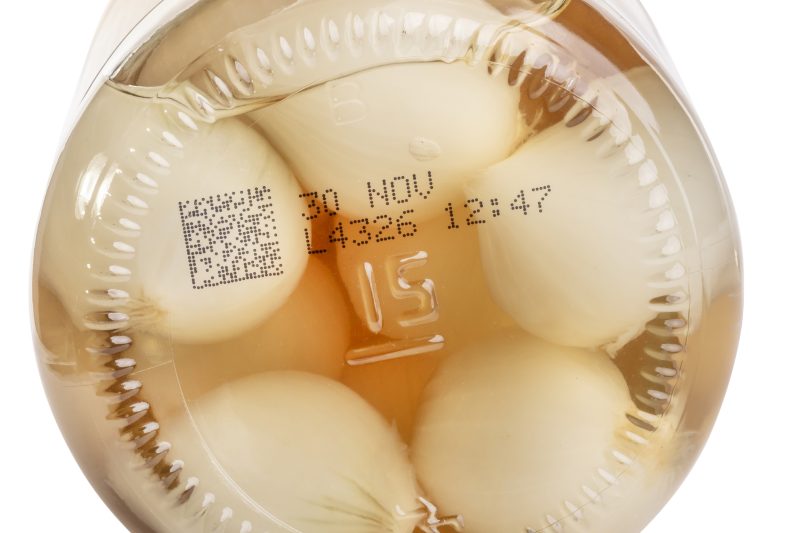
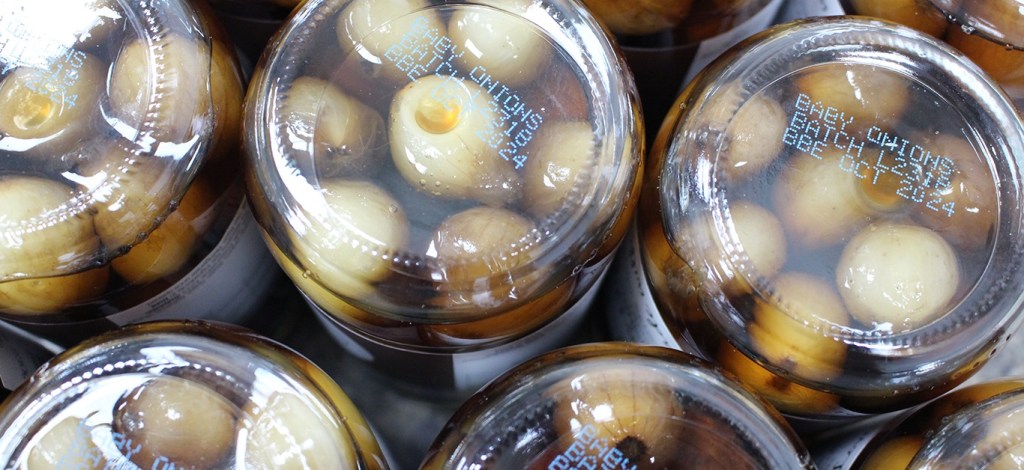
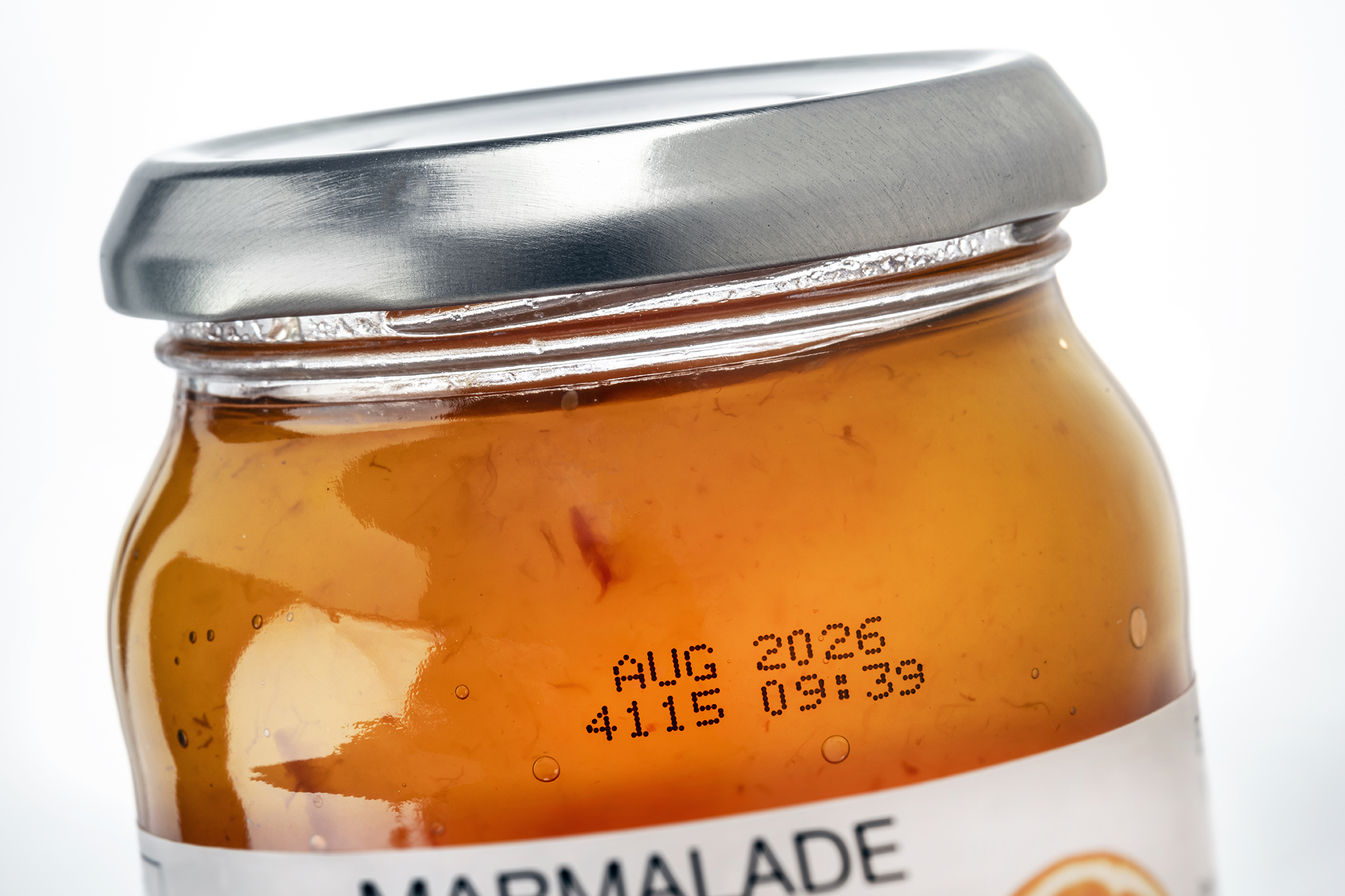
Glass coding printers are ideal for expiration date coding or batch identification, and are designed to code directly onto glass products in almost any orientation. They can mark variable information as well as printing barcodes, Data Matrix and QR codes, branding and safety information onto a product, to ensure traceability and even help prevent counterfeiting of premium products.
Whether you are looking to print onto glass using inks, or etch directly into the surface of the glass, Linx has the ideal solution for coding glass bottles and jars.

Glass Cosmetics Coding
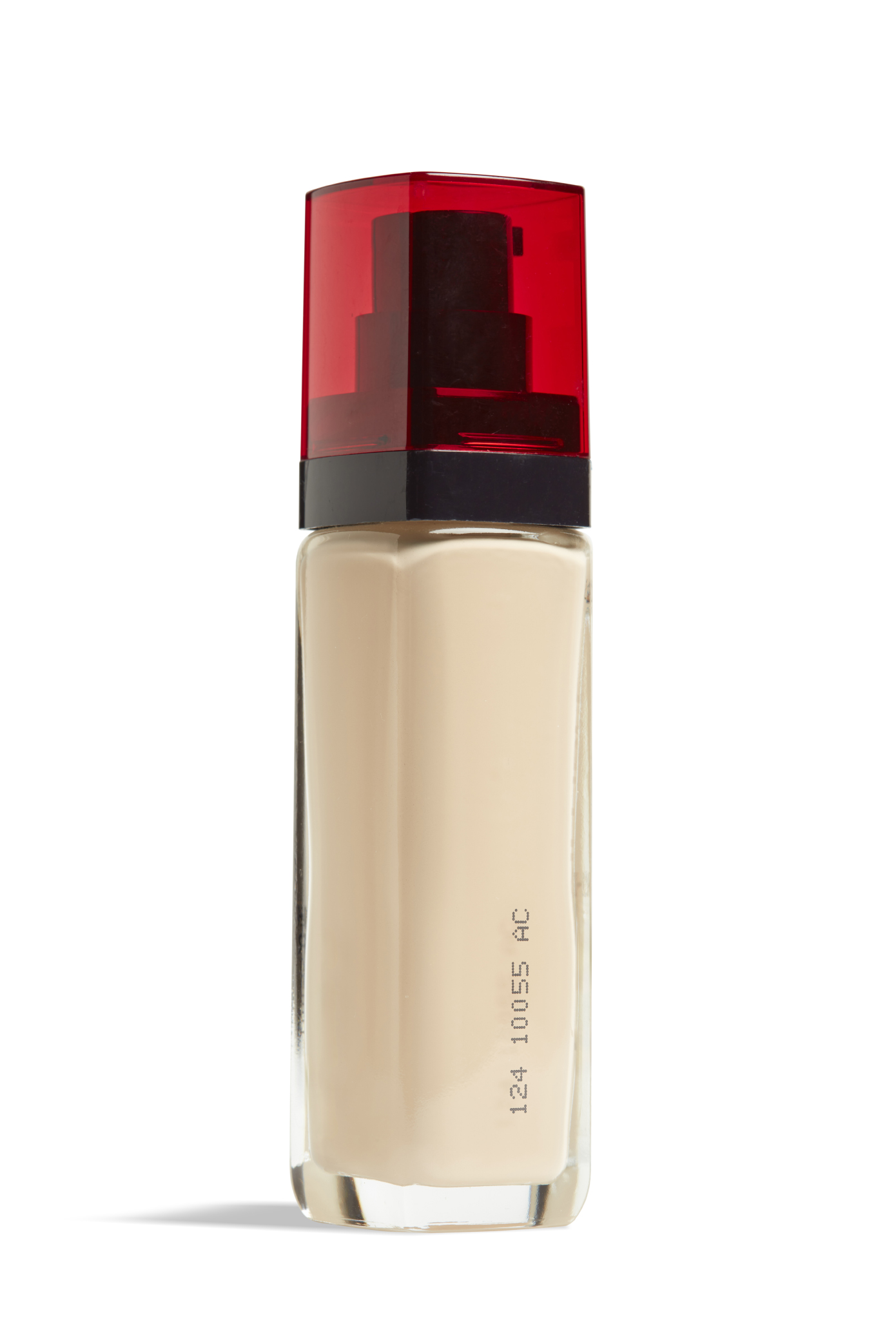
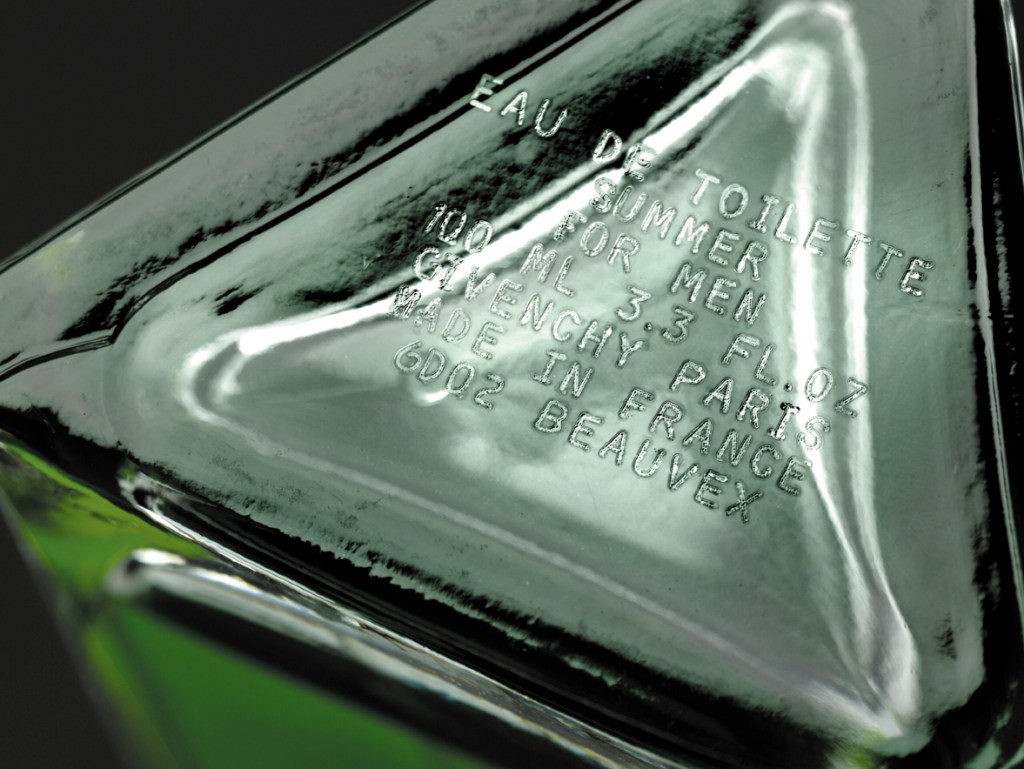
For high-value goods such as branded cosmetics and perfumes, CIJ inks can print small, durable codes. UV fluorescing inks can be used to identify counterfeit goods without being unsightly.
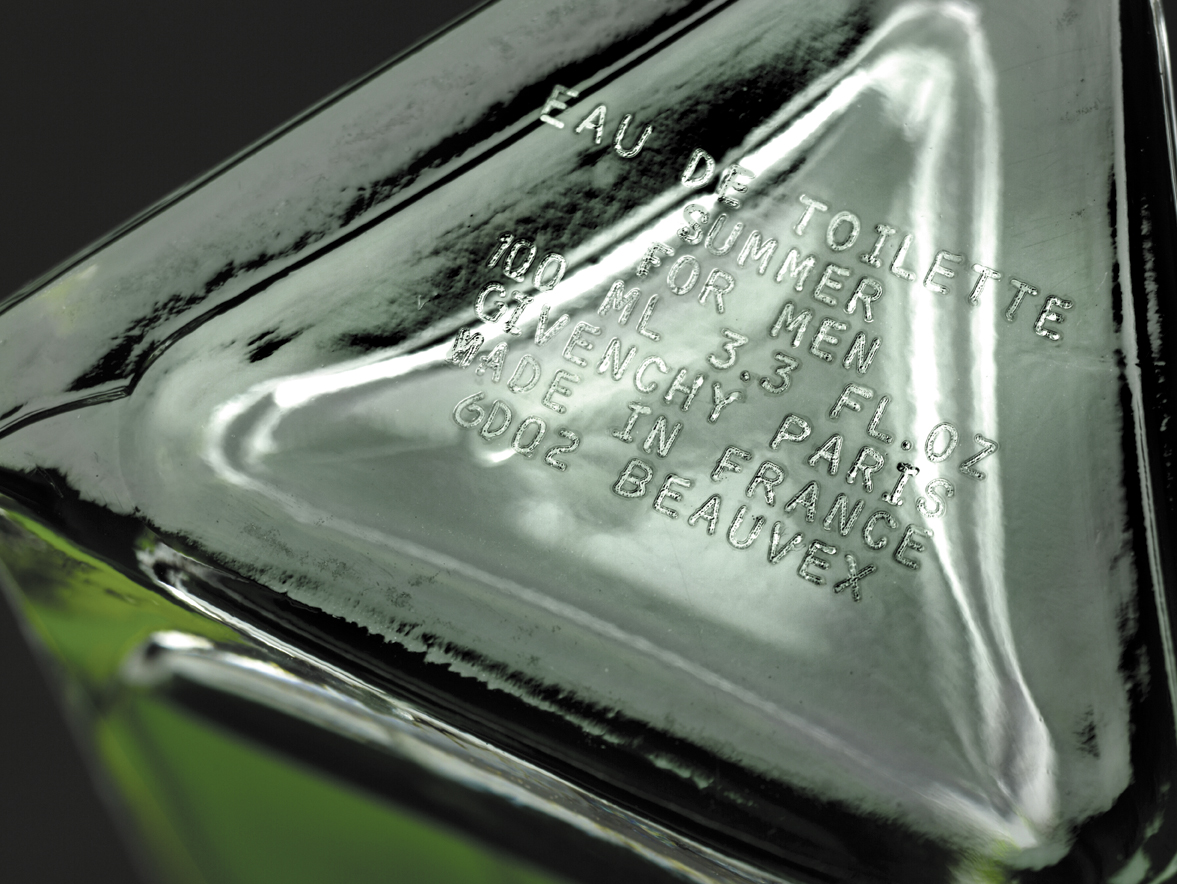
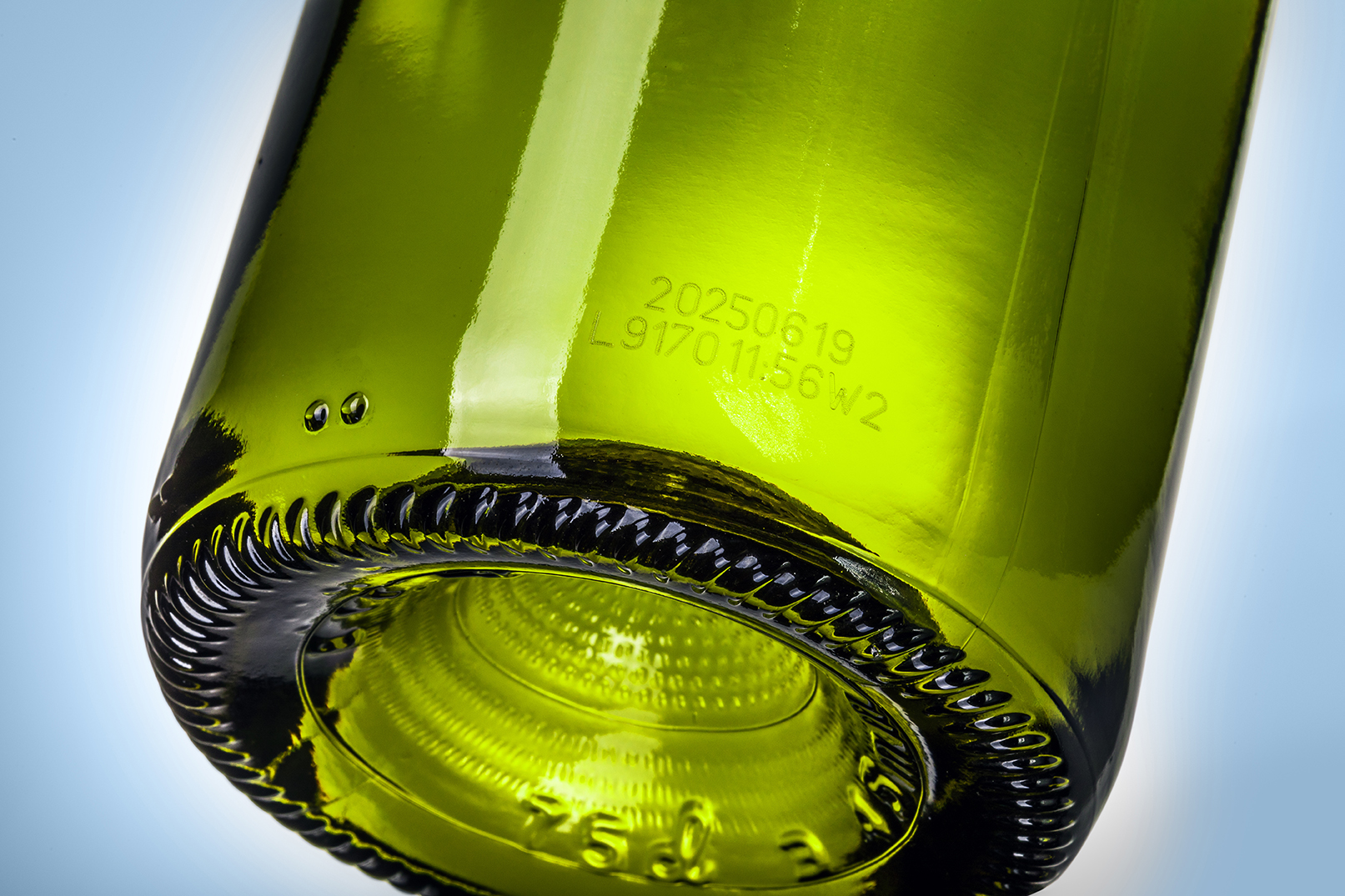
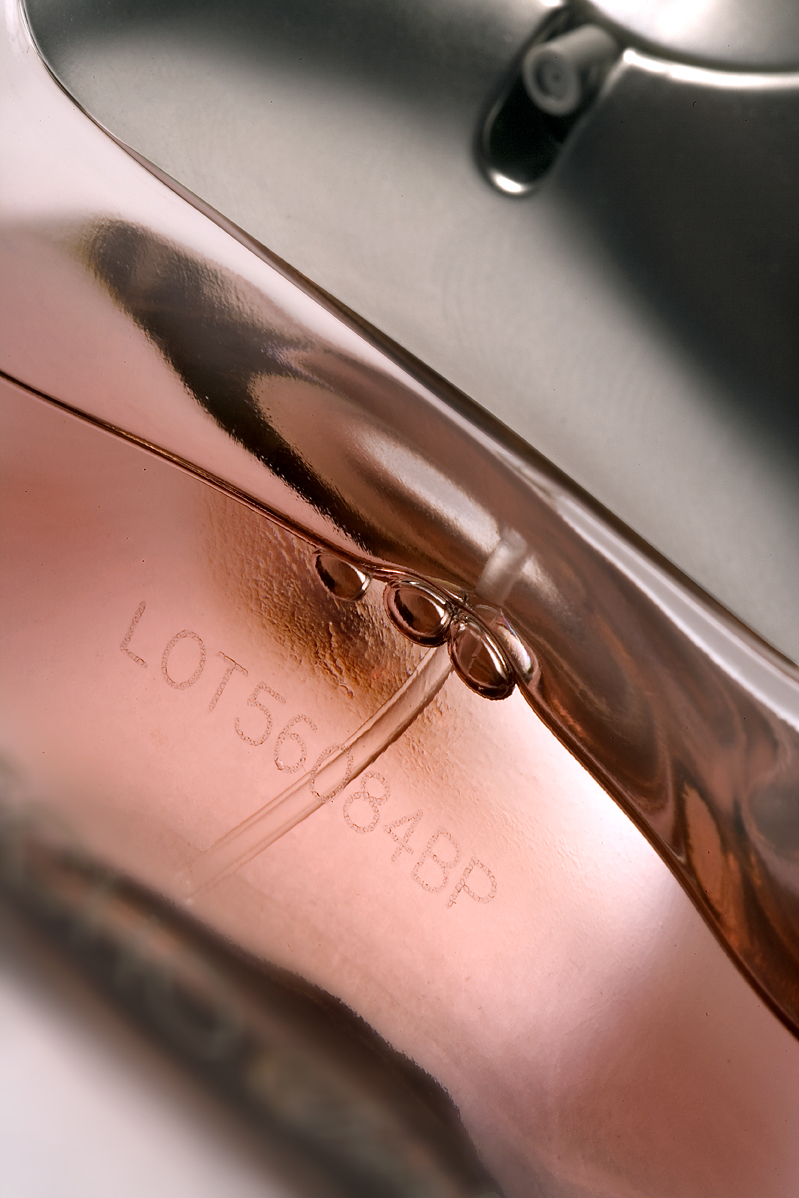
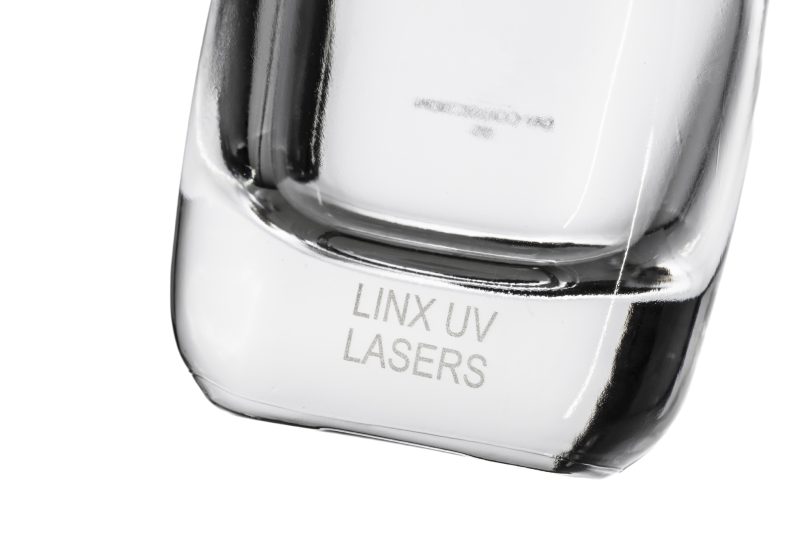
Lasers are also a good candidate for traceability and anti-counterfeiting as the codes can be discreet and permanent.
Glass Bottle Coding
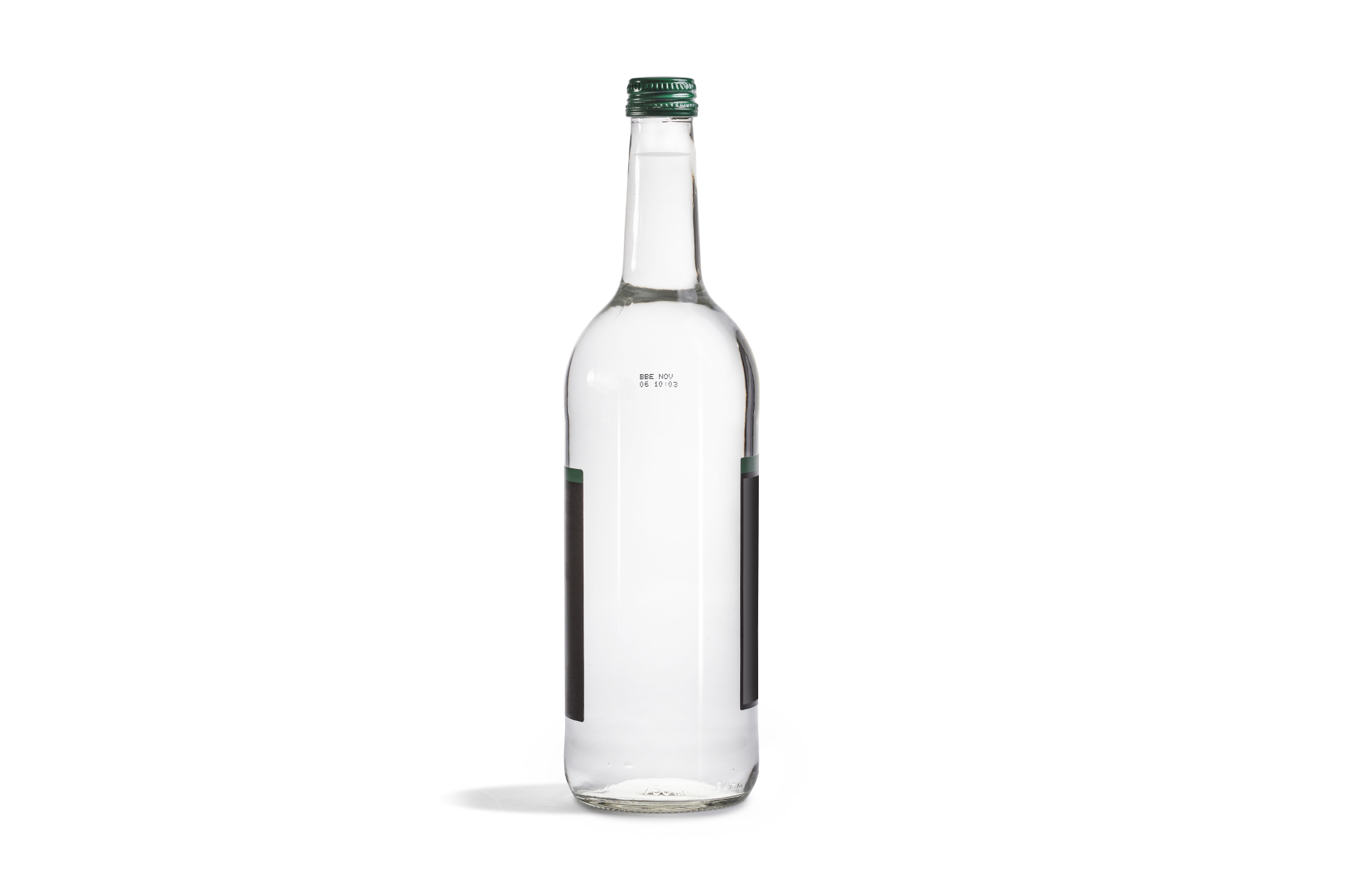
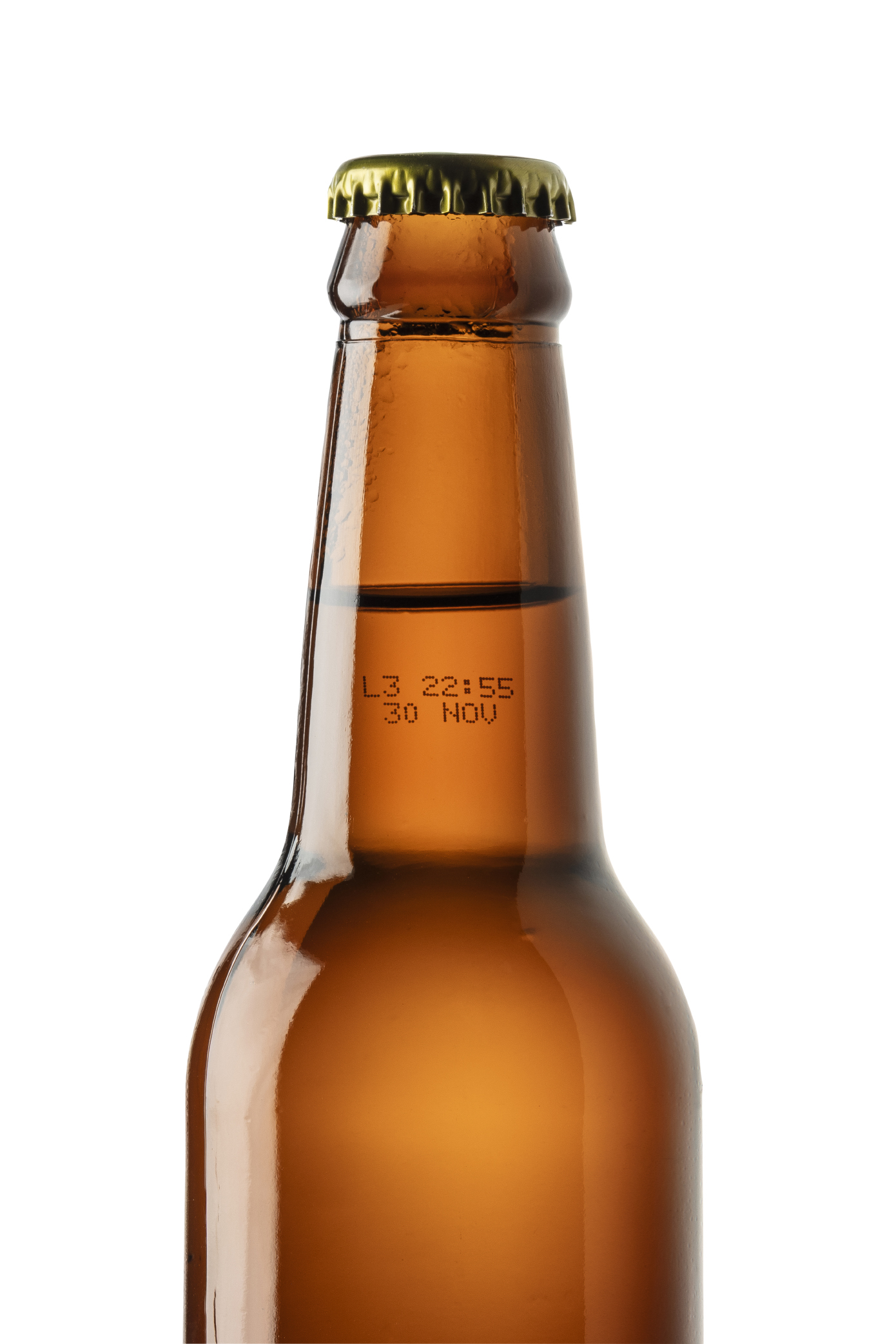
A range of CIJ inks are available for glass bottles, the right one is determined by your application. They are high-adherence, can code through condensation and some are designed to wash off with water or solvent for returnable bottles.
Laser marking systems can also code directly onto hot or cold glass.
Dark glass, or dark contents
Glass packaging in food and beverage can often be dark glass (brown, green) or clear glass filled with dark contents. CIJ printers are available with high-opacity coloured and white inks to ensure great contrast on dark products and are a great alterative to paper labels.
What to look for in a Glass Printing Machine
Code Content: The code requirements (batch numbers, dates, barcodes or 2D codes), the size, colour and the available marking area on the glass product will influence the most suitable solution. Consider a coder that can maintain code quality on small or curved print areas and deliver high‑contrast, readable codes on clear or coloured glass. Also think about future requirements, such as larger codes or GS1 2D codes.
Substrate: Consider whether your products are clear or coloured glass, the shape (flat or curved), and whether a removable or permanent code is required.
Speed: Look for solutions capable of marking at speed without distortion or variation, and for ink-based systems, ensure drying time is fast enough to prevent smudging as products move along the line.
Production environment: Glass products are often coded in environments with moisture, condensation or washdown processes, so choose a coder and ink or laser solution that can perform reliably in these conditions. IP rating, durability and flexible mounting options can also be important, particularly where space is limited.
Available budget: It is vital to consider not only the initial purchase price but also the total cost of ownership, including consumables and cost and frequency of servicing. Can the product be user maintained and repaired?
Reliability: Choose equipment designed for consistent performance, minimal maintenance and reduced risk of errors, helping to avoid rework, waste and unplanned downtime. Frequent breakdowns can negate any benefits of a lower purchase price.
Recommended Linx Glass Marking Technologies
Whatever your application, line speed and operating environment, Linx can provide you with a suitable batch & date coder for glass products. Browse our recommended technologies from the options below:
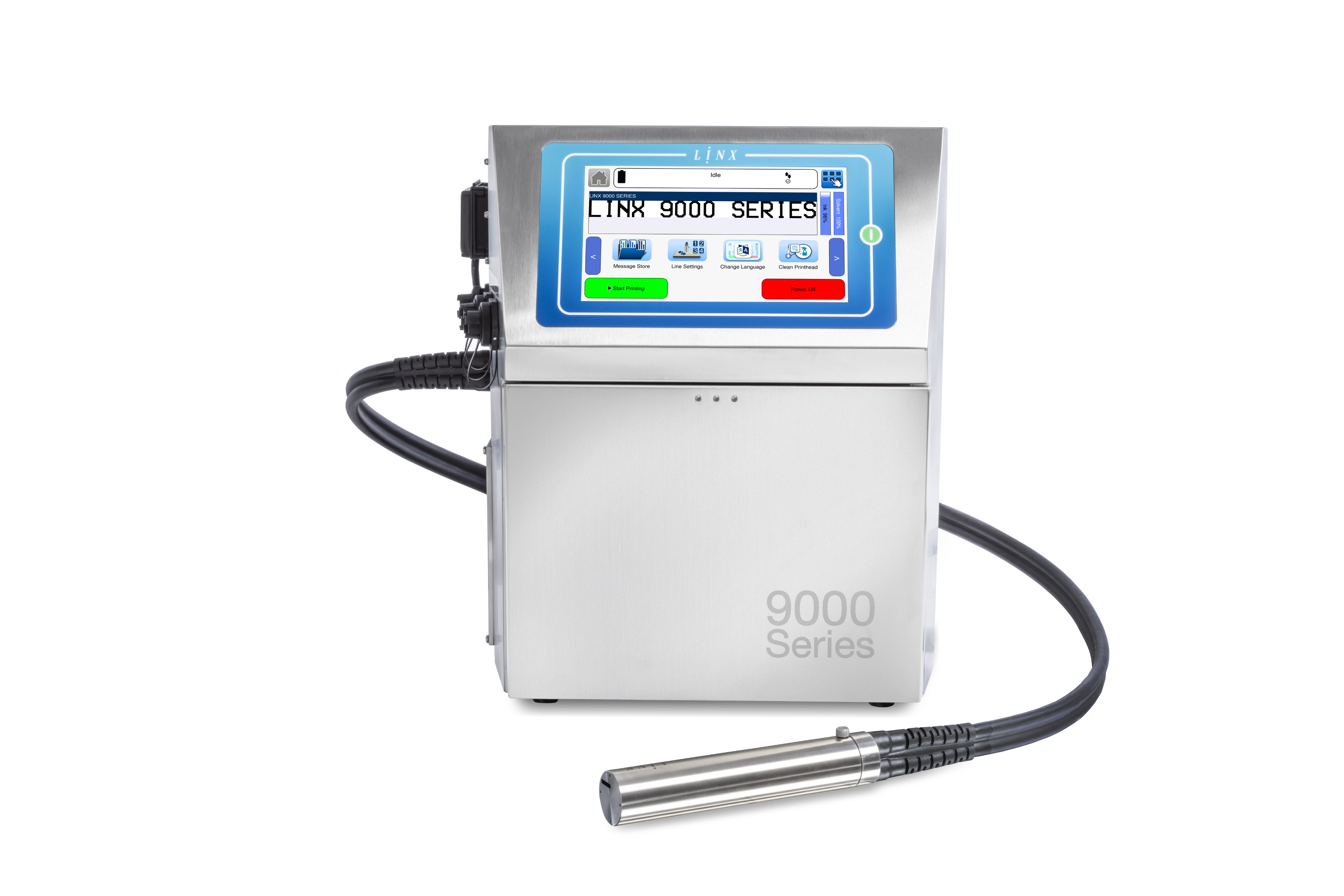

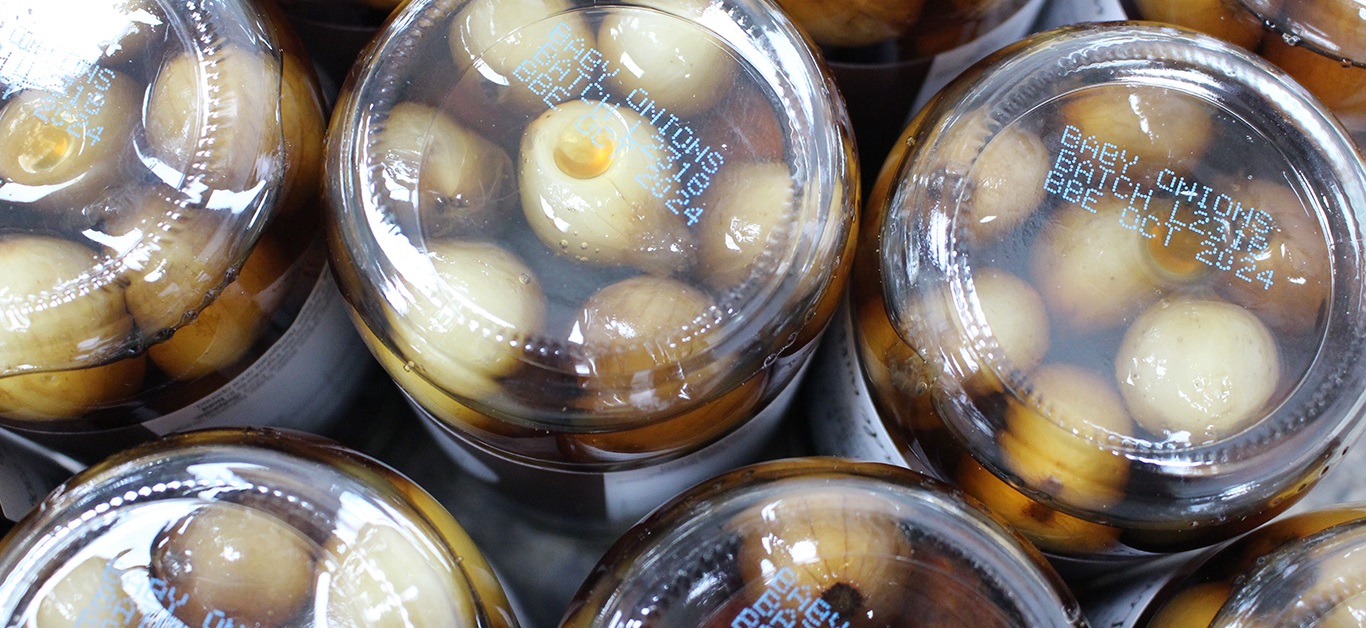

Linx 9000 Series
Flexible options for high-speed marking
Features
Suitable for 24/7 operations | Data Matrix and QR codes |GS1 compliant 2D codes | GS1 code builder | High-speed production | Print up to 6 lines | Black and coloured inks
Key Benefits:
- Excellent print on curved surfaces in any orientation
- Reliable operation in hot, dusty, wet, or non-temperature controlled environments
- Spectrum models for high-opacity coding onto dark glass
- Specialist inks for cold-fill glass, water-removable and alkali-removable for returnable bottles, UV fluorescing
- IP65 (option) for ingress protection
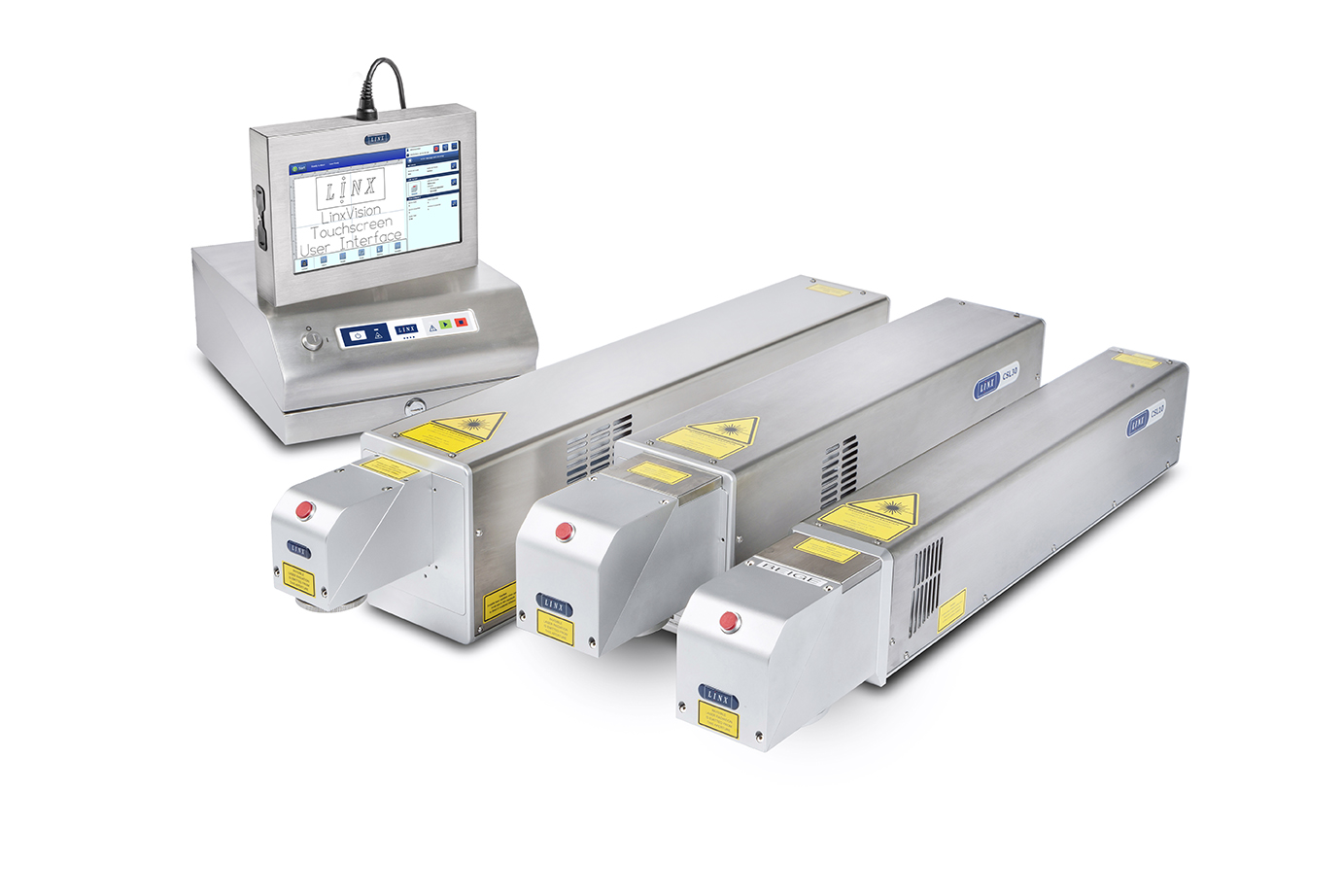
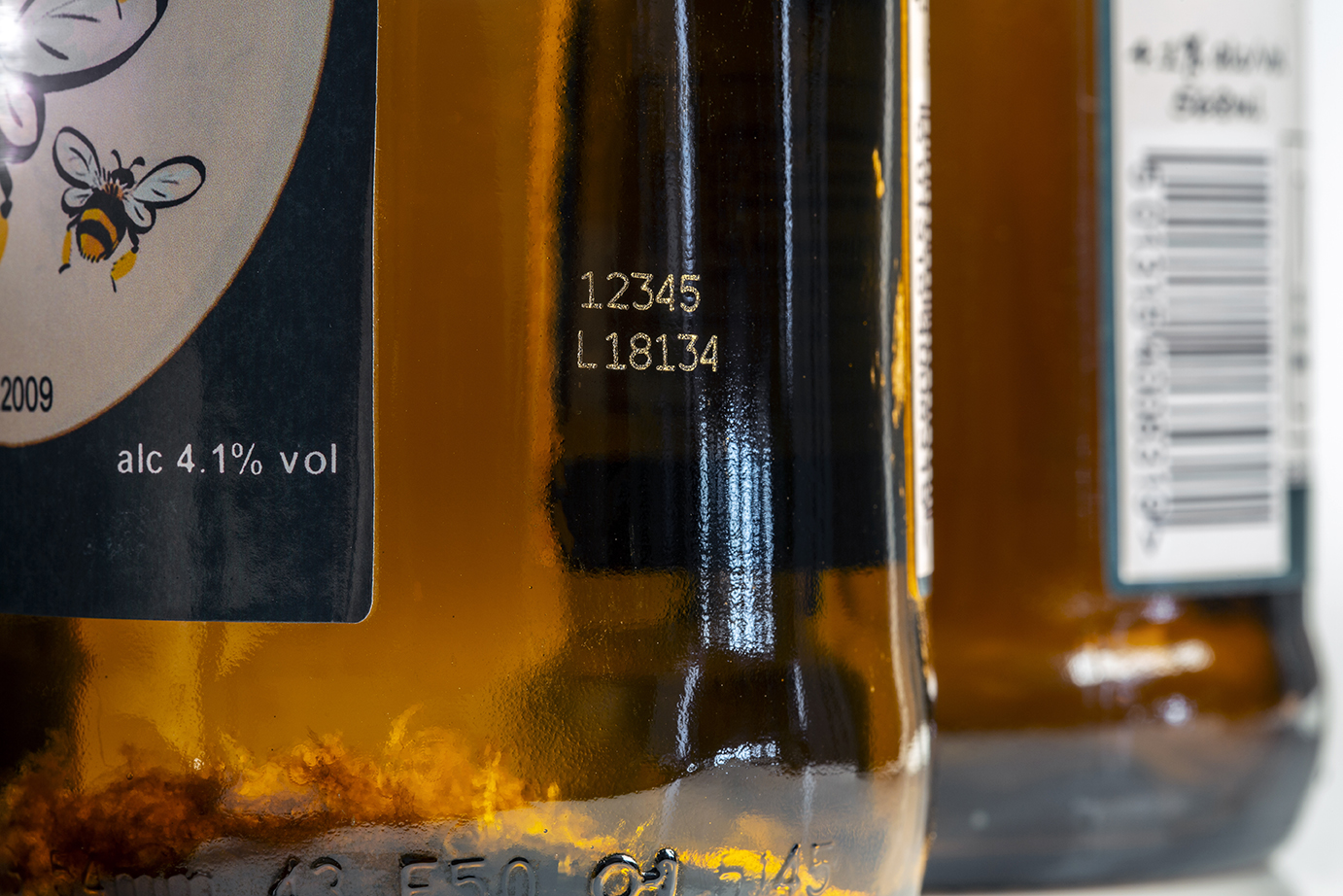
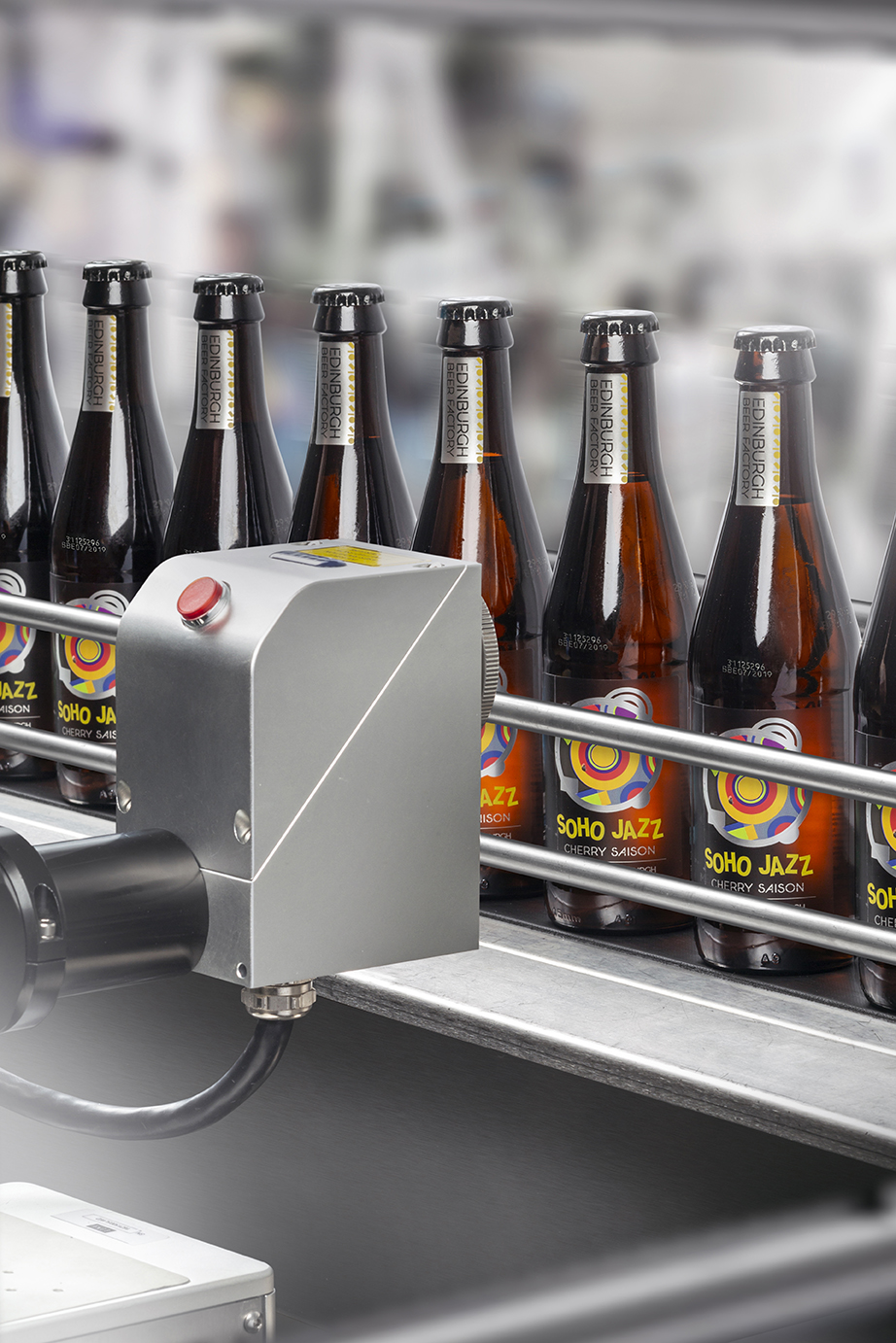
Linx CSL Series
Permanent marking for glass
Features
Suitable for 24/7 operations | Data Matrix and QR codes | Batch and date coding | Print unlimited lines of text | Ideal for glass, and plastics
Key Benefits:
- High-speed coding up to 900m/min
- Over 20,000 configurations to meet complex code requirements
- Zero consumables
- Quick to deploy and transfer to new lines
- Multiple beams allow for coding at any orientation
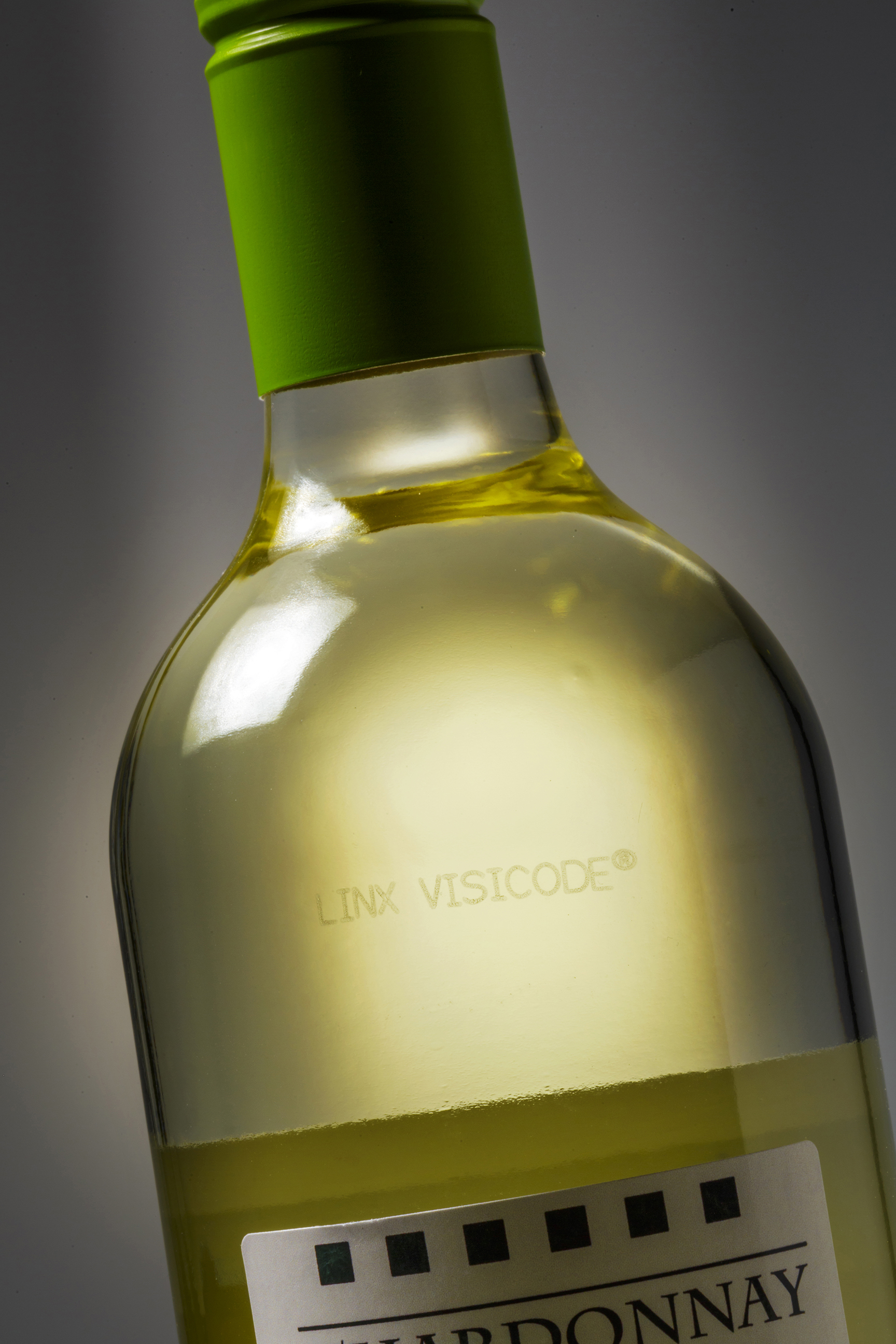
- Visicode coding parameters built in for optimal glass marking
Wolds Manufacturing
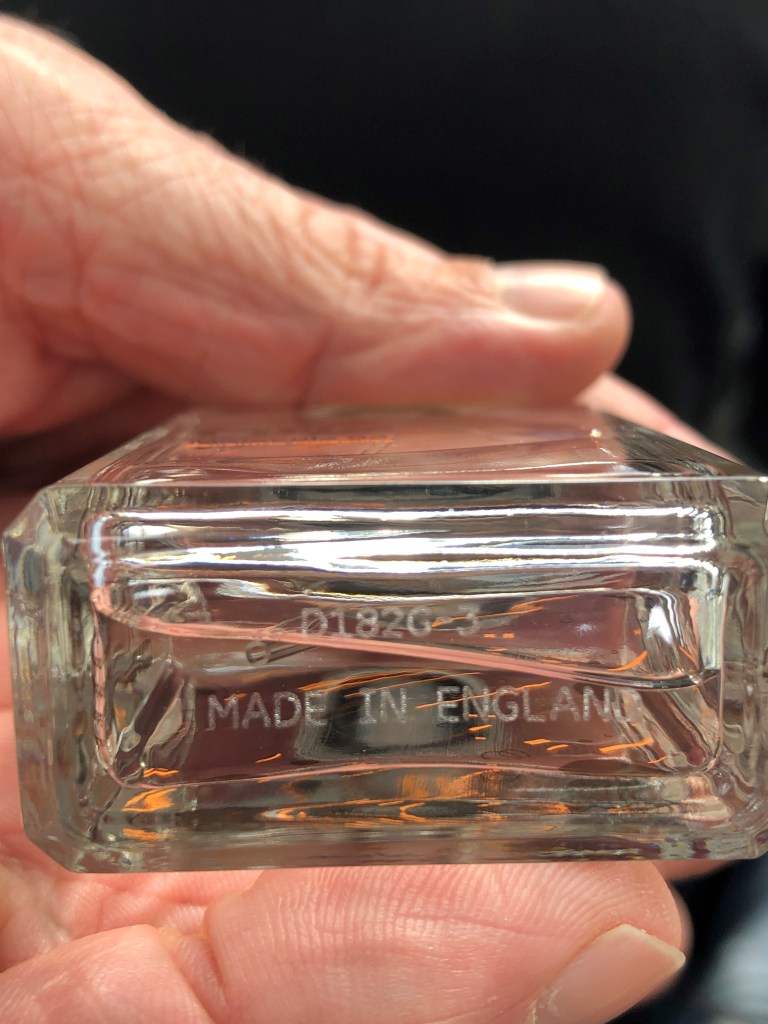
Marking fragrance bottles of various shapes and sizes with batch numbers, codes and origin information using Linx’s lasers allowed Wolds to not only achieve a permanent coding solution of highest quality, but also speed up their production process and save money.
Wolds installed two Linx CSL30 models to support their faster lines and enable printing more complex codes much faster on increased line speed.
“Customer satisfaction and product quality is the most important outcome for us. Linx lasers reliability and the high quality of marking help us to ensure our KPIs are met. The ROI of the coder itself is very high, it has practically paid for itself in less than a year”.
Read more

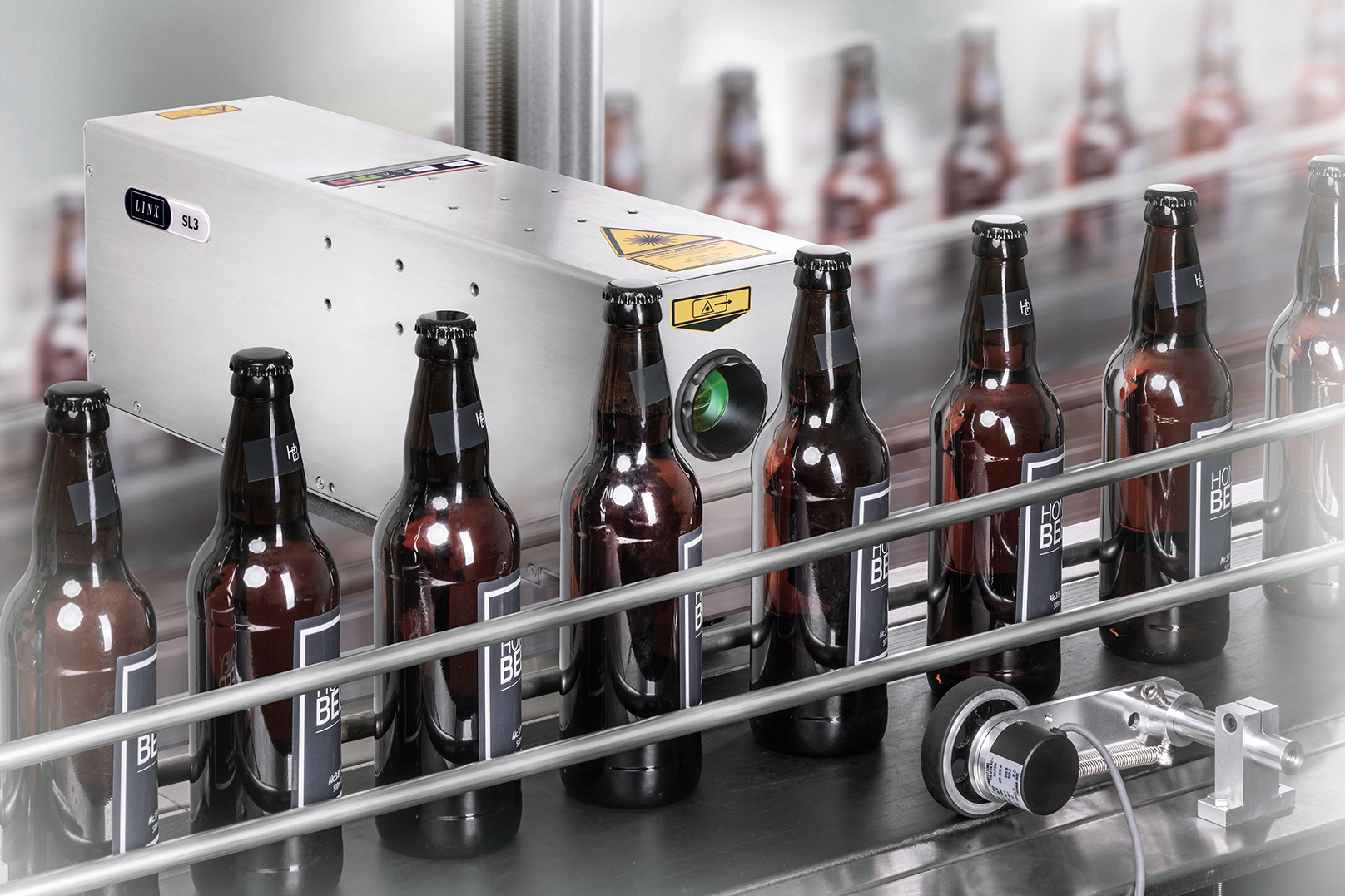
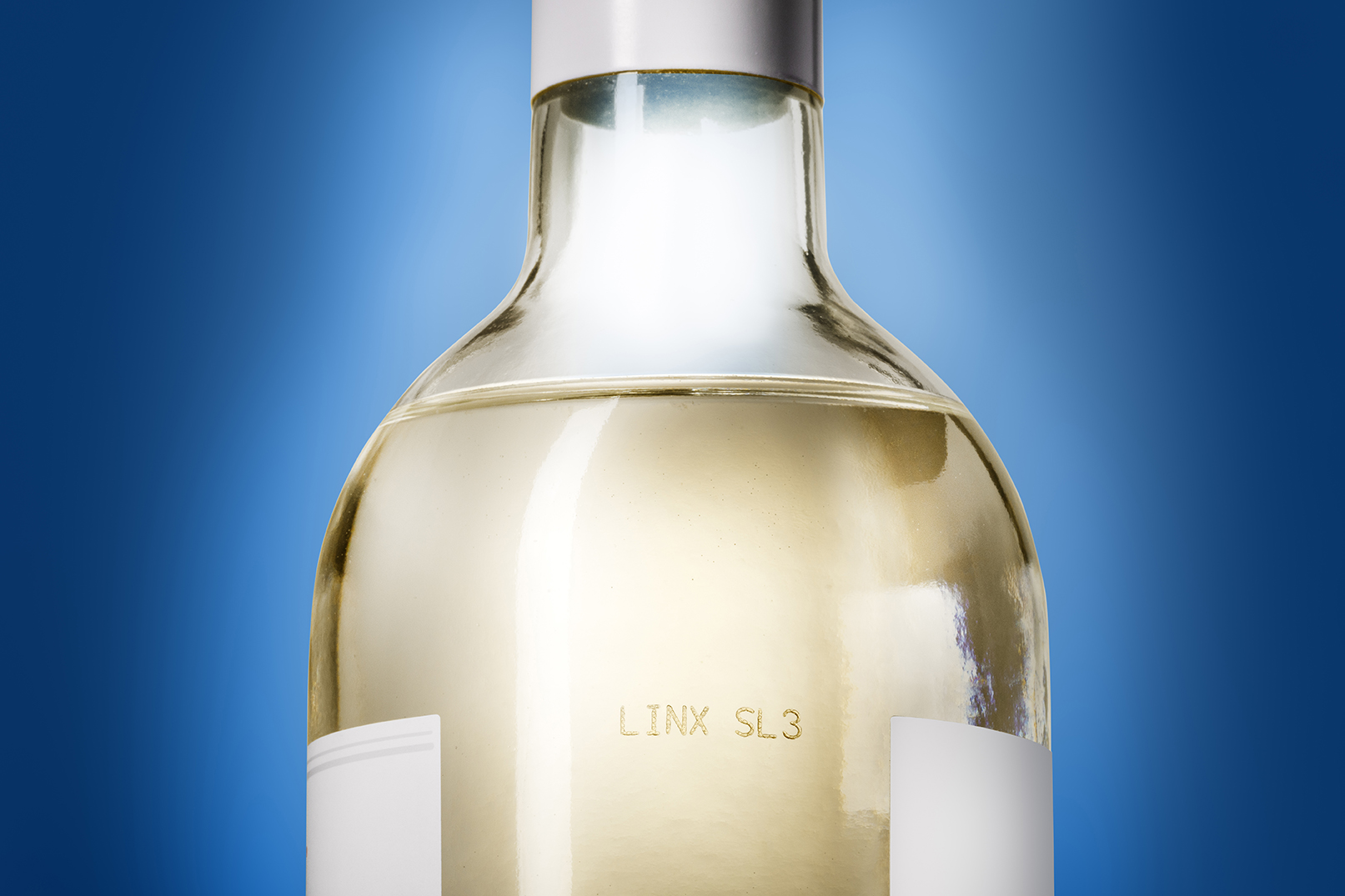
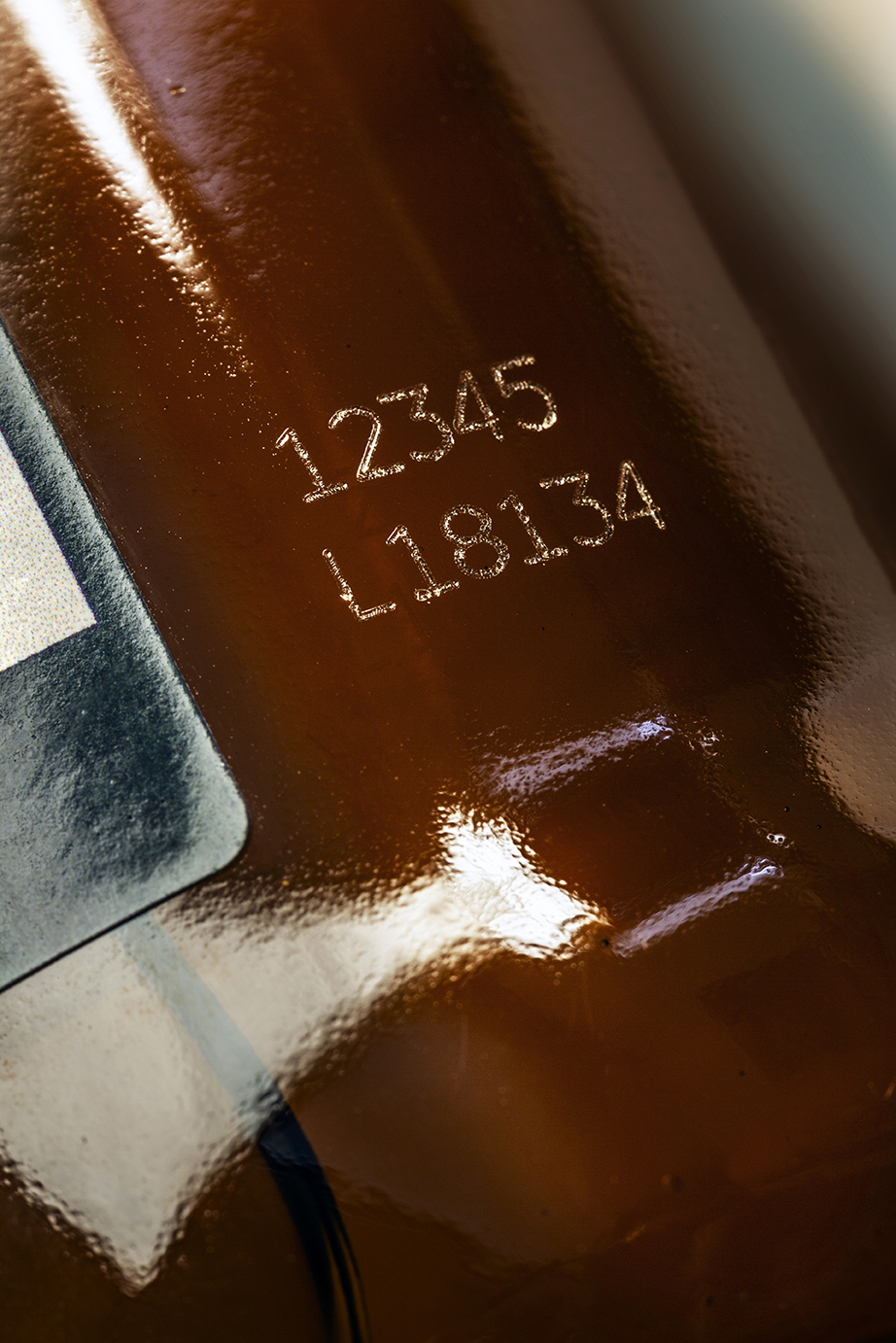
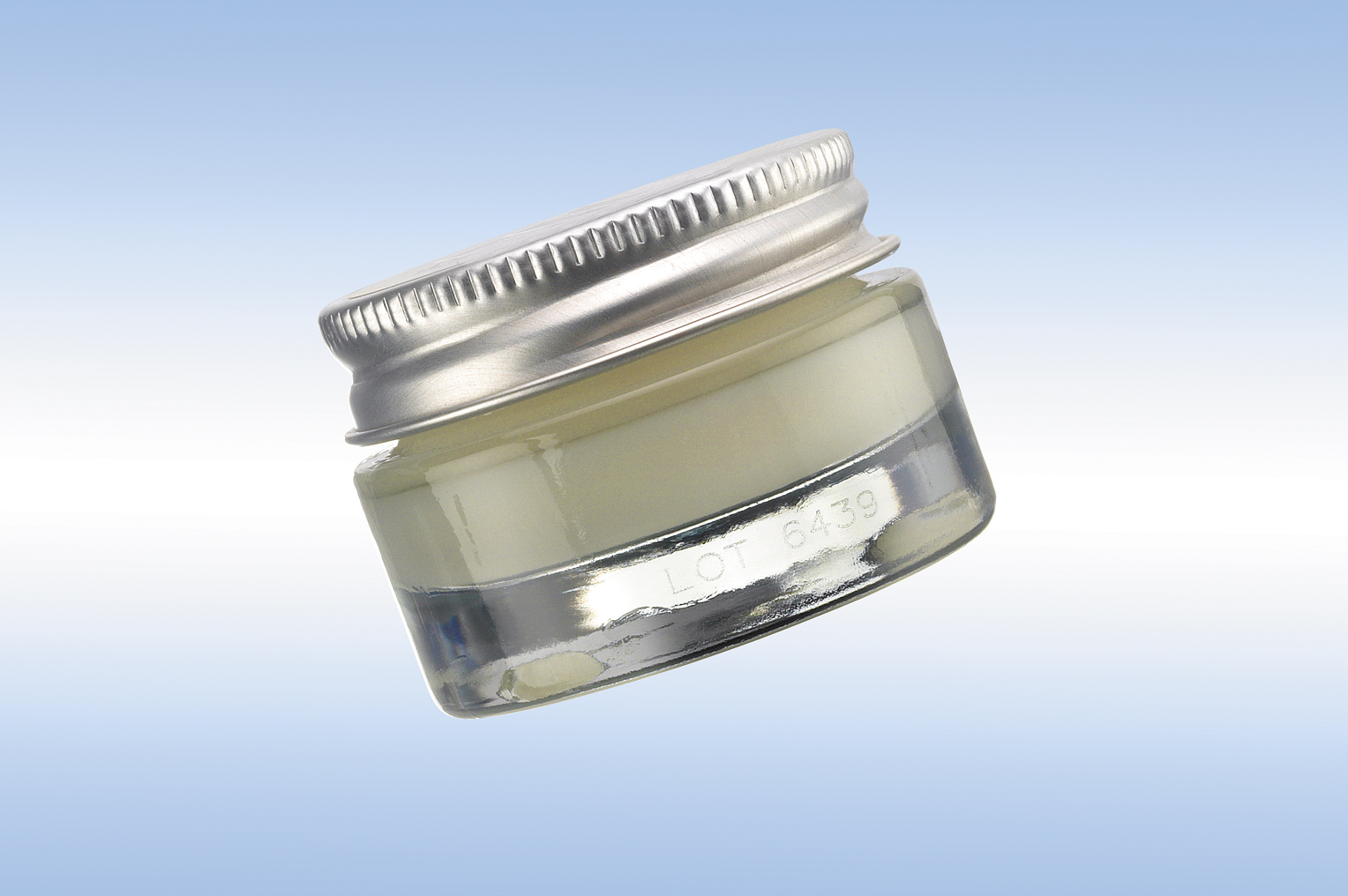
Linx SL3
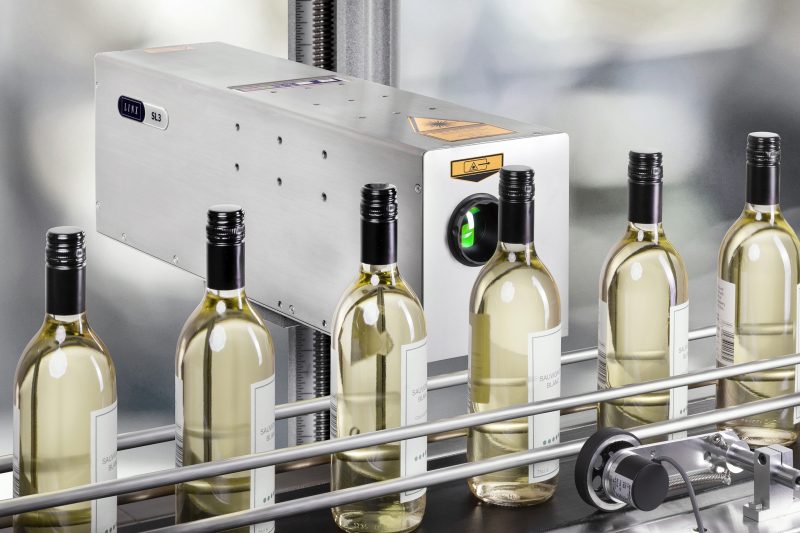
30W compact and robust laser coder
Features
Suitable for 24/7 operations | Data Matrix and QR codes | Print unlimited lines of text | Batch and date coding | IP54 stainless steel enclosure
Key Benefits:
- Single unit installation with multiple mounting positions
- 2 year laser tube warranty
- Code up to 360m/min
Not sure which solution is right for you?
Contact us to find the best solution for your marking and coding needs
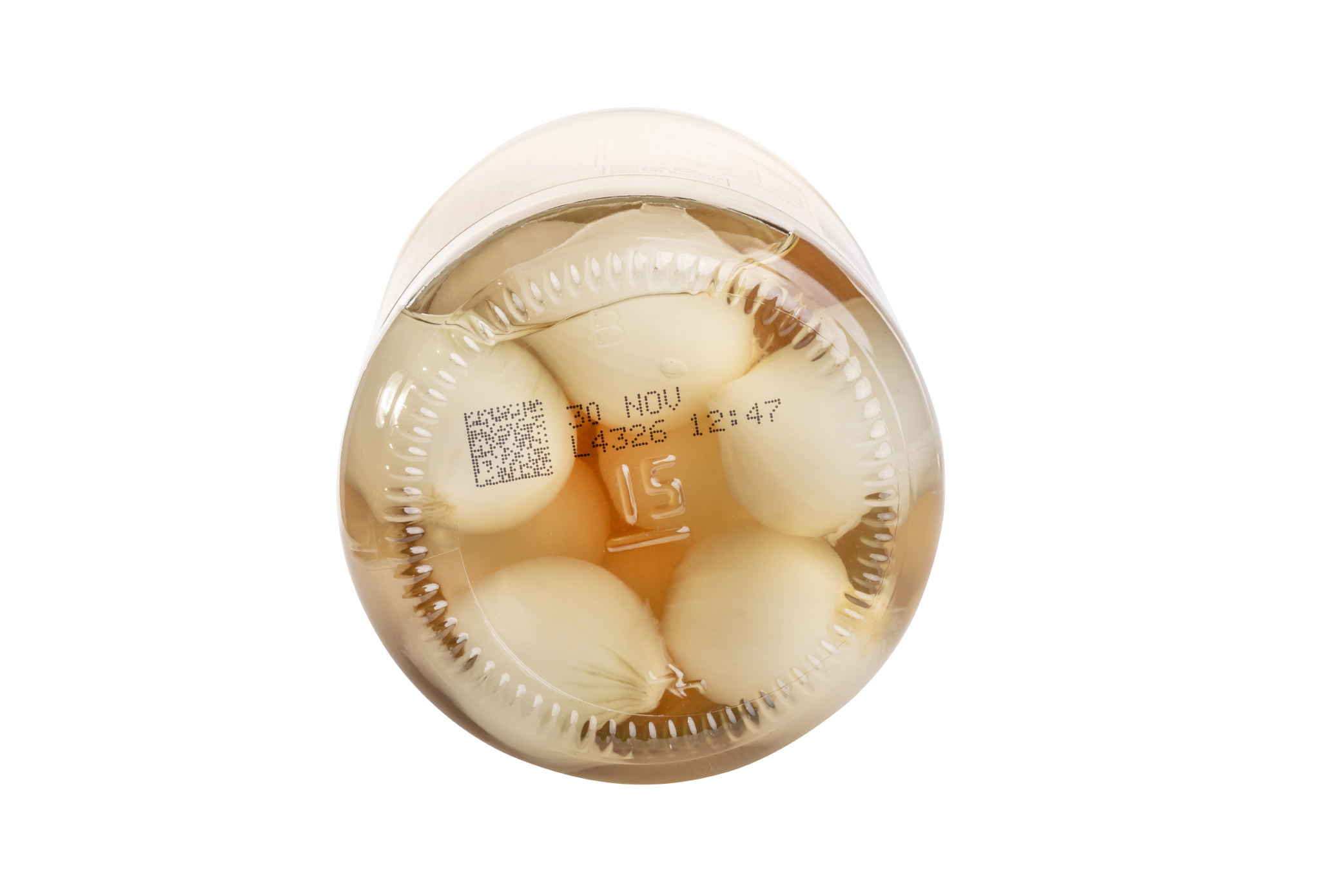
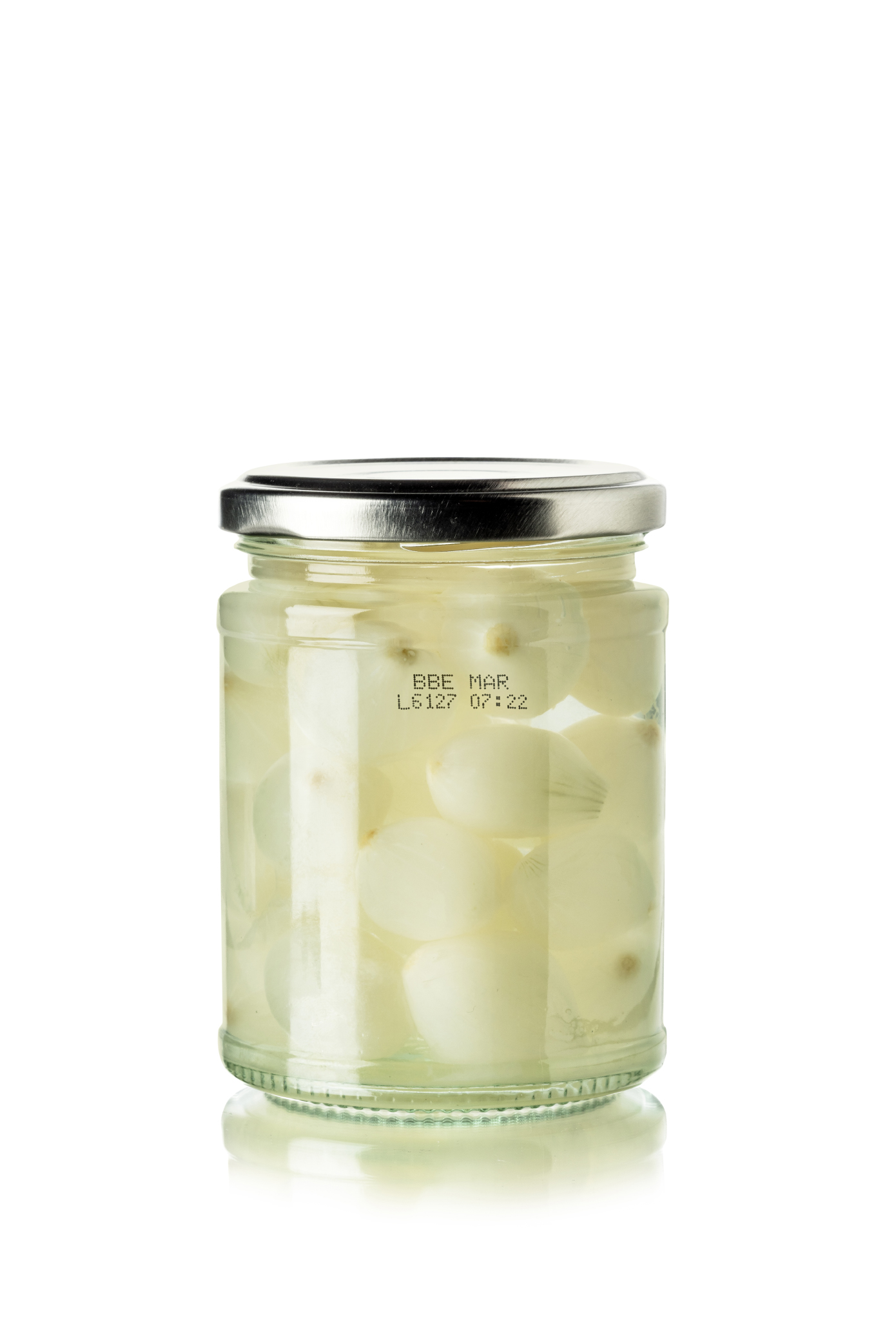
Direct coding onto glass with a rnage of inks available for any application
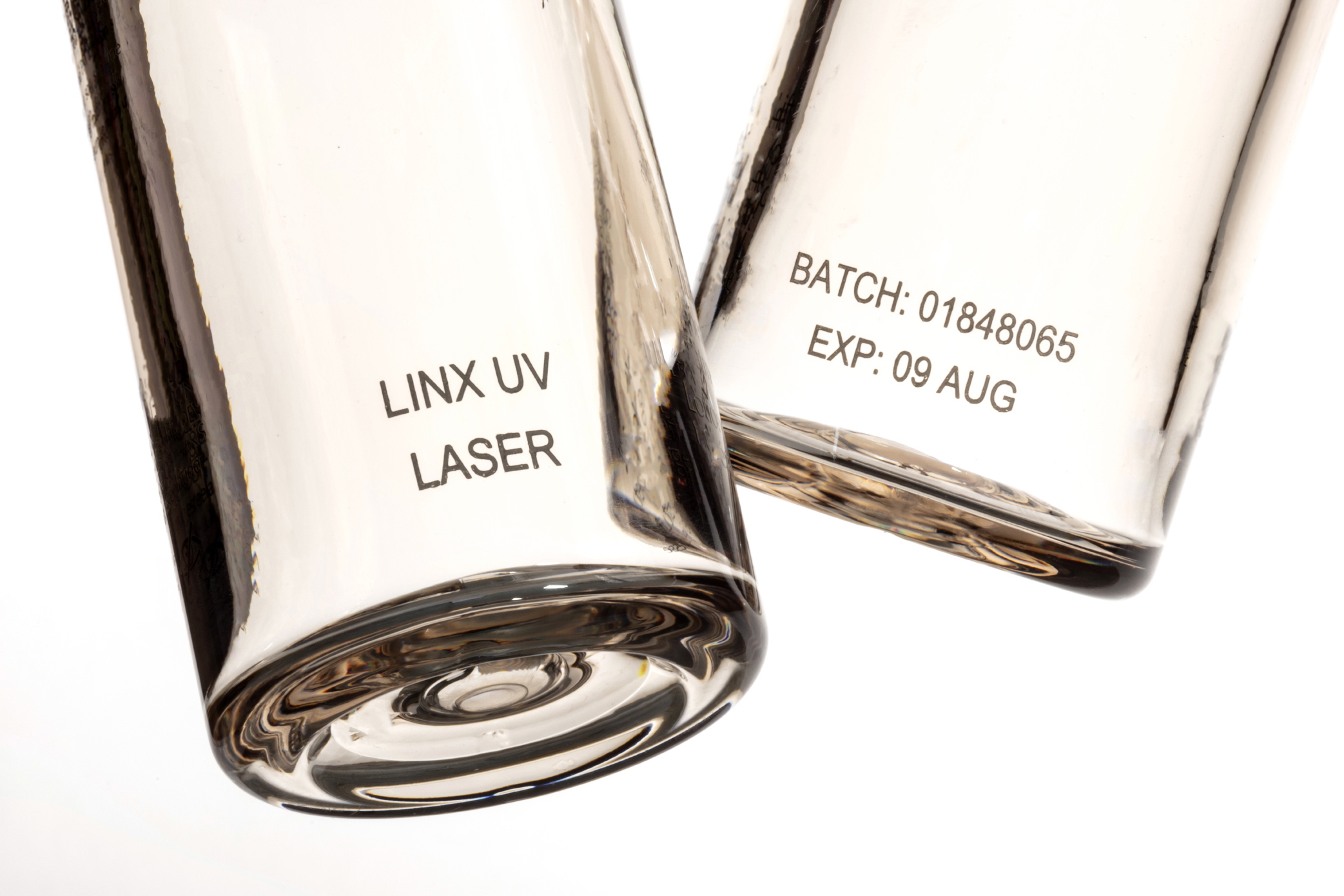
Permanent and discreet coding on glass cosmetics packaging
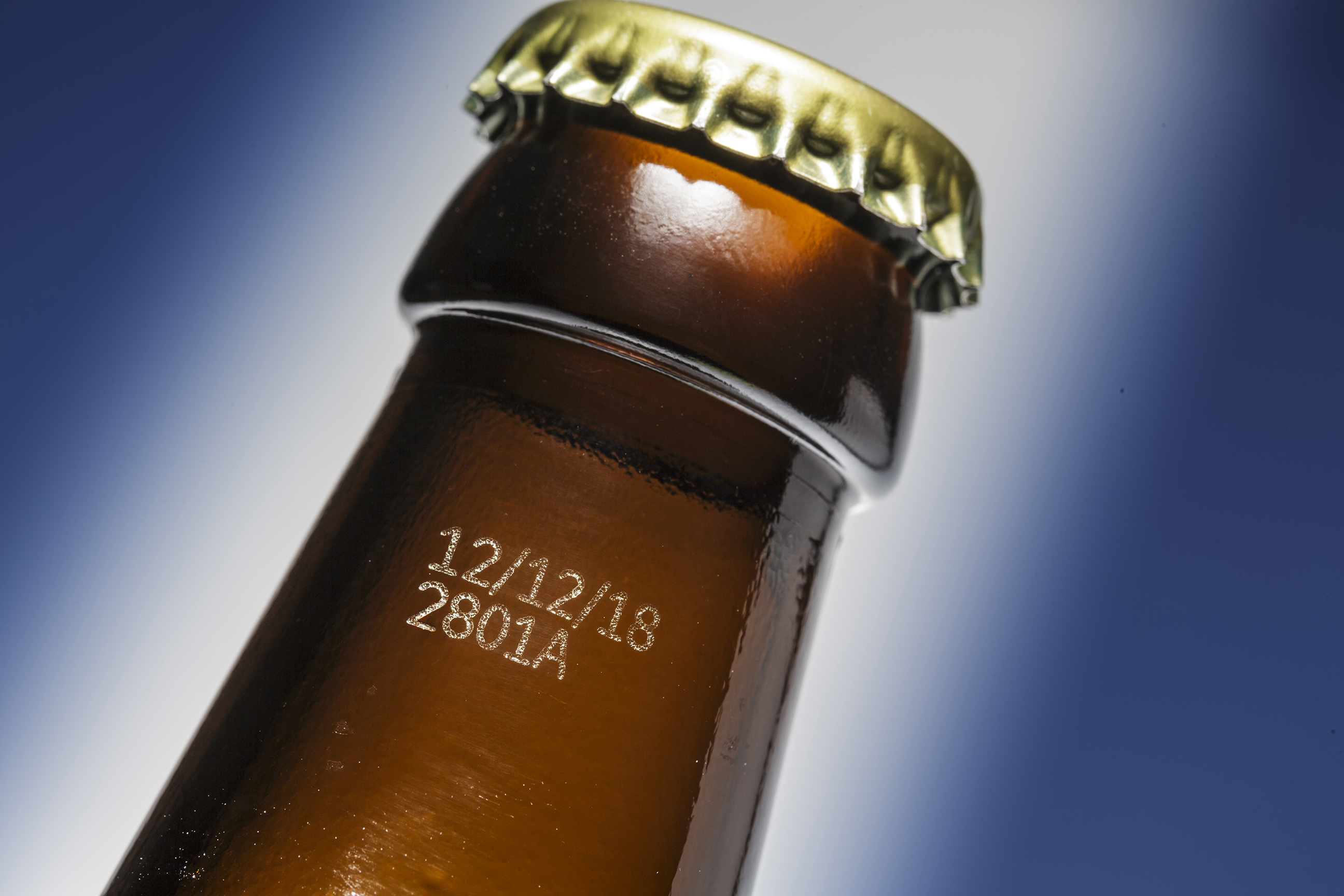
High-speed printing directly on glass bottles for the beverage industry
FAQ
Glass coding and marking is the process of applying variable information directly onto glass products such as bottles, jars or containers. This can include dates, batch numbers, barcodes or logos to support identification, traceability and compliance.
Coding on glass helps manufacturers track products through production and distribution, support recalls if needed, and meet regulatory requirements. It also ensures important information such as expiry dates and batch numbers is clearly visible to consumers.
The most common technologies for marking on glass are continuous inkjet (CIJ) printers and laser coders. Both are non-contact methods that can deliver clear, reliable codes, with the choice depending on your durability, speed and cost requirements.
Inkjet printers offer flexibility, lower upfront cost and a wide range of inks for different applications, including removable or coloured codes. Laser coders provide permanent, high‑contrast marks with no consumables, making them ideal where long-term durability or reduced maintenance is important.
Yes, modern coding systems are designed to operate at high production speeds while maintaining consistent code quality. This is especially important in industries such as beverage manufacturing, where large volumes of glass bottles are processed rapidly.
Yes, most industrial coding solutions are designed for easy integration into production lines, including bottling and packaging systems, allowing seamless operation without disrupting throughput.
Yes, coding solutions are available for wet or challenging environments, including specialised inks and robust equipment designs that can maintain performance where condensation or washdown is present.
Glass can require more careful setup when using laser coding, but it is not inherently difficult to mark when the correct technology and settings are used. Although glass is a hard and brittle material, modern laser systems are specifically designed to create clear, high‑quality marks without damaging the surface.