
Laser Marking
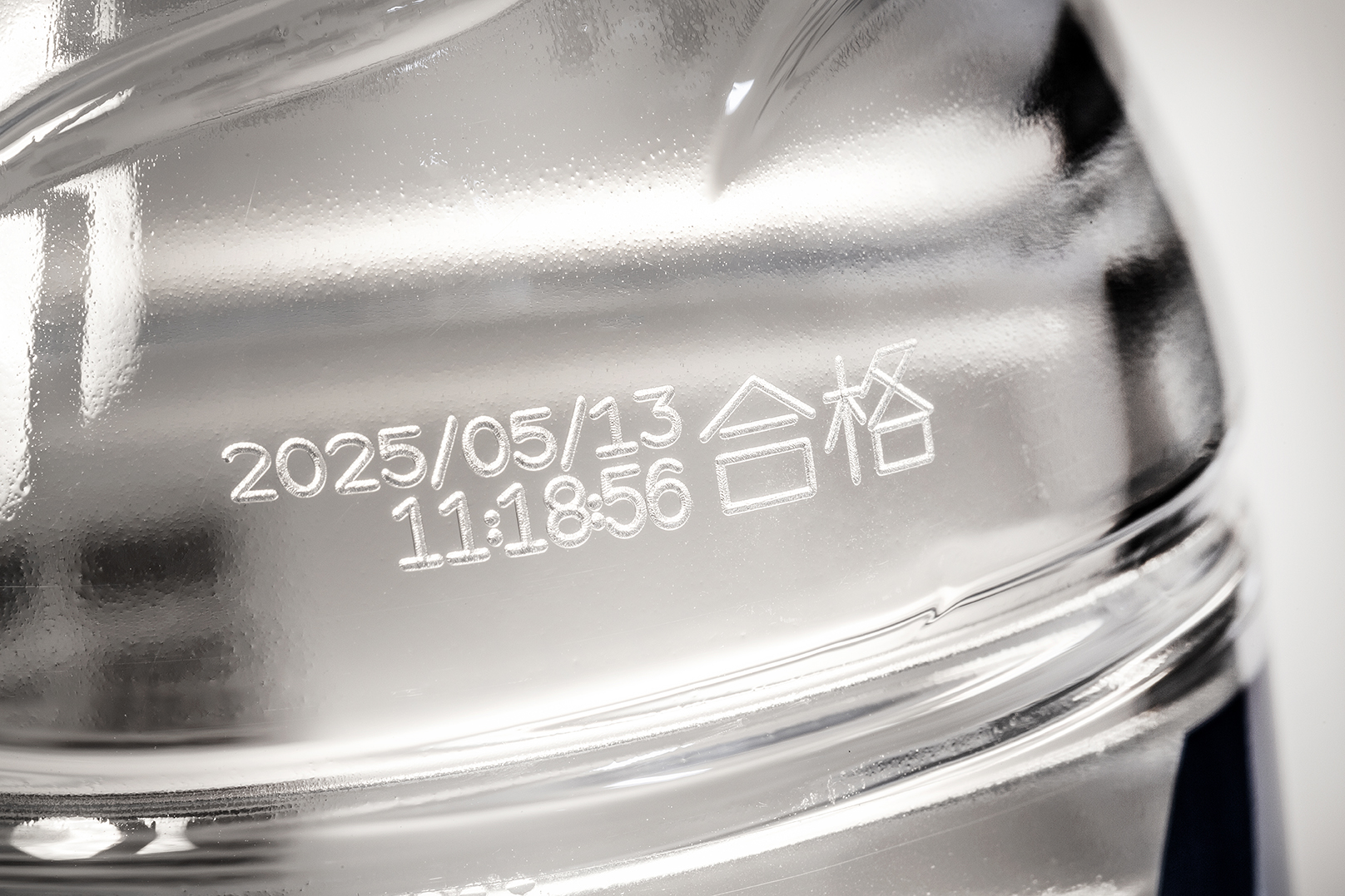

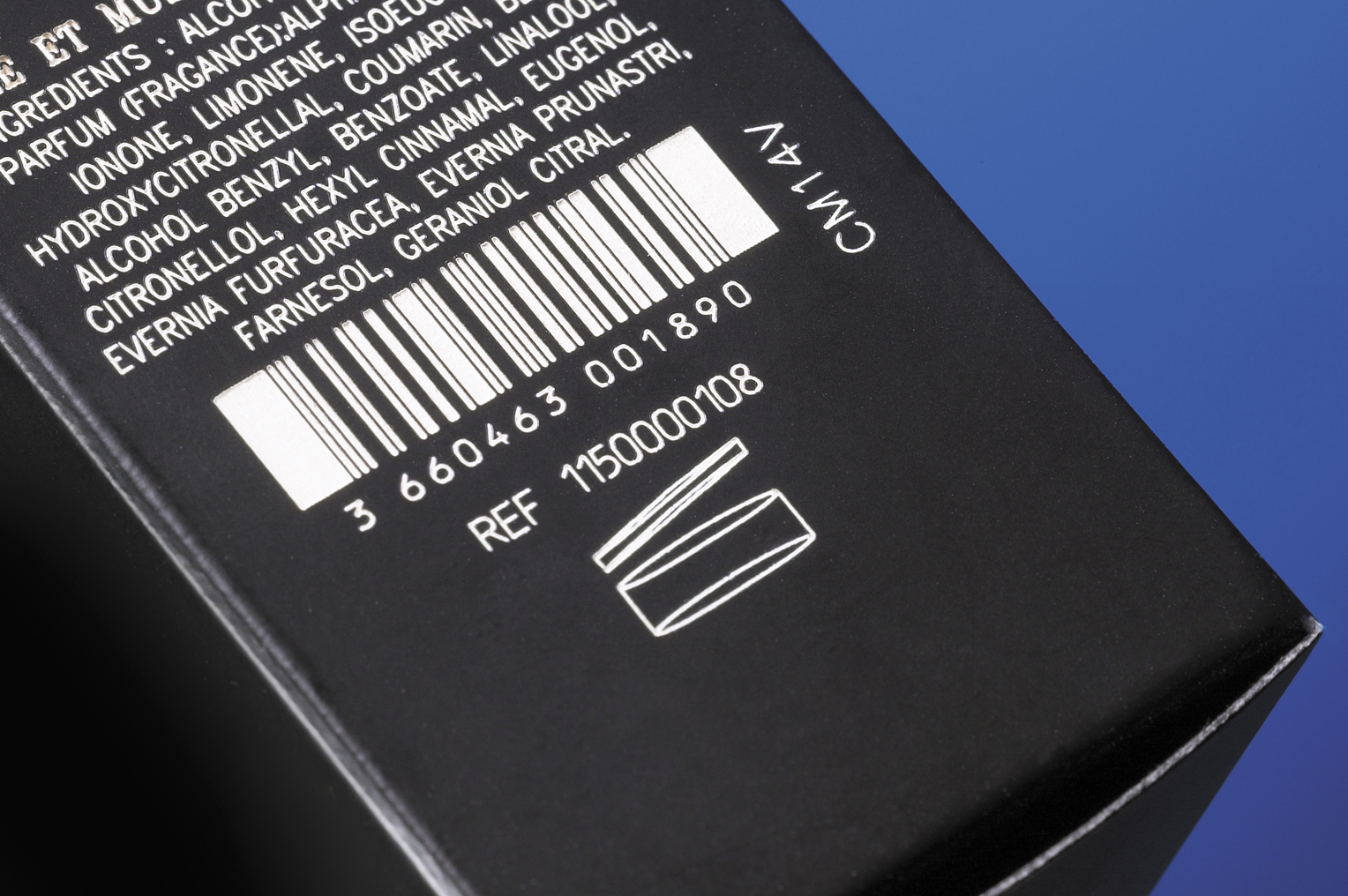
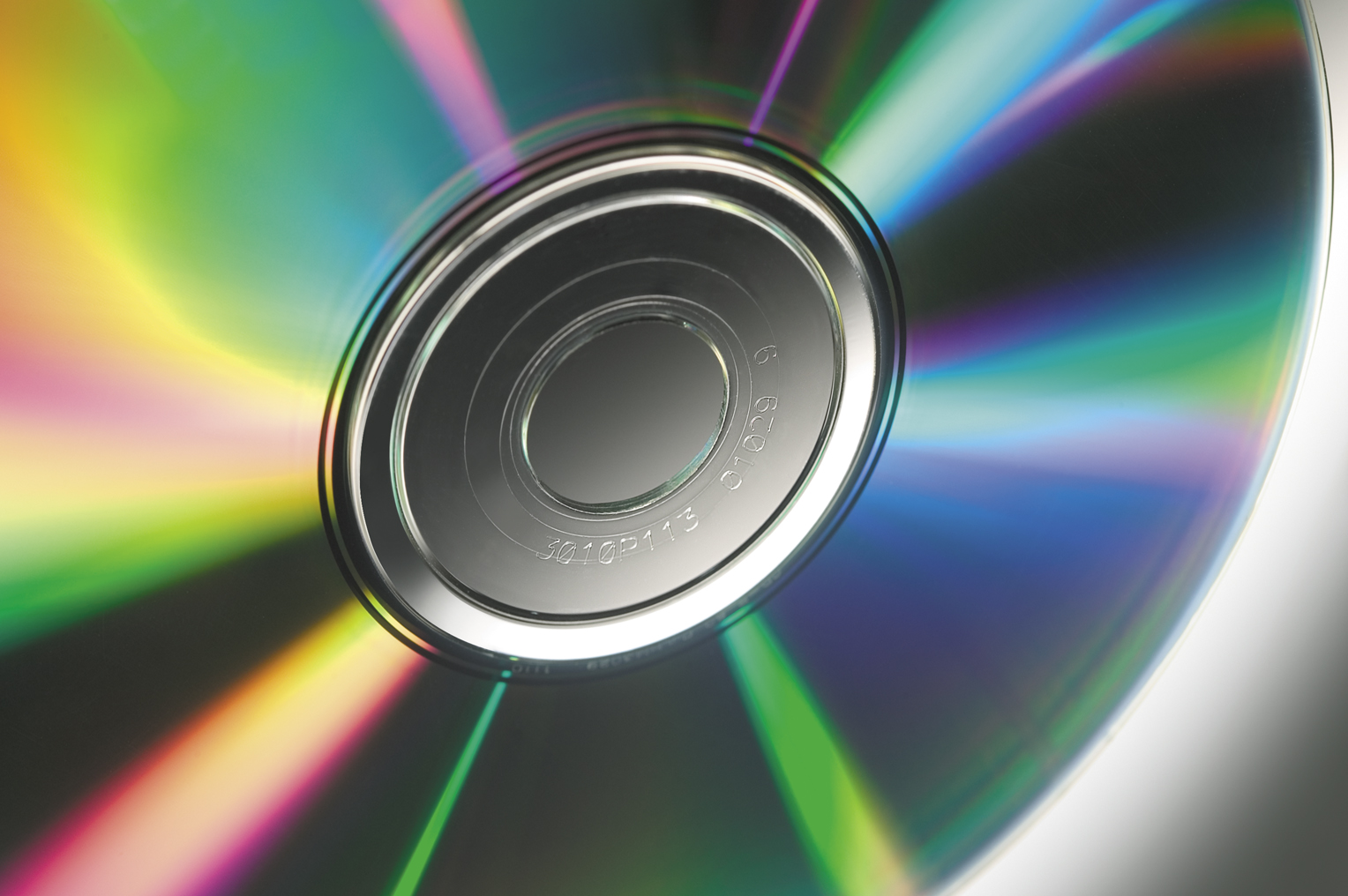
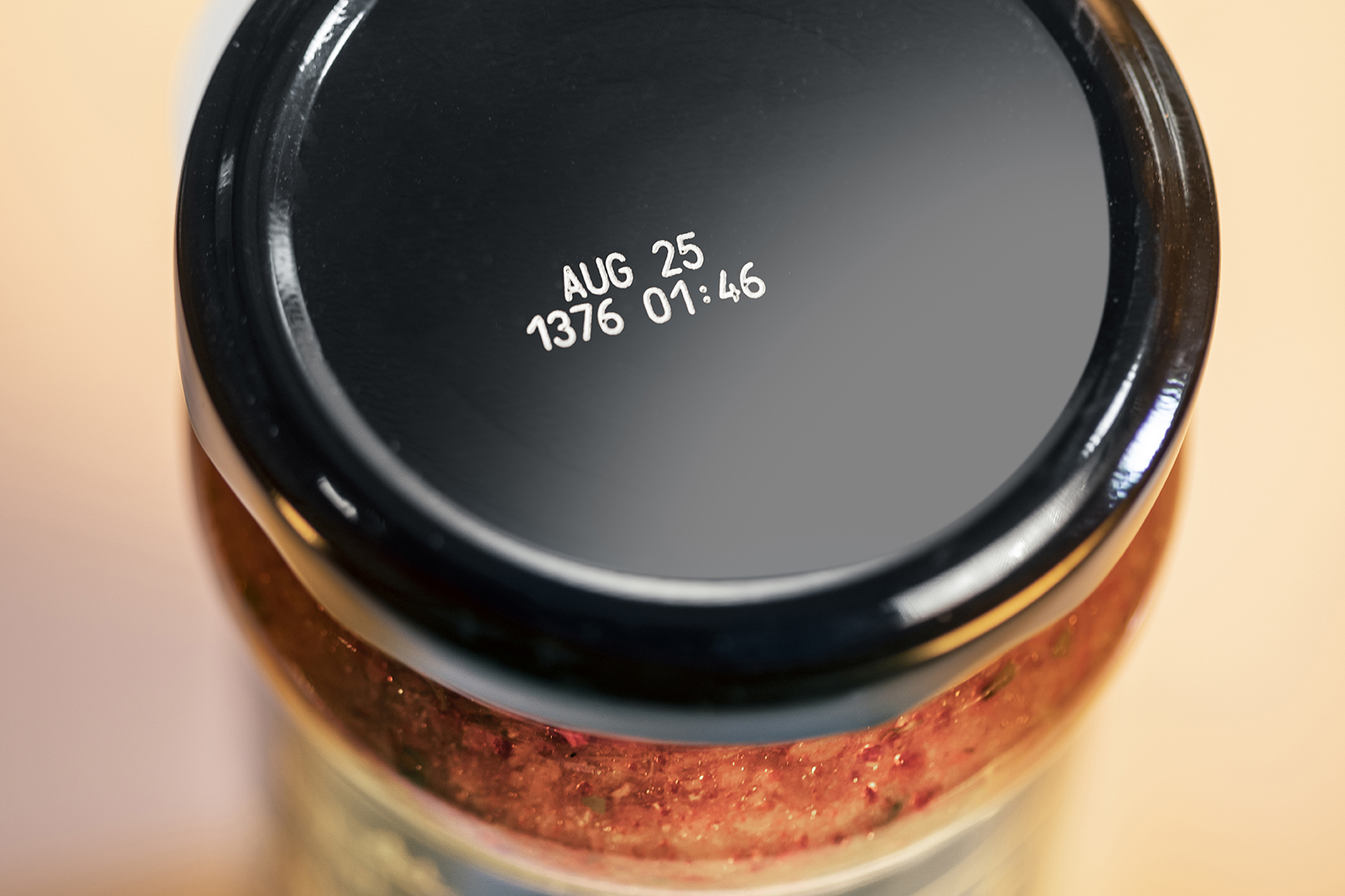
Laser marking technology uses a focused beam of light to create permanent codes and marks. Because it is a precise, non-contact technology, manufacturers use it across many industries. It delivers durable, consistent results while supporting high-speed production lines.
In addition, laser marking can reduce maintenance requirements and lower running costs. As a result, it provides a reliable solution for high-volume manufacturing environments.
The Linx range of laser coders can mark a wide variety of products and packaging materials.
What is a laser?
Today, the term laser is widely recognised. It originates from the phrase Light Amplification by Stimulated Emission of Radiation.
Although many people associate lasers with modern technology, scientists have developed them over several decades. Researchers first proposed the concept in 1957, and engineers built the first working laser in 1960. However, the scientific principles behind lasers date back even further. In the early 20th century, Albert Einstein described the physical processes that make laser operation possible.
As interest in the technology grew, commercial organisations and government institutions began exploring its potential. At that stage, practical applications were not always clear. Consequently, many people described lasers as a “solution looking for a problem”. Nevertheless, their versatility soon became apparent.
Today, manufacturers design lasers for specific tasks. As a result, each laser type offers characteristics that suit particular applications.
Lasers support one of the widest ranges of applications of any technology. For example, they are used for metal cutting and welding, surgery, data transmission, holography, precision measurement, non-destructive testing, and product marking on production lines.
How does a laser work?
All lasers operate using the same fundamental principles. However, manufacturers engineer them in different ways. They also use different materials and beam characteristics to achieve specific performance requirements.
The Laser Light Spectrum
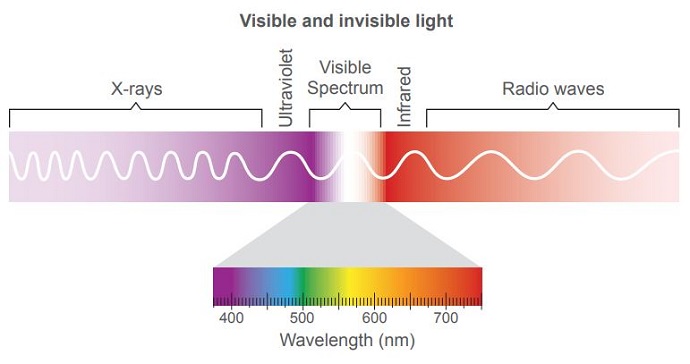
Lasers used for product marking operate within the infrared region of the electromagnetic spectrum. For example, CO₂ lasers typically operate at 10,600 nm, while ytterbium fibre lasers operate between 1,055 and 1,070 nm.
By comparison, laser pointers use diode lasers that operate at approximately 671 nm.
Components of a laser
Every laser contains three main components:
The lasing medium The lasing medium may be a gas, solid, or liquid. Examples include carbon dioxide (CO₂), neodymium-doped yttrium aluminium garnet (Nd:YAG), and dyes.
The lasing medium stores energy through a process known as population inversion. When excess energy builds up, the medium releases it in the form of light particles called photons.
The excitation mechanism The excitation mechanism supplies energy to the lasing medium. This energy excites the atoms or molecules within the material.
Manufacturers can provide this energy through an electric current, electrical discharge, light source, or other methods.
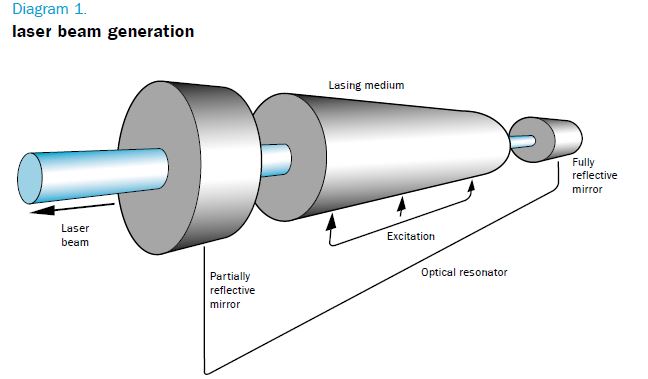
The optical resonator The optical resonator extracts stored energy from the lasing medium and forms the laser beam.
In its simplest form, the resonator contains two mirrors positioned at opposite ends of the lasing medium. Photons bounce repeatedly between these mirrors, creating amplification. One mirror reflects all light, while the other allows a small amount to pass through. This escaping light forms the laser beam.
Generation of a laser beam
As photons pass through the lasing medium, they cause excited particles to release excess energy. This process is known as stimulated emission. The newly generated photons are identical to the original photons. They have the same wavelength, travel in the same direction, and remain in phase.
Next, the partially reflective mirror allows some photons to pass through and form the laser beam. Meanwhile, the remaining photons reflect back through the lasing medium. As a result, they continue the stimulated emission process and amplify the beam.
How does laser marking work?
Laser Marking Technology works by removing material from a substrate or altering its surface. Therefore, the material’s ability to absorb laser energy plays a critical role in the marking process.
Different materials absorb different wavelengths. Consequently, the substrate often determines which laser type is most suitable. If a material reflects or transmits the laser beam, marking becomes difficult or, in some cases, impossible.
For the best results, the material surface must absorb the focused laser beam within its top few microns. This creates enough energy density to modify the surface through one of three processes.
Etching
During etching, the laser vaporises material from the substrate surface. In most cases, this process does not create a colour change.
For example, laser marking on PET polymers primarily uses etching. The resulting marks often resemble embossed printing.
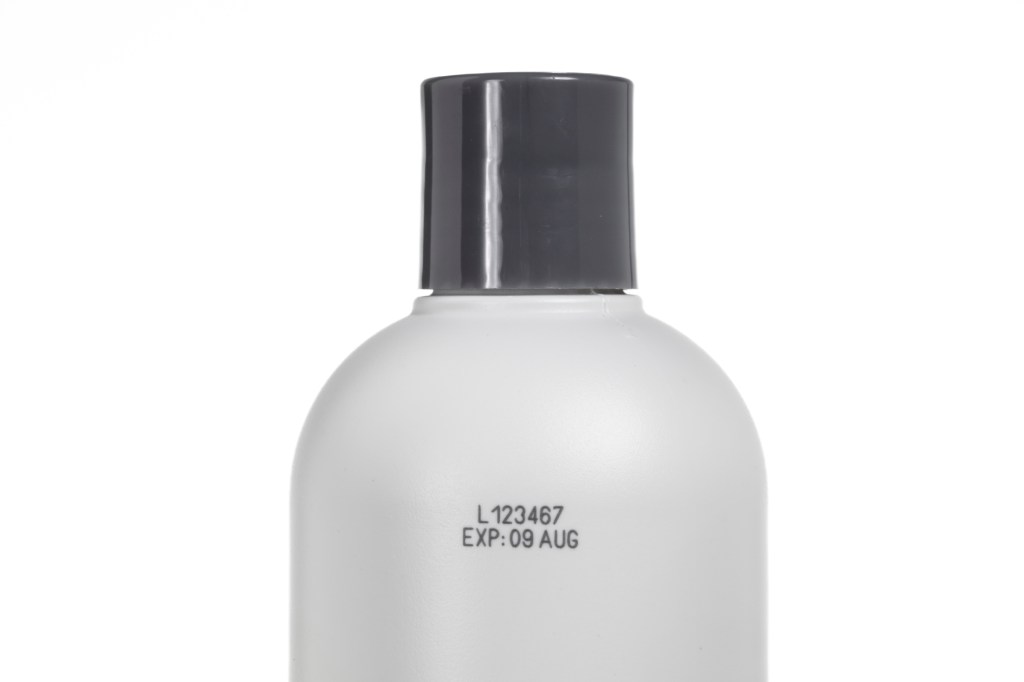
When marking glass, the laser creates thermal stress within the surface. This stress forms microcracks and ejects tiny glass particles, which create the visible mark.
Coating removal
In this process, the substrate or surface coating absorbs the laser energy. The laser then vaporises the coating and exposes the contrasting material underneath.
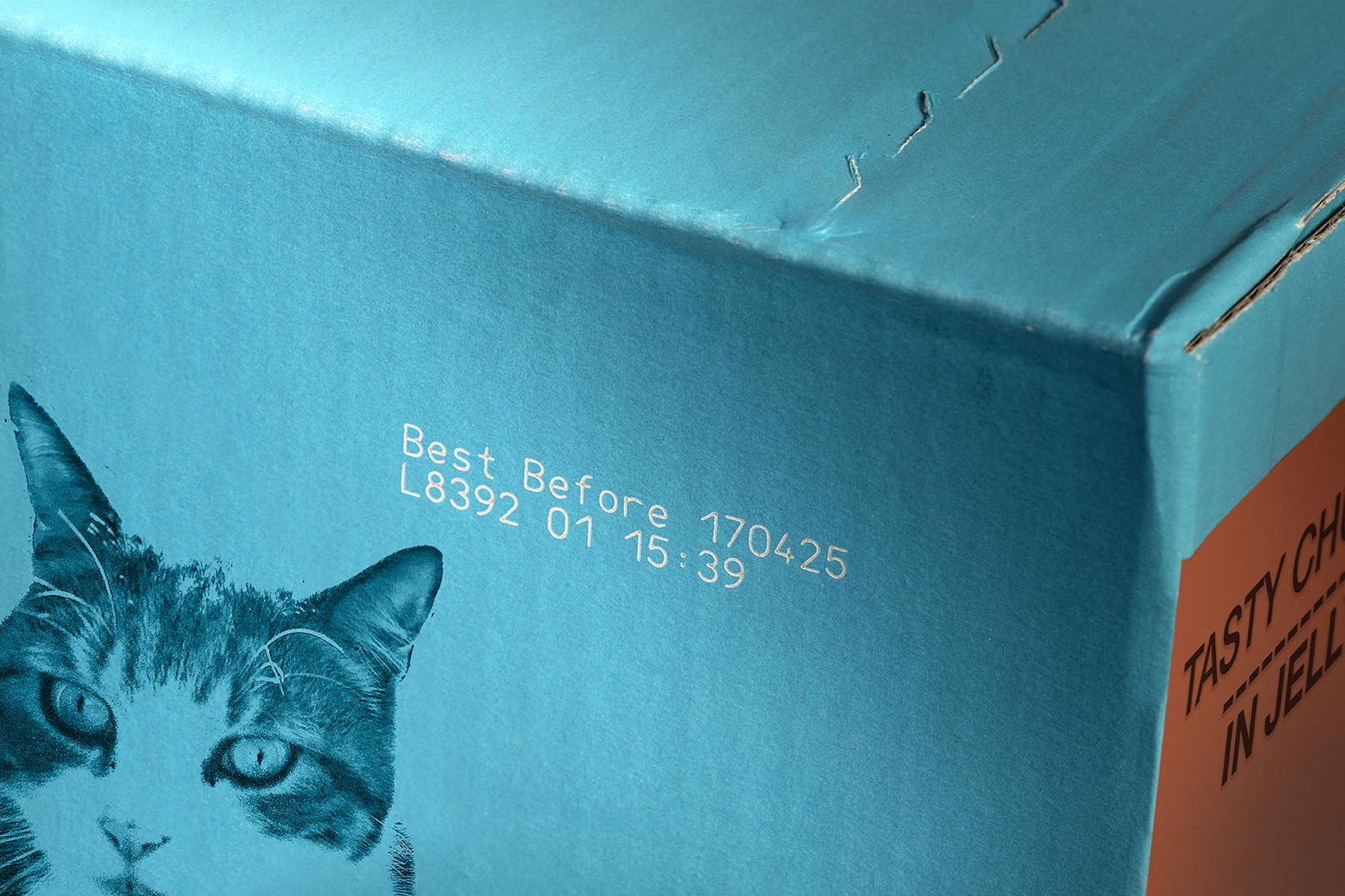
For example, a laser can remove coloured ink from white paper or card to create a clear, high-contrast code.
Thermochemical
Thermochemical marking uses heat to alter the material structure. The laser raises the temperature sufficiently to break molecular bonds.
As a result, the material changes colour and produces a visible mark without removing material from the surface.
Types of laser
Most Laser Marking Technology systems use one of four laser technologies.
CO2 laser
CO2 lasers use a mixture of gases that an electrical discharge excites. Typically, they operate at wavelengths of 9.3 μm, 10.2 μm, or 10.6 μm.
CO₂ laser coding technology can mark almost any surface, including glass, plastics, coated metals, paper, and card. Therefore, manufacturers use it across a wide range of industries and production environments.
Linx CO₂ laser coders are available in multiple power levels. As a result, they support a broad range of coding applications and production speeds.
Fibre lasers
Fibre lasers belong to a special category of solid-state lasers. Instead of using gas as the lasing medium, they use an optical fibre.
The fibre generates and confines the laser beam within its core. Manufacturers dope the fibre with ions such as ytterbium and typically excite it using a diode laser. Consequently, fibre lasers produce wavelengths between 1.05 μm and 1.08 μm, centred around 1.06 μm.
Linx Fibre lasers permanently mark many materials, including metals, plastics, rubber, and packaging foils. In addition, their extremely fine spot size creates highly detailed codes. Therefore, they are ideal for small components and applications that require a large amount of information in a limited space.
Nd:YAG
Nd:YAG uses a crystal as the lasing medium. Manufacturers typically excite the crystal with either a flash lamp or a diode laser.
As a result, Nd:YAG lasers produce infrared light at a wavelength of approximately 1.064 μm.
UV lasers
UV lasers are diode-pumped solid-state lasers that operate at shorter wavelengths, typically around 355 nm.
Because UV lasers generate less heat, they support a “cold marking” process. Consequently, they minimise the risk of material damage or deformation.
UV laser coding technology is particularly suitable for delicate or heat-sensitive materials. Examples include plastics, films, and electronic components.
Linx UV laser coders create high-contrast, permanent marks with excellent precision. Therefore, they are ideal for applications that require fine detail, a premium appearance, and consistent code quality.
Laser Beam delivery
Manufacturers use three main beam delivery methods to create laser marks.
Mask laser systems first appeared in the early 1970s.
These systems expand a pulsed laser beam and direct it through a thin metal mask containing the required code or image. Because the laser illuminates the entire pattern at once, the marking process can be extremely fast.
However, mask lasers have several limitations. The marking area remains relatively small and depends on beam diameter, optics, and power density. In addition, users must replace the mask whenever the code changes. Therefore, the technology provides limited flexibility
Dot matrix laser systems create codes from individual marked dots. Together, these dots form characters, logos, or graphics.
One design uses a vertical array of lasers that project through a shared focusing lens onto the product. Depending on which lasers activate, the system produces different dot patterns.
However, this method requires a separate laser source for each dot position. As a result, the technology can be expensive and resource intensive.
Like mask lasers, dot matrix systems offer limited flexibility. In contrast, scribing lasers create marks dynamically and support more complex code formats. Therefore, most manufacturers now prefer scribing systems.
Scribing lasers write directly onto a surface, much like a pen.
The first pulsed Nd:YAG systems appeared in 1969. Later, manufacturers introduced continuous-wave CO₂ versions during the early 1980s. Initially, adoption remained limited because controlling the mirror systems required advanced processing technology.
A lens focuses the beam into a small spot on the product surface. Next, two galvanometer-driven mirrors move the beam to create the required code or image.
The control system activates the laser when marking is required and disables it when marking is complete. At the same time, computer-controlled mirrors position the beam with high precision.
Modern systems accept marking information from many software platforms, including databases, CAD systems, and word processors.
Scribing systems can produce high-quality marks across areas up to 600 × 400 mm. Furthermore, special flat-field lenses help maintain print quality across the entire marking area.
Because scribing systems mark only the required lines, they use laser energy very efficiently. Consequently, many entry-level systems operate with low-power air-cooled CO₂ lasers.
Today, faster galvanometers and lower computing costs allow scribing systems to produce highly complex codes at very high production speeds.
Laser Marking Applications
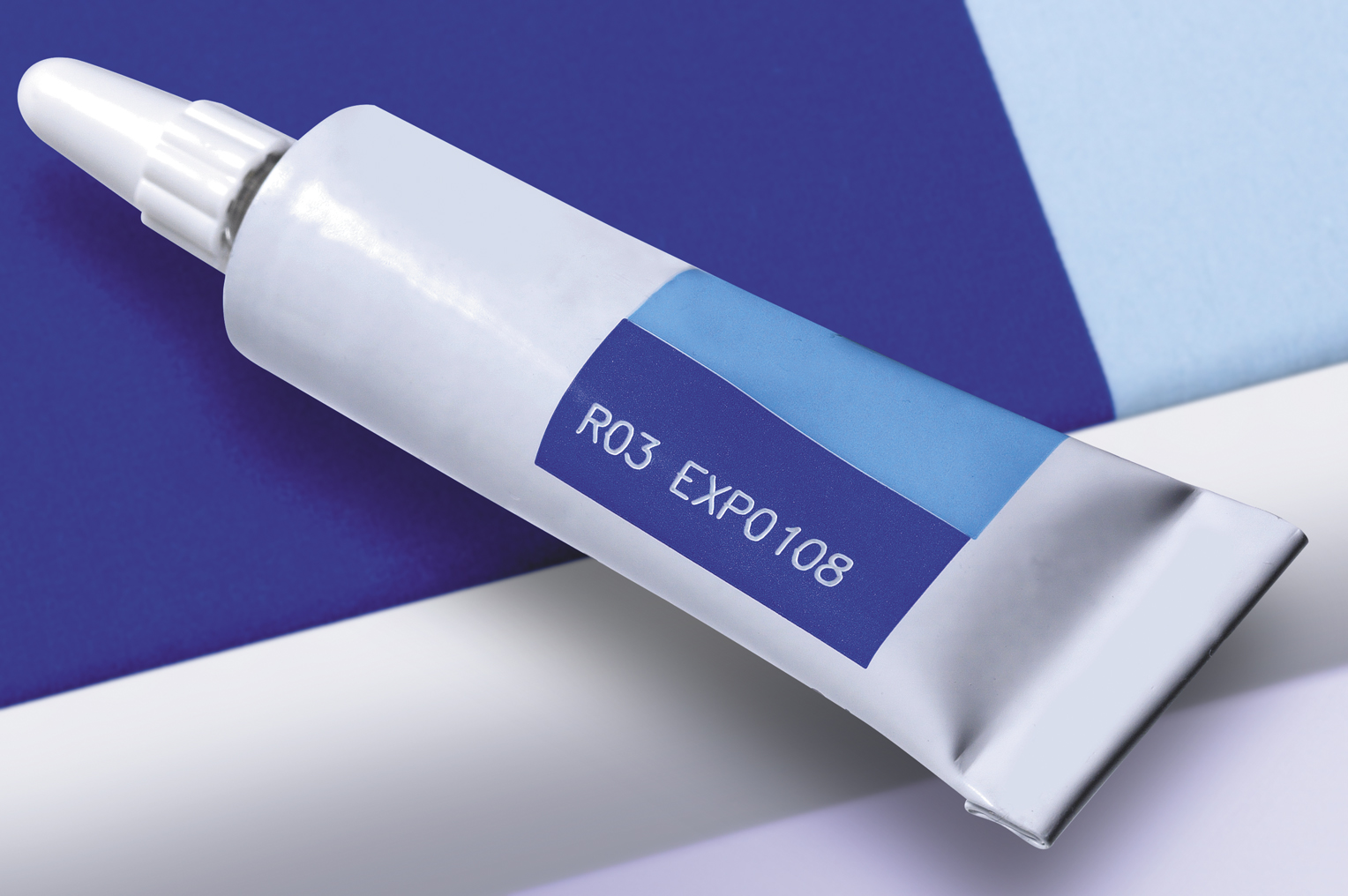
Laser Marking Performance
Several factors affect the performance of Laser Marking Technology, including coding quality and production speed.
Laser dwell time
Dwell time is the amount of time a focused laser beam remains on a substrate. Different materials require different energy levels to create a clear mark. As a result, longer dwell times can reduce maximum coding speeds.
For example, recycled board often absorbs printed ink into its surface. Therefore, the laser needs more time to remove the ink and create a visible code.
However, fast-moving production lines reduce the available dwell time. In these situations, manufacturers may need a higher-power laser or materials that react more quickly to laser energy.
Laser absorption
A material’s ability to absorb laser energy directly affects marking performance.
For example, bare metals reflect CO₂ laser light. Consequently, CO₂ lasers cannot mark untreated metal surfaces effectively. Manufacturers can overcome this limitation by applying an absorbent coating or by using a fibre laser instead.
Similarly, some plastics allow CO₂ laser light to pass through the material. As a result, they cannot be marked effectively with a CO₂ laser. In these cases, manufacturers often add light-absorbing additives or select a laser with a different wavelength, such as an Nd:YAG laser.
Surface treatments
Surface coatings can also affect marking performance.
For example, if a product has a varnished coating, the laser must first remove the varnish before marking the underlying material. Consequently, the application may require a higher energy density.
Complex or large codes
Code size and complexity influence marking speed.
A large code or a design containing multiple elements takes longer to apply than a simple code. This remains true even when using the same laser, material, and production conditions.
Product pitch
Product pitch refers to the distance between consecutive products on a production line.
If products move closer together, the laser has less time to print each code within the available marking area. Therefore, tighter product spacing can reduce maximum coding capacity.
Benefits of Laser Marking Technology
Laser Marking Technology offers a combination of permanence, reliability, and low running costs, making it a popular choice for industrial coding and traceability applications.
- Indelible codes: Codes are etched into the surface which prevents unauthorised removal and aids anti-counterfeiting
- High quality codes: Scribing laser systems deliver quality codes which can match product branding, for discreet coding
- Low maintenance: Only a visual inspection every month; long service intervals compared to other coding technologies
- Low running costs: No consumables cost
- High reliability: Laser systems are designed to run at high-speed for 24/7 operations, allowing you to maximise your production efficiency
- Non-contact: Enables high-speed printing as there is no physical contact with the surface to be printed
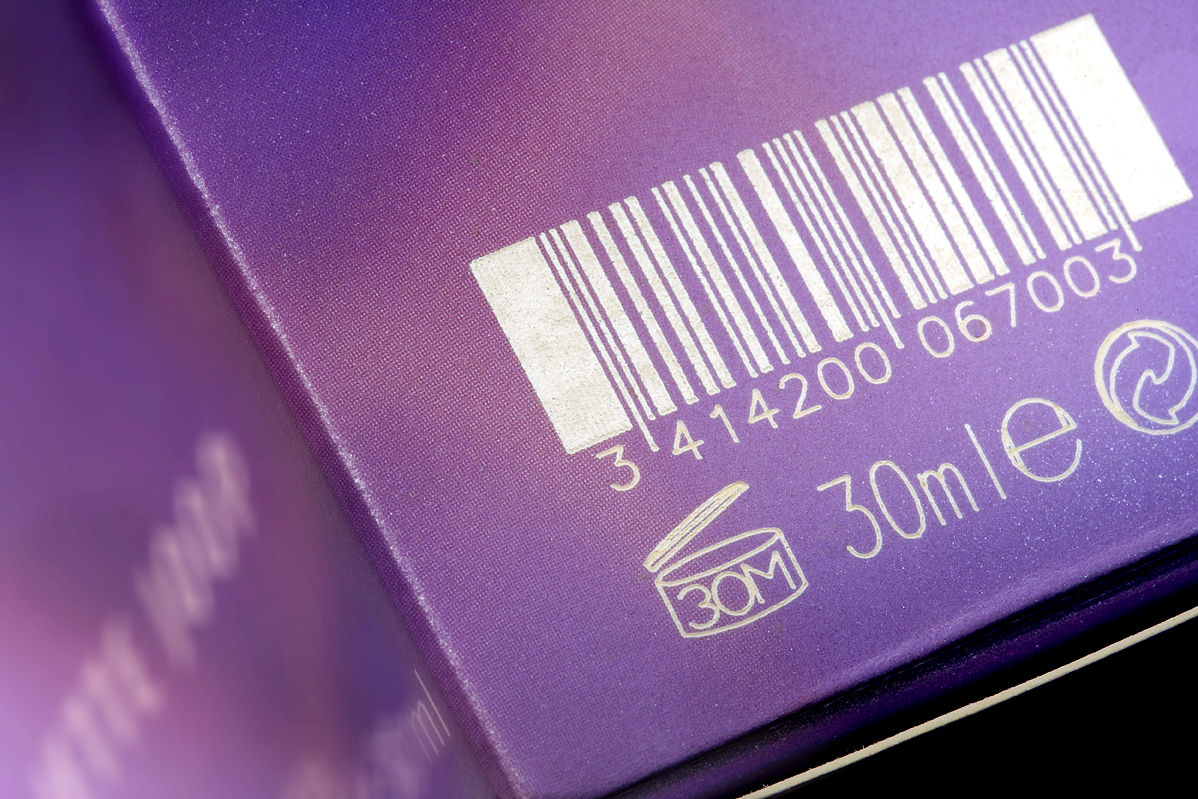
- Complex codes: Barcodes and 2D codes containing a large amount of information can be generated
Linx Laser Marking Technology
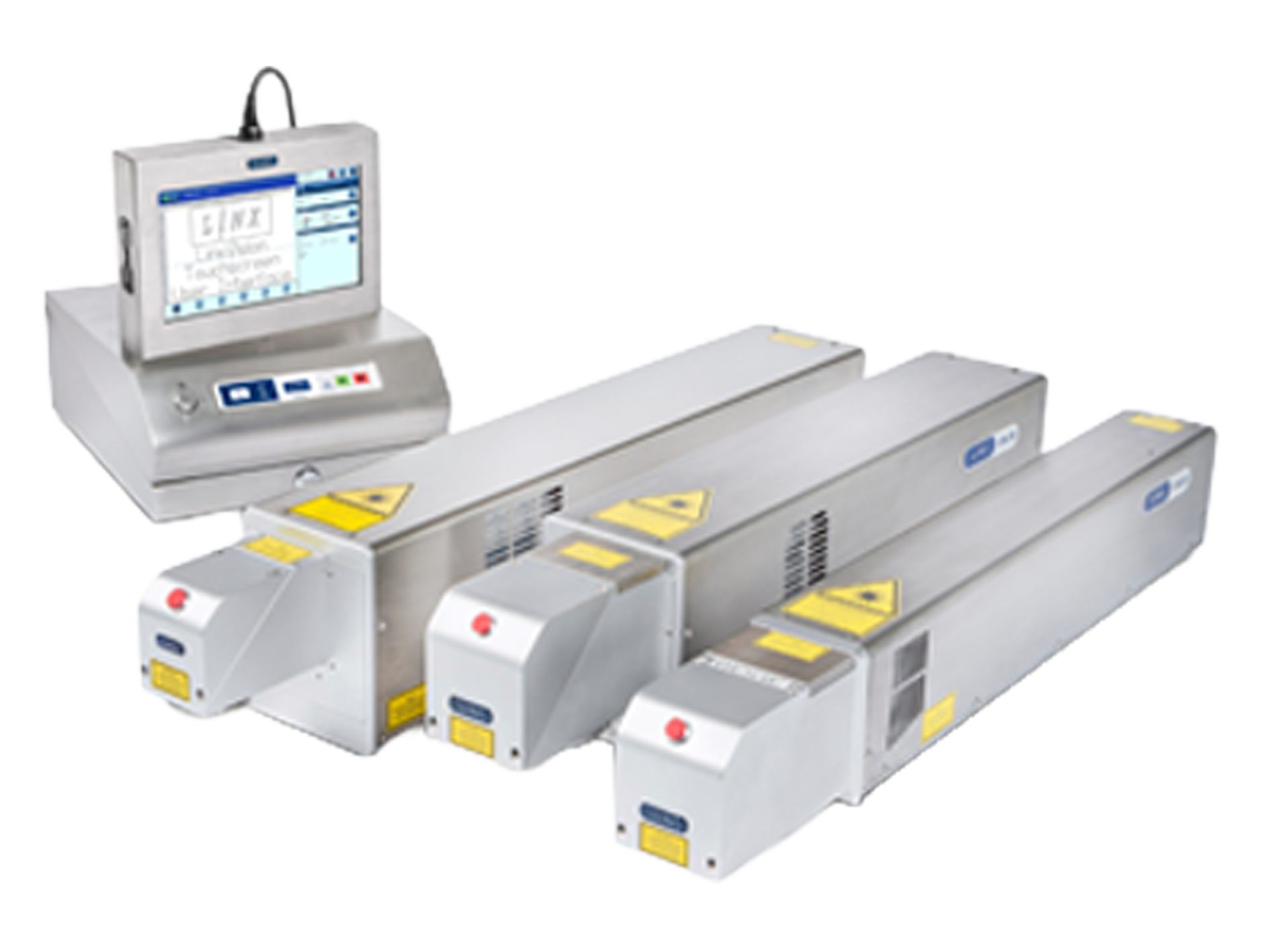
Co2 Lasers
Linx CSL Series and SL3 laser ideal for paper, card, glass and plastics
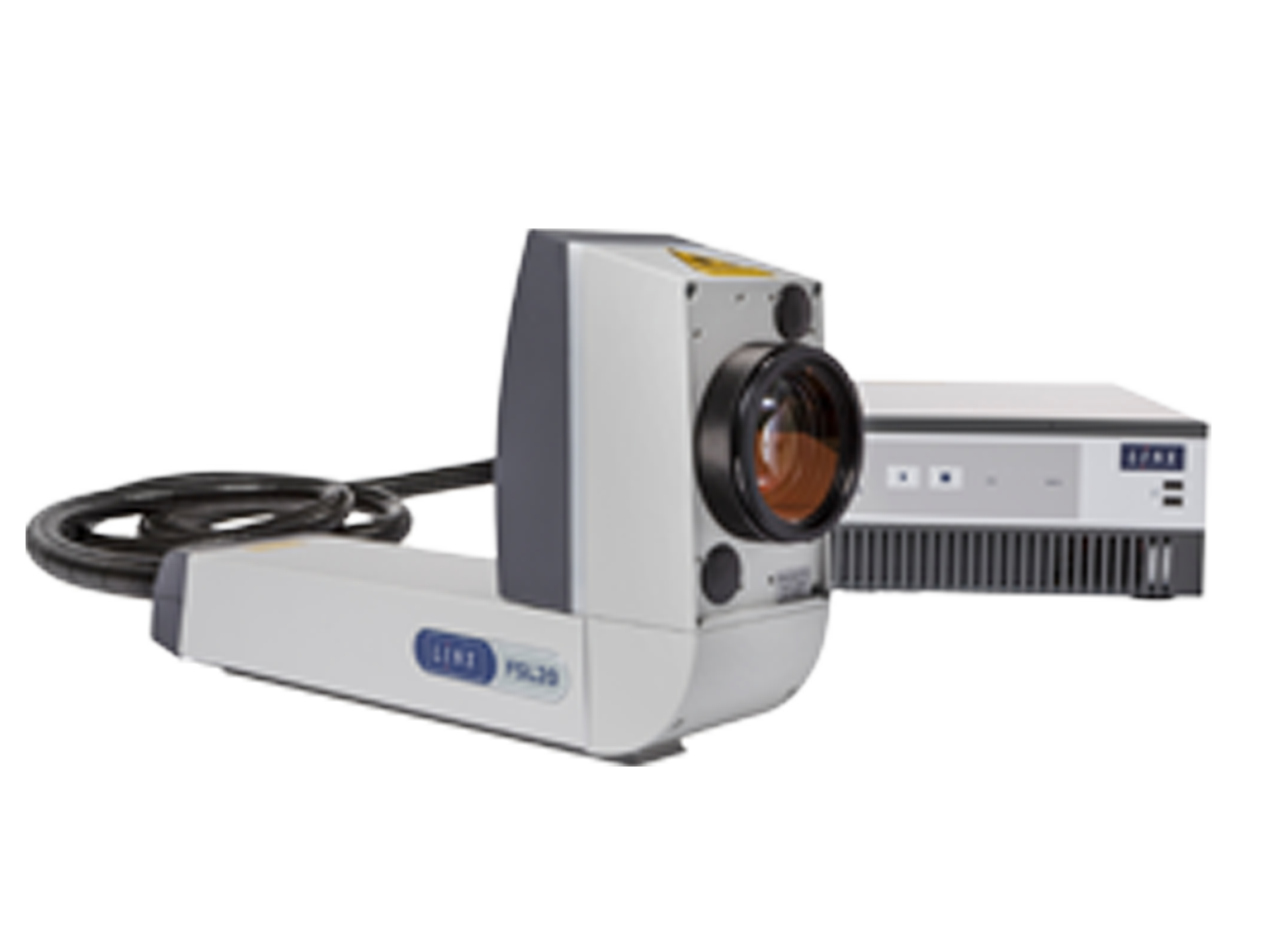
Fibre Lasers
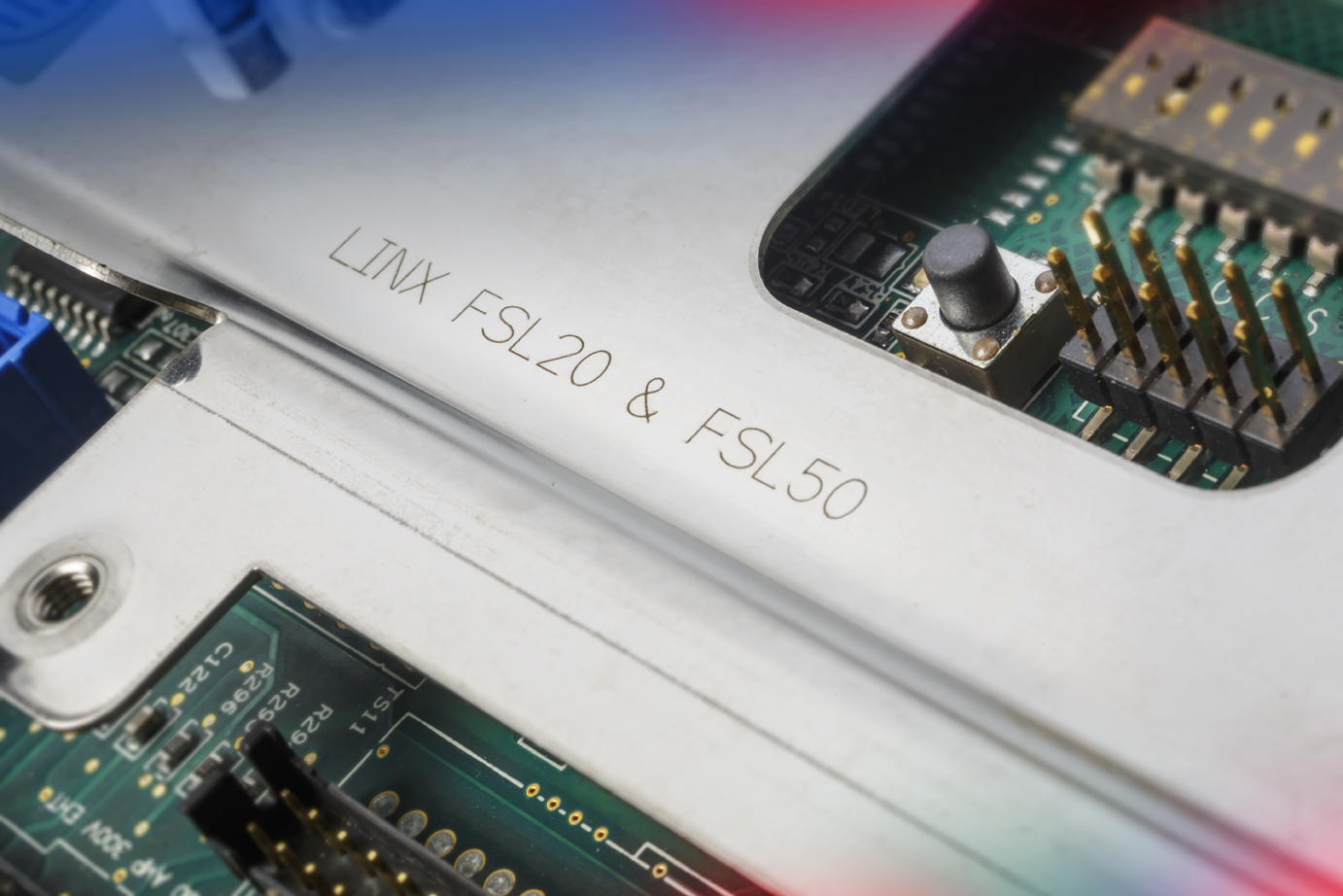
Linx FSL20 and FSL50 fibre lasers are ideal for marking metals and durable plastics
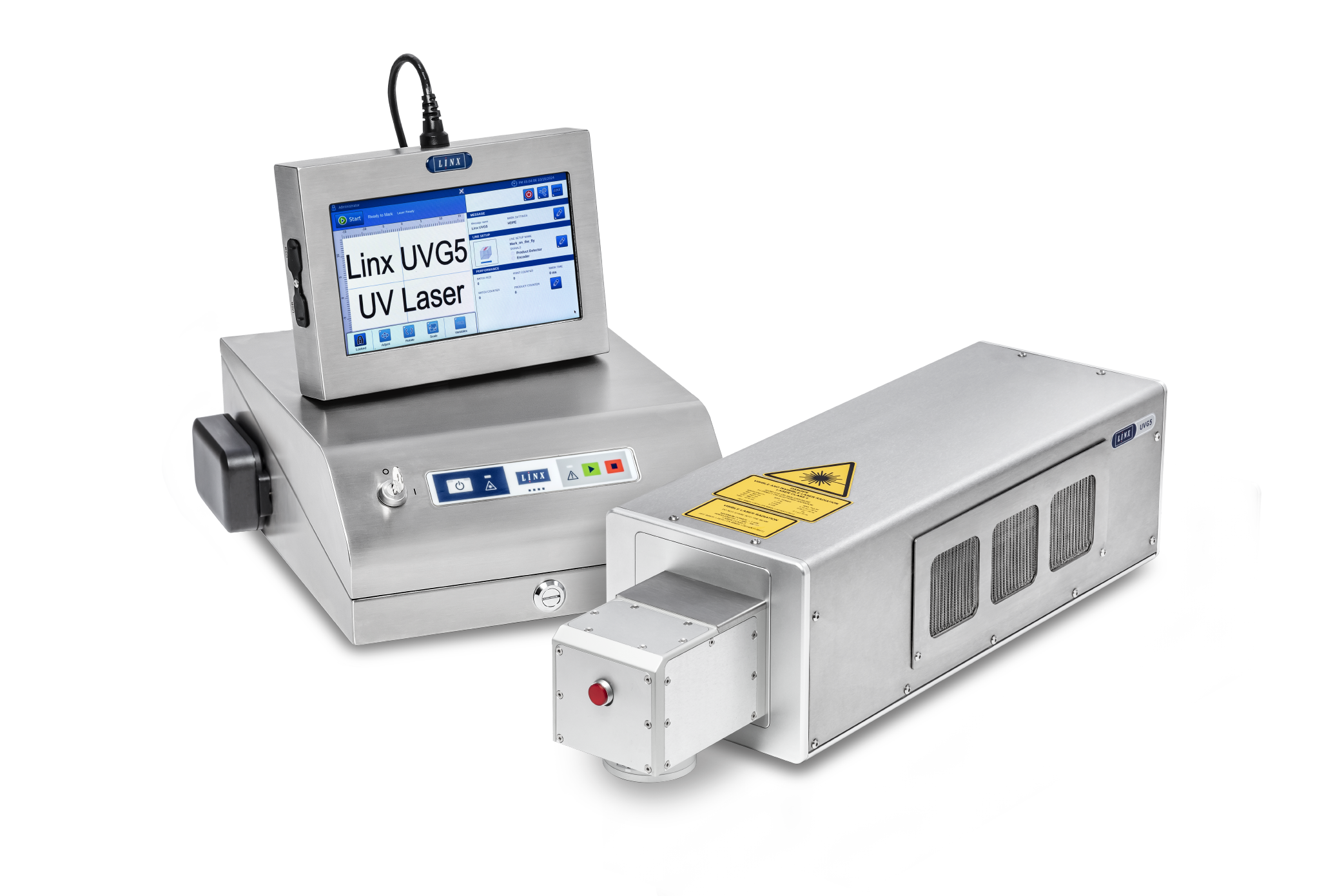
UV Laser
Linx UVG5 UV laser is ideal for marking delicate or heat-sensitive materials such as films, plastics, and glass.
Laser Safety
The lasers that are used for marking in an industrial environment are all classified as laser class 4 according to the standard EN 60825-1. Therefore, safeguarding must be integrated into a production facility for staff safety. By using a few simple engineering design rules for guarding, it is relatively easy to gain a safe overall system setup.
Performance level
Local industrial regulatory requirements (e.g. the Machinery Directive 2006/42/EC) will determine the level of safety required.
Today’s laser marking machines can fulfil the highest “performance level ‘e’ (PLe), which means an emergency circuit switches off the laser immediately. Door lock switches operate in a similar fashion: if one opens then marking stops.
Laser guarding
Although laser light is not visible, it behaves the same as visible light. A beam is only emitted in a straight direction and does not travel on curved paths – but the directed rays can go around corners by reflection off surfaces and objects. The reflected laser light from the product surface can still contain sufficient energy to be harmful to eyesight and skin. The access to the laser beam should therefore be restricted by a housing that reduces the possible laser radiation from laser class 4 to laser class 1 (eyesafe emission). The wavelength that is emitted by a fibre laser needs a guarding, so no light can exit the location were a product is marked.
Restricted access
If areas and rooms containing running lasers cannot have direct guarding installed, then access must be restricted to persons specially trained for laser radiation. These persons must wear laser safety goggles which protect the eyes from the wavelength of the emitted laser radiation in that area.