
Understanding UV laser emissions: insight from Donaldson BOFA
Learn how UV laser coding produces cleaner results — and why the right extraction system completes the picture.
Why Emissions Matter
Laser coding can release microscopic particles and vapours depending on the substrate being marked. Although emissions from UV lasers are typically lower than from other laser types, proper fume extraction remains best practice for a safe and compliant workplace.
Insight from Donaldson BOFA
Recent testing carried out independently by Donaldson BOFA, a world leader in fume extraction technology, explored emissions during UV laser coding of materials such as HDPE and polypropylene.
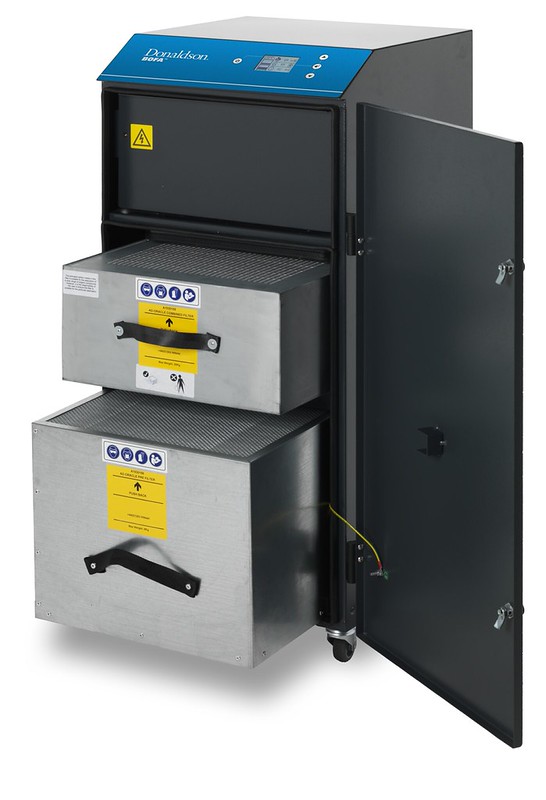
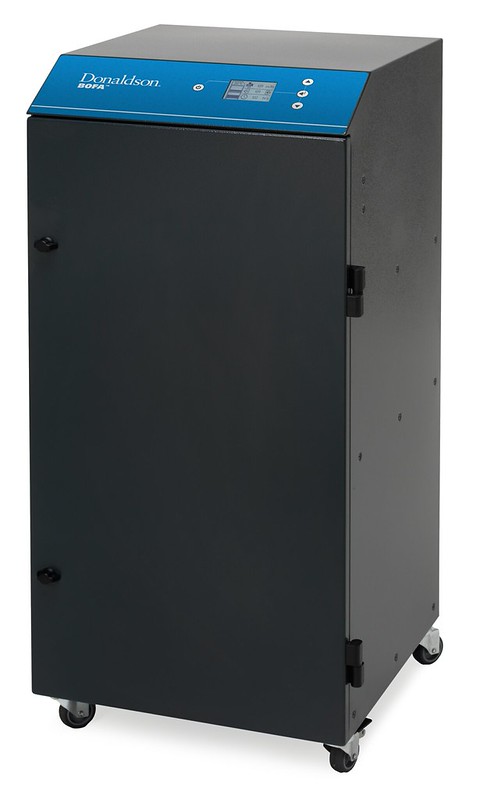
Their results showed that:
- UV lasers removed significantly less HDPE and polypropylene material than CO2.
- The average particle size generated by the UV laser was smaller for HDPE and PP.
- VOC concentrations for HDPE and polypropylene were lower for UV than for CO₂.
- Small particles can be harmful if not properly filtered, reinforcing the value of effective extraction.
(Source: Donaldson BOFA UV Laser Emissions Report, 2025 click here to download the full report)
What this means for manufacturers
- UV laser technology already offers a cleaner, lower-impact coding process.
- The addition of the right extraction setup supports compliance, operator safety, and consistent performance.
- Users may also benefit from longer filter life and lower operating costs due to reduced material removal.
How Linx supports you
The Linx UVG5 delivers precise, permanent coding across a wide range of materials — ideal for delicate substrates such as plastics and films.
Linx works closely with trusted extraction partners to help customers identify compatible solutions designed to maintain air quality and support operators’ compliance efforts.
Interested in learning more about UV laser coding and fume extraction?
Speak to our team or book a site visit with one of our laser experts today.
