

Printing on Flexible Plastics
Printing on flexible plastic materials requires technology that can ensure codes adhere to glossy and lightweight materials. Printing on flow wrap plastic can be challenging due to its smooth surface, low surface energy, which can reduce ink adhesion, combined with high-speed packaging lines that require fast drying inks and precise code placement on moving film.
Flexible plastic films (e.g. flow wrap) are increasingly used as part of sustainability strategies because they:
- Use significantly less material than rigid packaging
- Are much lighter, reducing transport emissions
- Offer a high product-to-packaging ratio
- Reduce overall resource use and carbon footprint across the product lifecycle


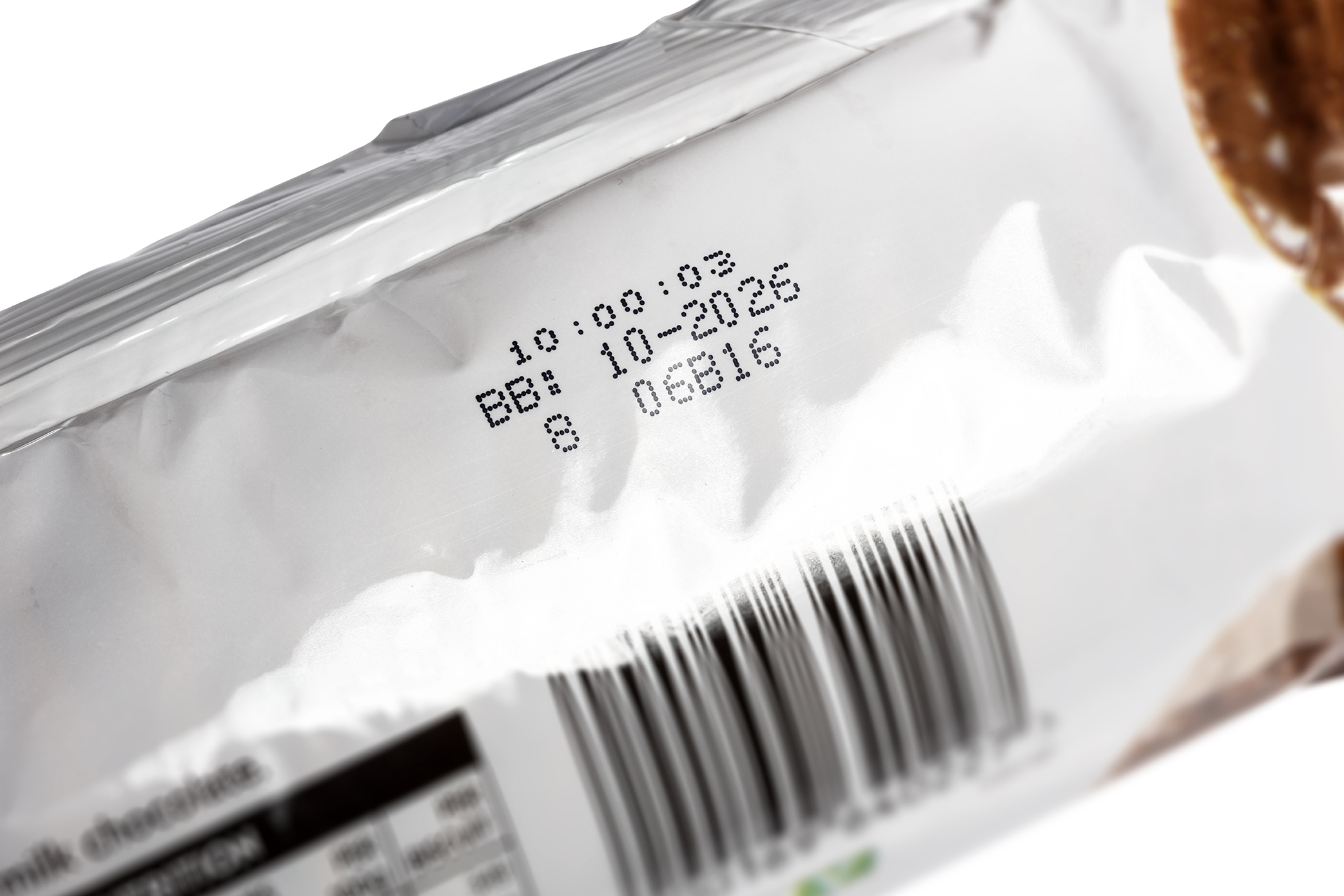
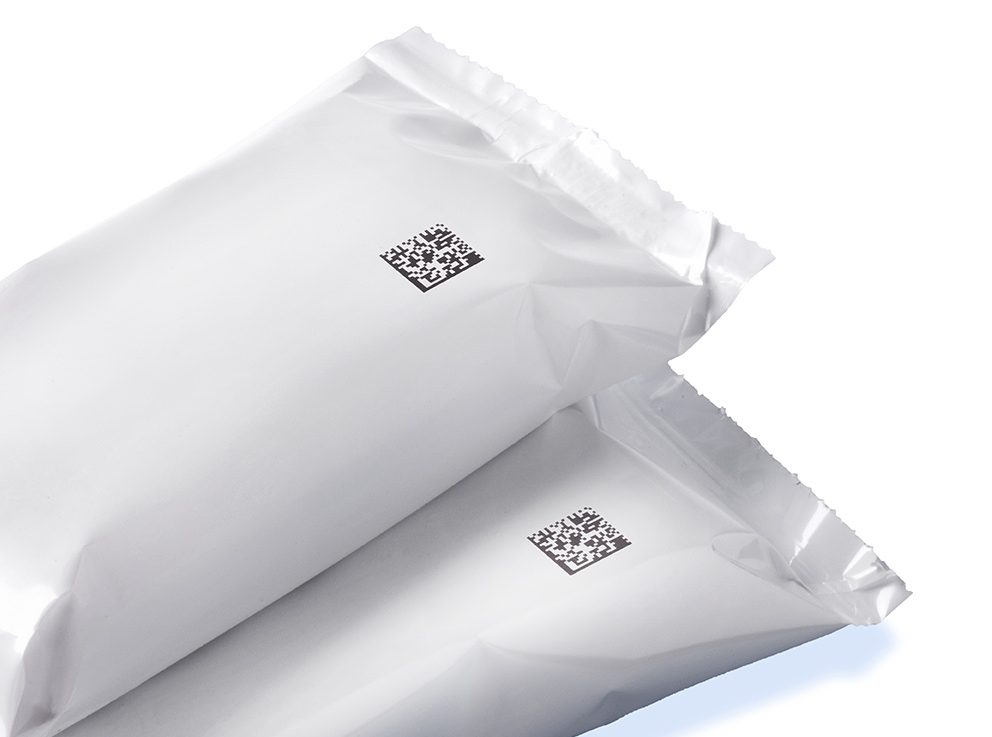
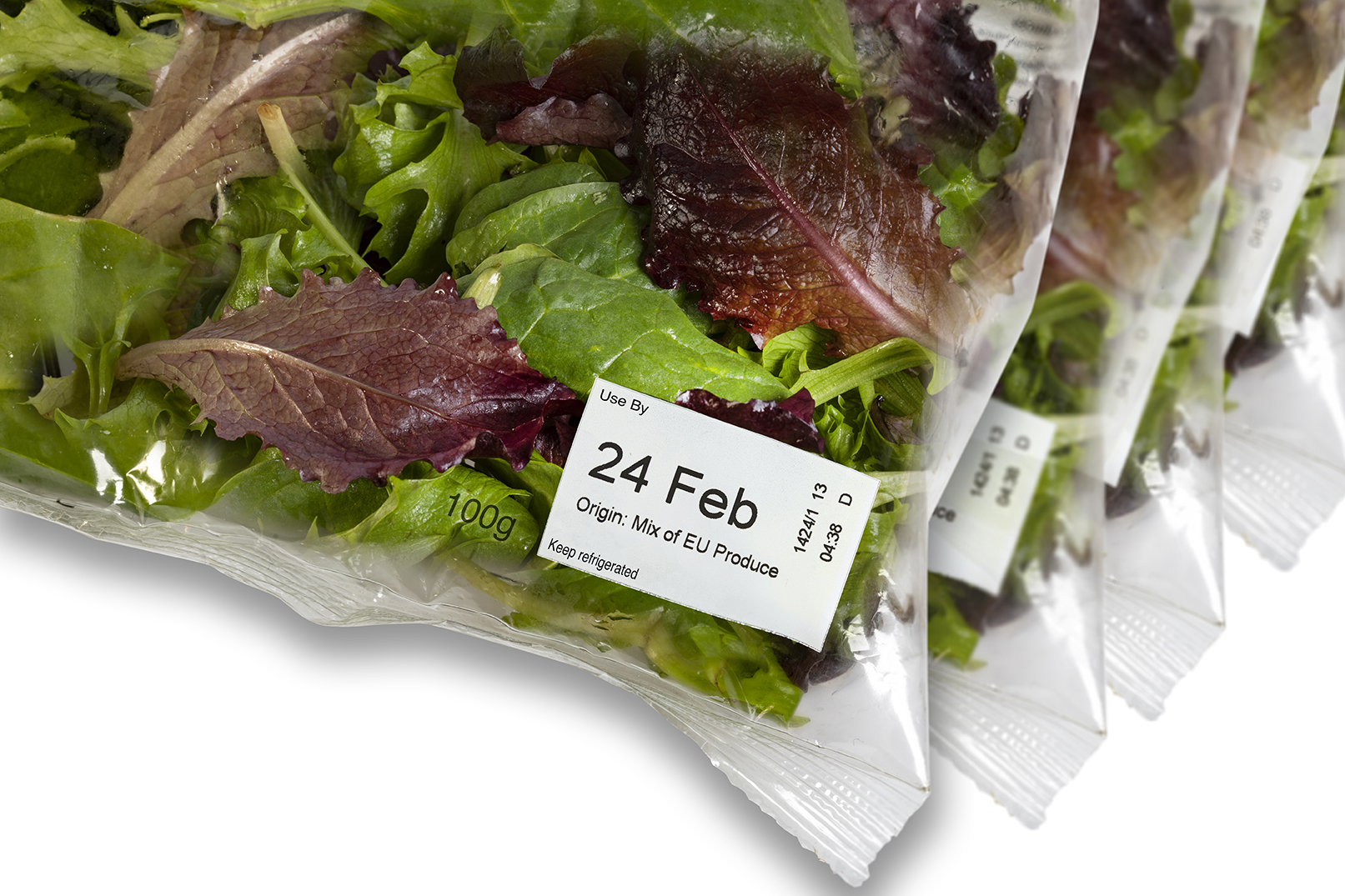
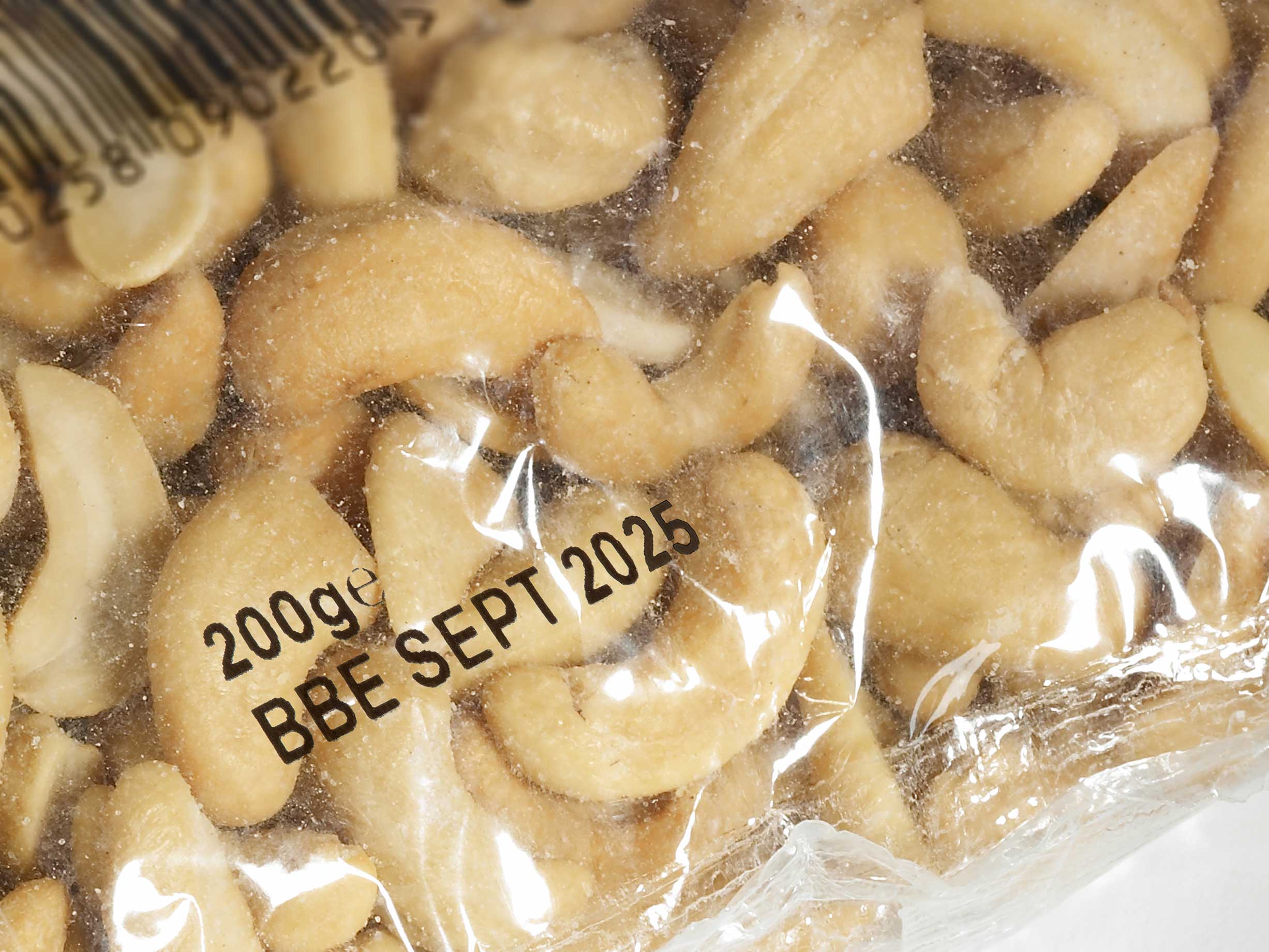
Types of Film Packaging
Flexible packaging dimensions are not unique to the specific product, which allows manufacturers to alter the size of their products without having to redesign packaging. This is a very practical solution, especially for food producers.
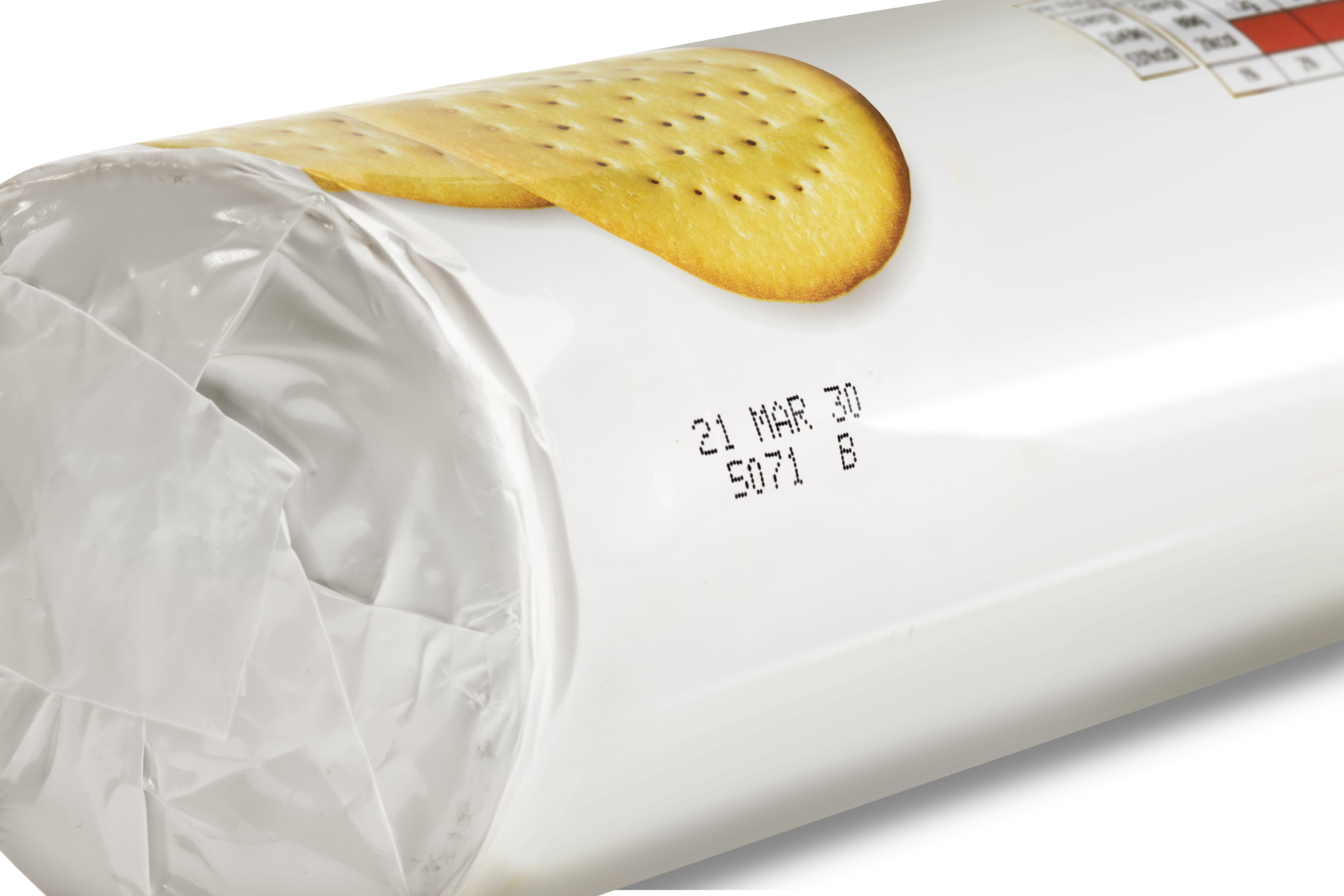
Flow-wrapping is a very popular method of packaging products. With this technology, the product moves along a flow wrapping machine that wraps it in protective plastic films or foils consisting of clear or printed polypropylene films and heat seals it at both ends.
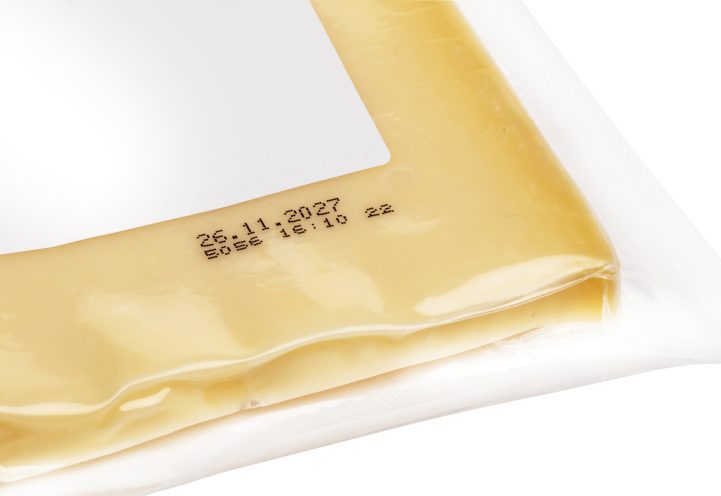
Packing products in plastic trays with film lids, that gets sealed onto the edges, packed in a protective atmosphere and often filled with a mix of gases for longevity, are very popular in the food industry. Films can also be used as vacuum packs, being wrapped around the product and adapting to its shape, saving packaging costs and space during transport.
Challenges in Flexible Plastic Marking
Smooth, low surface energy films (e.g. PE, PP) can prevent inks from bonding effectively, leading to smudging or codes rubbing off during transit.
Form-fill-seal and film converting processes often run at highly variable speeds, requiring fast-drying inks, precise code placement and consistent print quality on moving film. Coding systems must adapt quickly to changing production rates without compromising readability. and without requiring frequent operator adjustments.
Film tension, stretching and sealing during packaging can distort or misalign printed codes.
Multilayer, laminated films, coatings and barrier layers can behave differently, affecting ink adhesion and print consistency. Recycled content or slight variations in film composition can lead to changes in surface properties across batches.
Manufacturers often need to switch between different code formats, message lengths and print locations across multiple products. Managing these changes efficiently is essential to reduce downtime and minimise coding errors on high-volume lines.
Fresh food, meat and chilled products are often packed in low-temperature environments. Coding equipment must deliver consistent code quality immediately following start-up and remain stable despite rapid temperature changes throughout production.
Heat-based marking methods or incorrectly specified laser settings can deform, melt, or weaken thin plastic films.
Sealing, shrinking or handling can damage or degrade codes if inks are not sufficiently durable.
What does a Plastic Film Printer do?
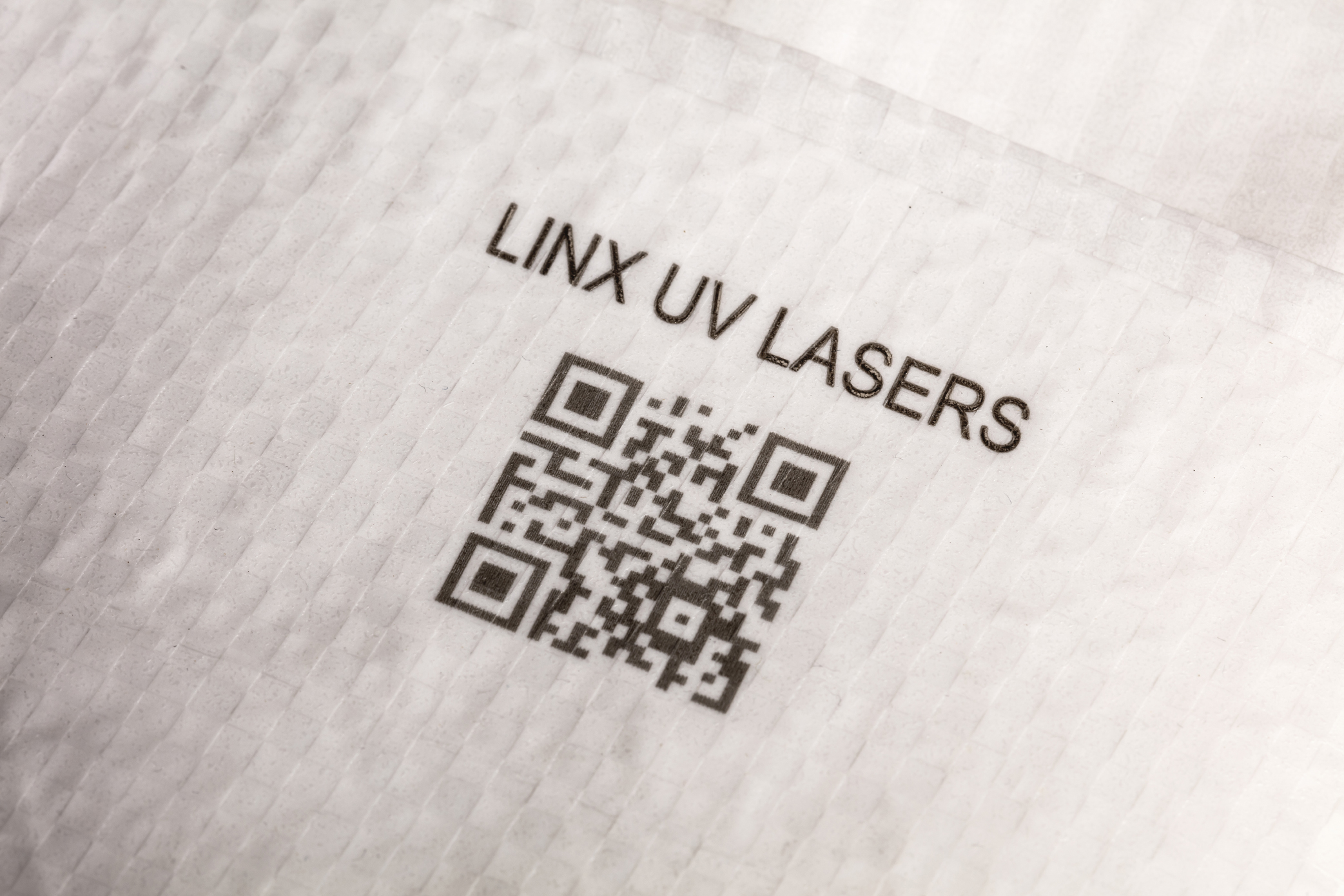
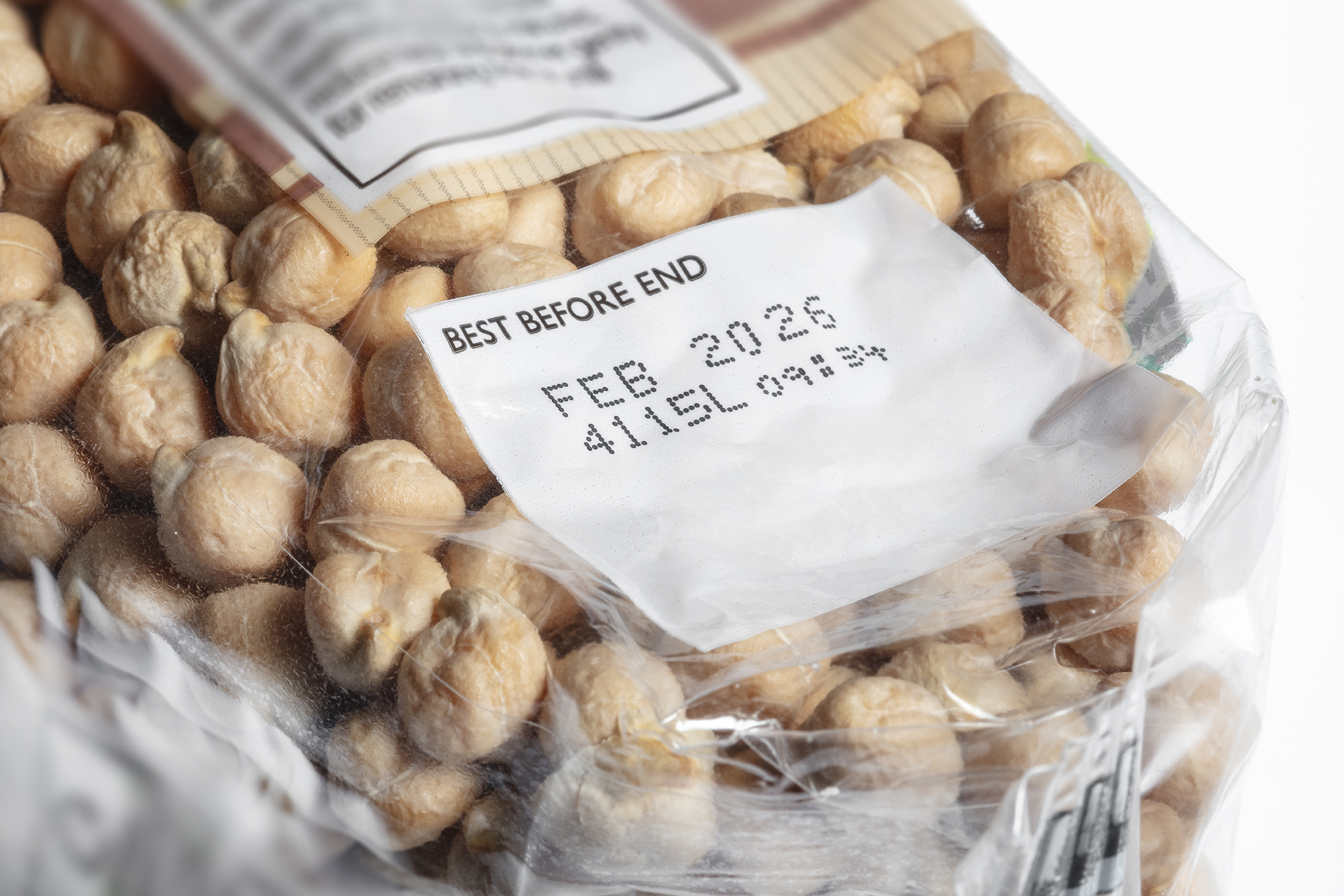
Flexible plastic film printers may need to mark at high-speeds, continuously or intermittently, and are designed to print date coding or batch identification directly onto the film. They can mark variable information as well as printing barcodes, Data Matrix and QR codes onto plastic to enable traceability, and convey quality and safety information to the consumer.
The most commonly used technologies for coding onto flexible plastic films are continuous ink jet (CIJ) , thermal transfer overprinting (TTO) and laser coders. Each has unique benefits and the one that is right for you application will depend on your product material, environment and code requirements.
Our expertise in product and packaging marking & identification can help you to reduce costs and improve production rates.


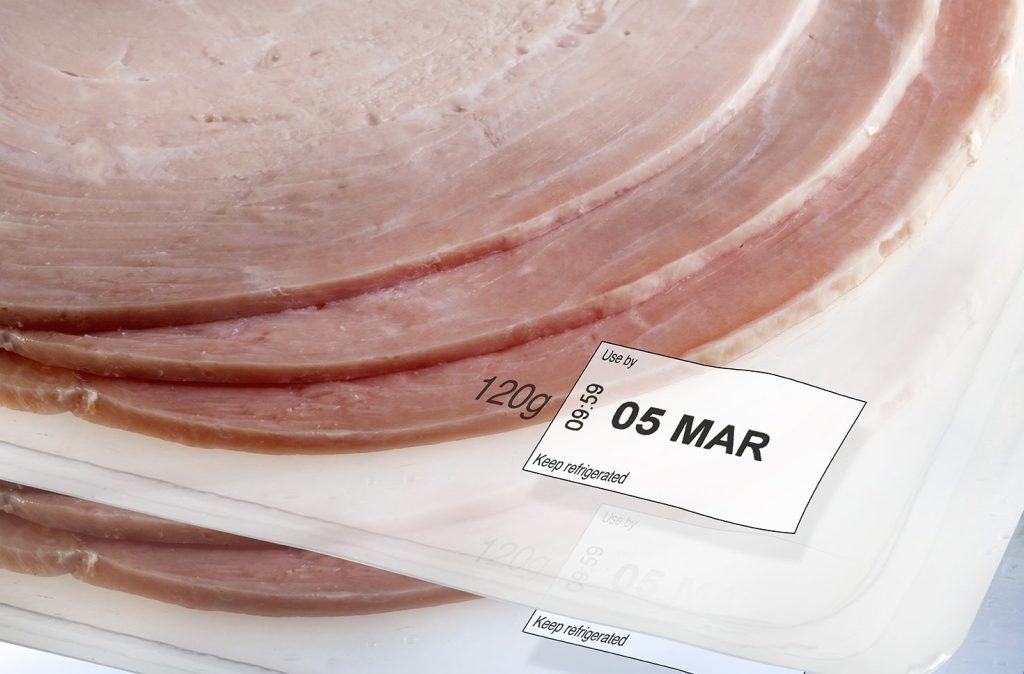
Flow Wrap Coding
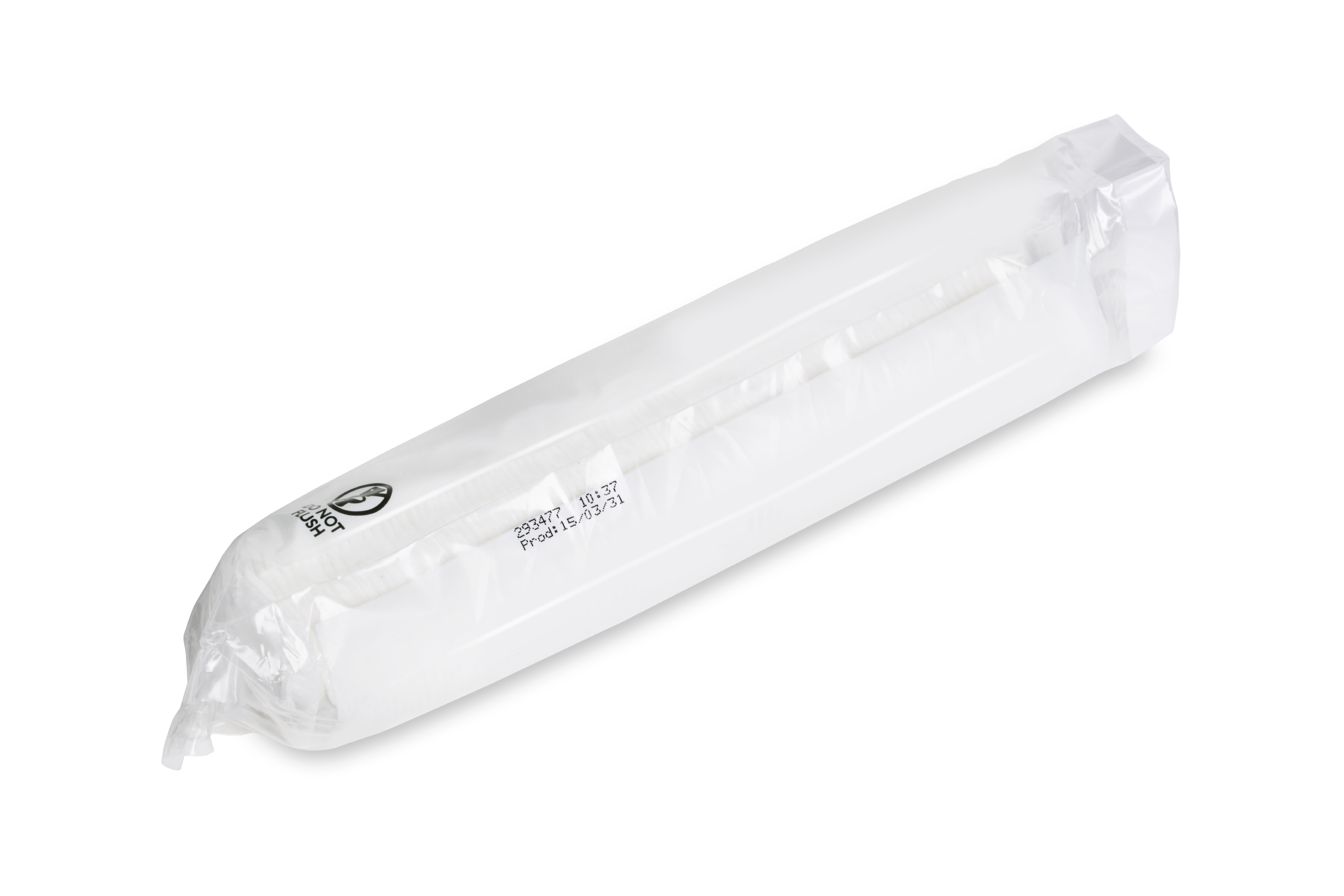
Flexible plastic films are widely used in high-speed flow wrap lines for household products, snack foods and confectionery, where products are sealed in polypropylene or laminated films.
Reliable drying performance is critical on flow wrap lines where film passes immediately over rollers and guides after coding. Fast-drying inks help prevent smudging and code transfer, ensuring clear, legible codes even at high production speeds.
Plastic Pouch Printing
Plastic film pouches and sachets are used across industries for single use packaging.
CIJ, and laser coders can mark on stand-up pounches and sachets as they move through production, before or after filling.
TTO coders can print durable codes on flexible pouches before filling.
Vacuum-packed Food Packaging
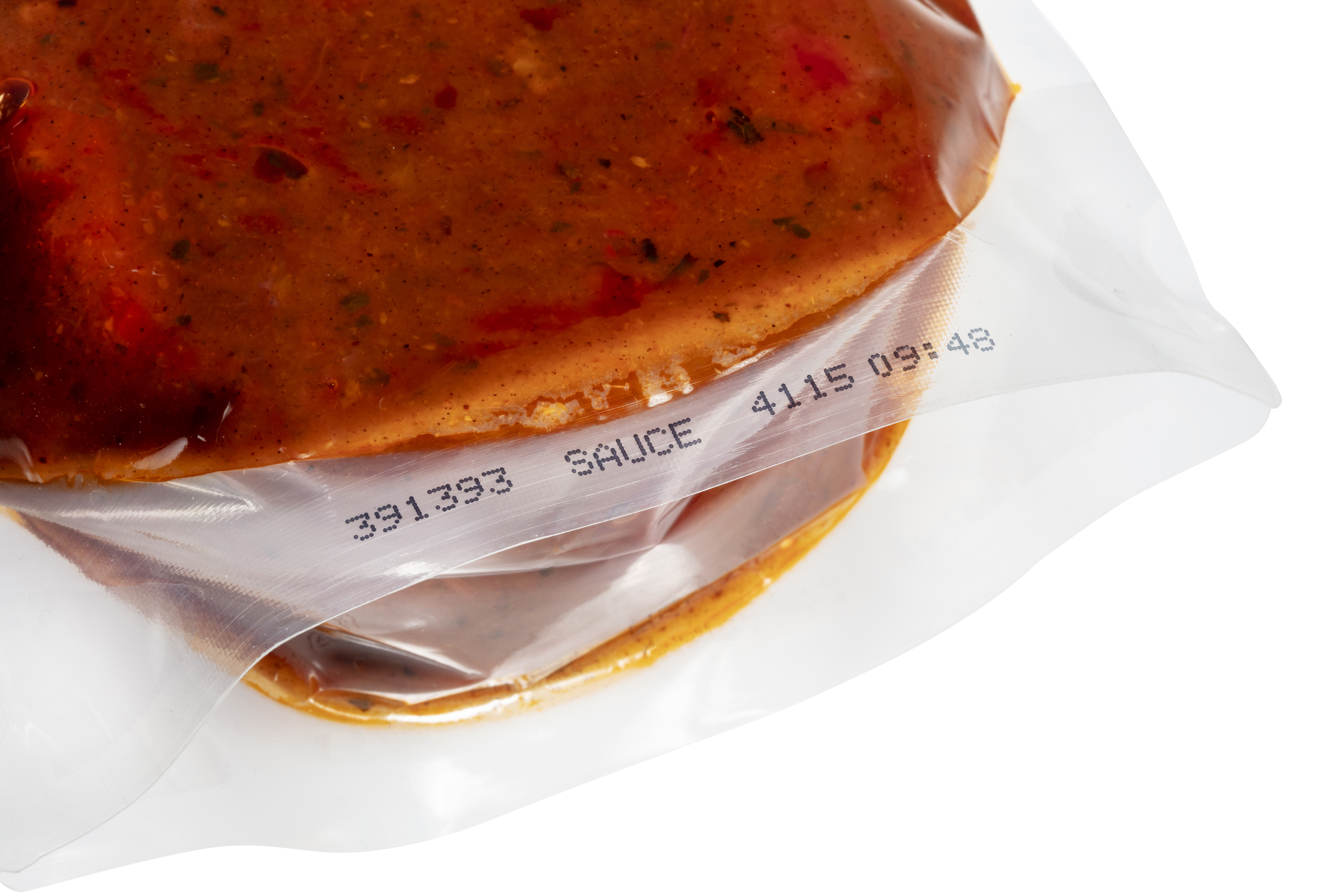
Plastic films are used to seal products in vacuum or protective atmospheres, helping extend shelf life, particularly in fresh food packaging.
Various coding technologies can be used to code the film before or after sealing, are safe for food packaging and adhere well to maintain safety and traceability from production to consumer.
Form-Fill-Seal Packaging Coding
Flexible films are widely used on both vertical form-fill-seal (VFFS) and horizontal form-fill-seal (HFFS) machines across food, consumer goods and industrial applications.
These high-speed packaging lines require coding systems that can accurately place date codes, batch numbers, barcodes and traceability information on continuously moving film. Linx solutions support a wide range of line speeds and film types, helping maintain clear, consistent codes throughout production.
For manufacturers producing multiple products, stored messages and flexible print layouts make it easy to switch between code formats while reducing the risk of operator error.
Film Rewind and Converting Operations
Flexible films are often coded during rewinding and converting processes before being supplied to packaging lines. These applications may require multiple lines of information, varying print locations and consistent code quality across a wide range of web speeds.
Linx printers can accommodate variable speeds, message placement and different message formats while maintaining reliable code quality. Flexible mounting options and configurable printhead orientations simplify integration into complex film handling systems.
What to look for in a Film Printing Machine
Code Content: The code requirements (batch numbers, dates, 2D codes etc.), the size and colour. Also think about how the code requirements may change in the future or on other products you produce.
Production processes: For durable codes the printing solution you choose must be able to adhere reliably and still be legible through your production and supply chain.
Speed: Ensure the coder you choose can keep up with your production line speed and throughput without compromising on code quality. Drying time of ink based solutions can be an important consideration especially on flow wrap applications where the film is constantly moving over rollers.
Production environment: Wet, hot, humid or non-temperature controlled production environments can affect the performance of your printing solution and the printed codes. In demanding conditions or washdown environments the IP rating of your coder may be key. If the production space is limited, investigate coders that are compact or can be mounted in different ways to fit the available space.
In food manufacturing environments, coding is often applied before the packaging film contacts the product. Compact printers with clean operation and reliable performance can help simplify integration close to open food production areas while maintaining production efficiency.
Available budget: It is vital to consider not only the initial purchase price but also the total cost of ownership, including consumables and cost and frequency of servicing. Can the product be user maintained and repaired?
Reliability: On a high-volume line, the reliability of your coder is crucial to avoid product rework, scrappage, line downtime and loss of efficiency. Frequent breakdowns can negate any benefits of a lower purchase price coder; look for automatic cleaning or self-service features.
Printers should also be capable of maintaining print quality when production temperatures change. This can be particularly important in chilled and fresh food environments, where coding equipment may experience rapid temperature fluctuations during daily operation.
Linx Technologies for Coding on Plastic Films
Our range of industrial printers offer consistent, cost-effective and efficient solutions for printing on shrink and flow wrap, pouches, flexible plastic bags such as PVC or PPE films, and more.
Browse our recommended technologies from the options below:
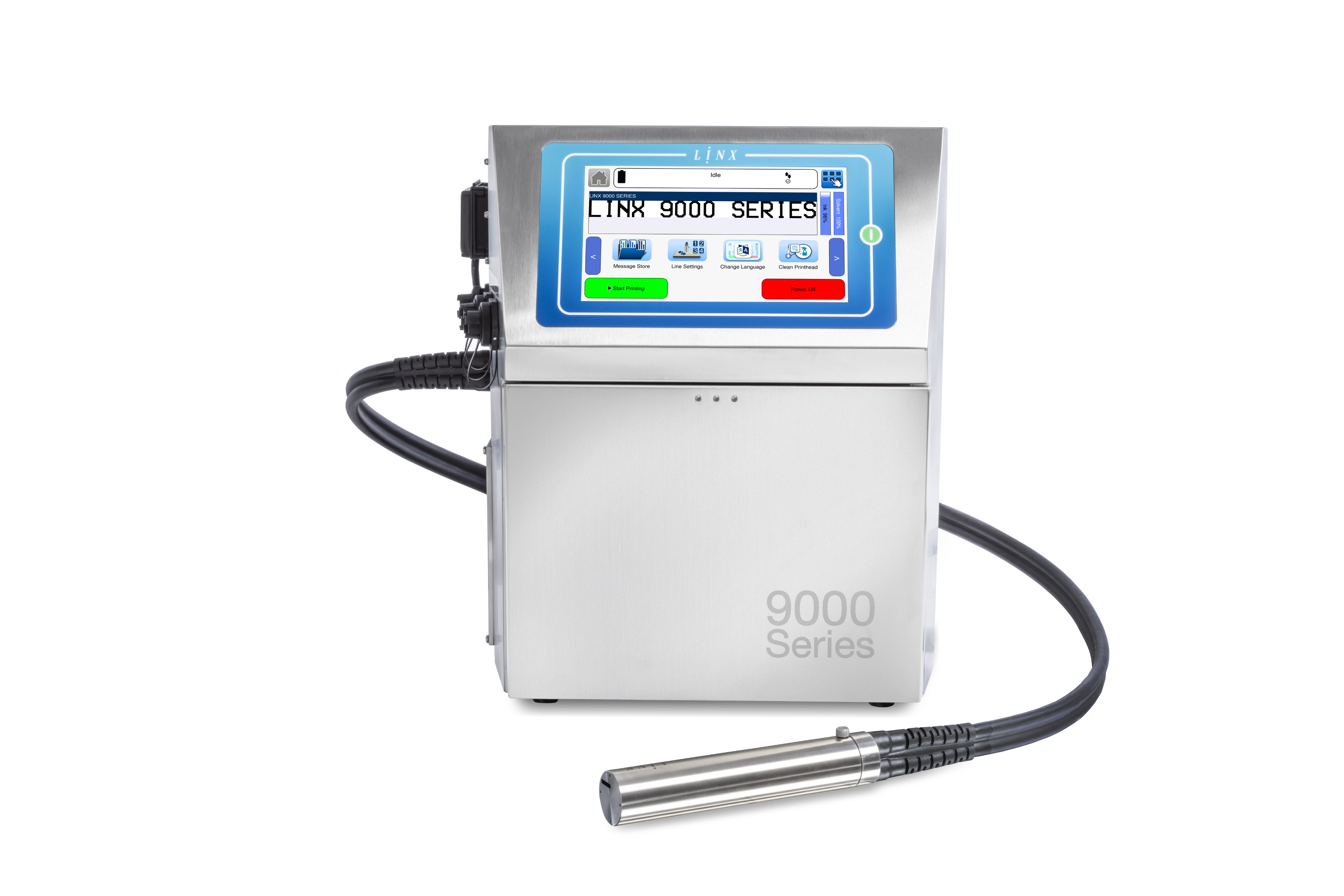
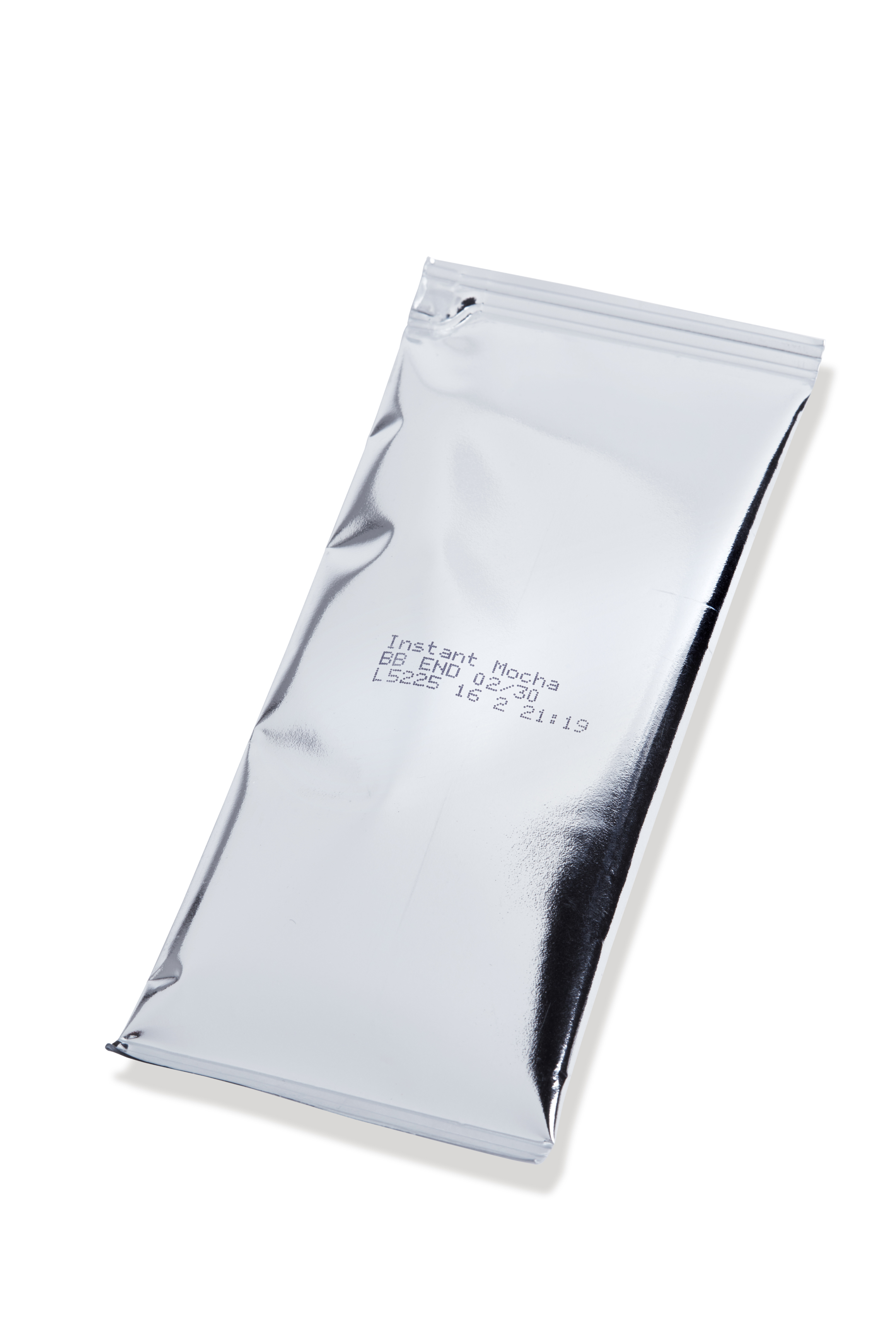
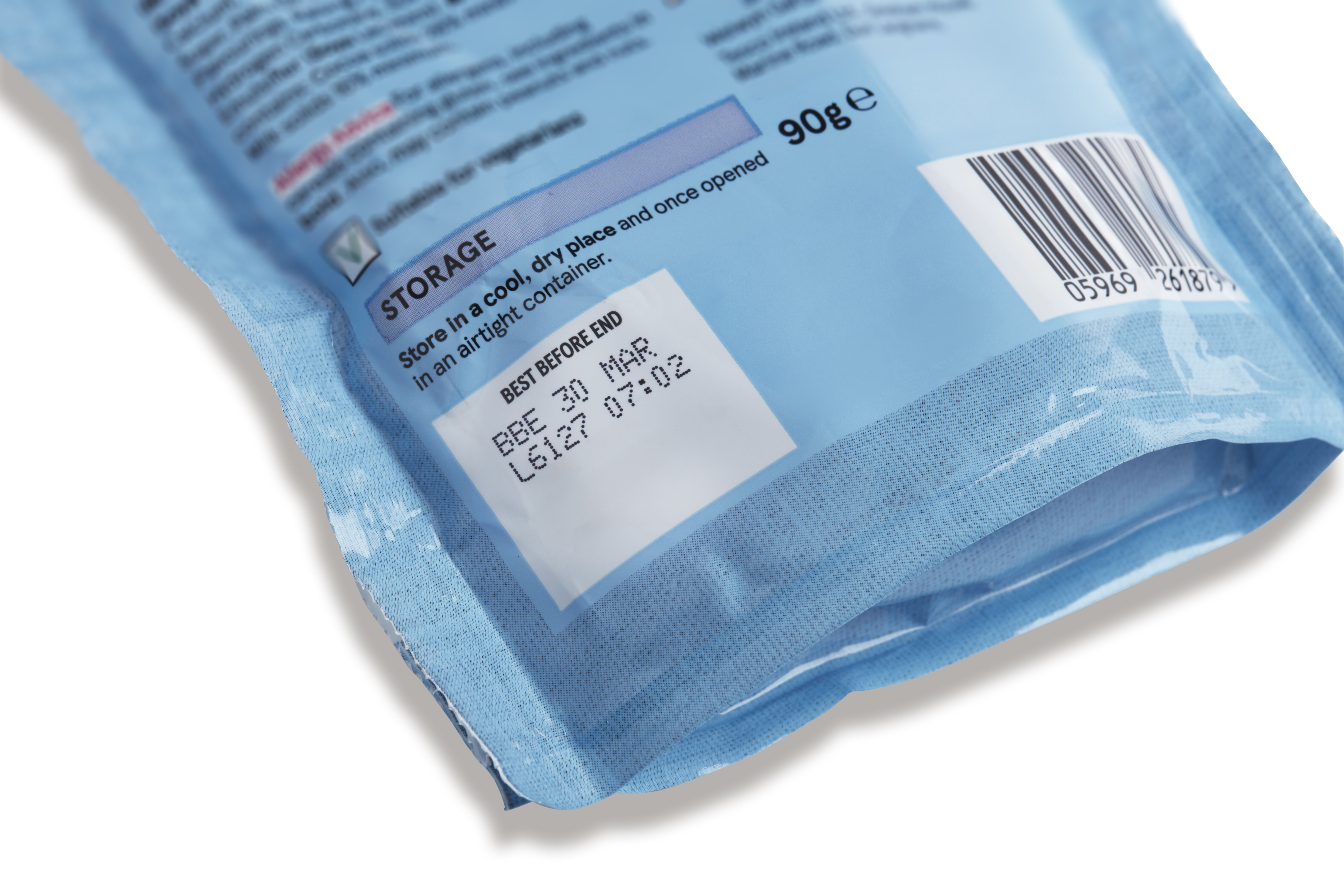
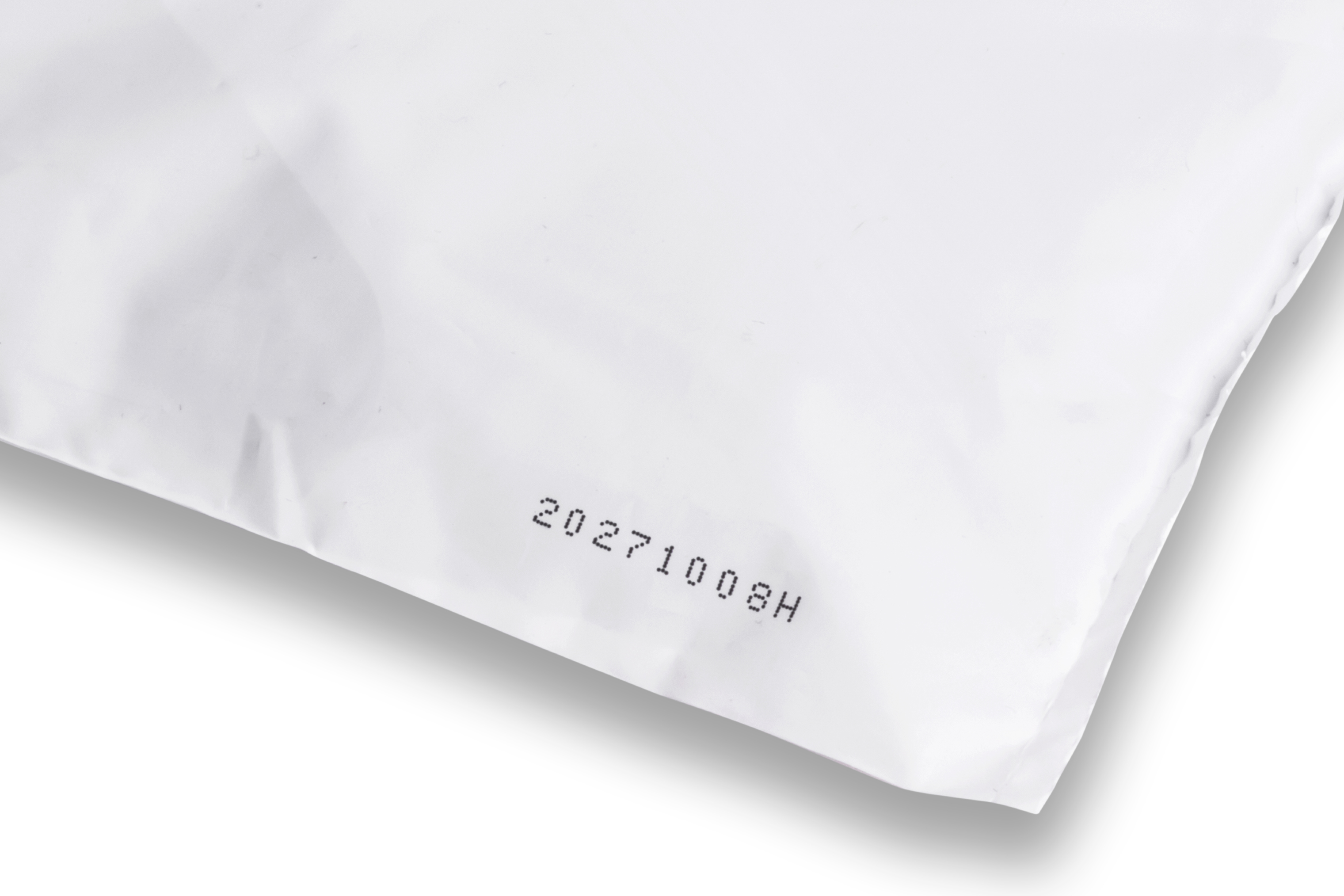
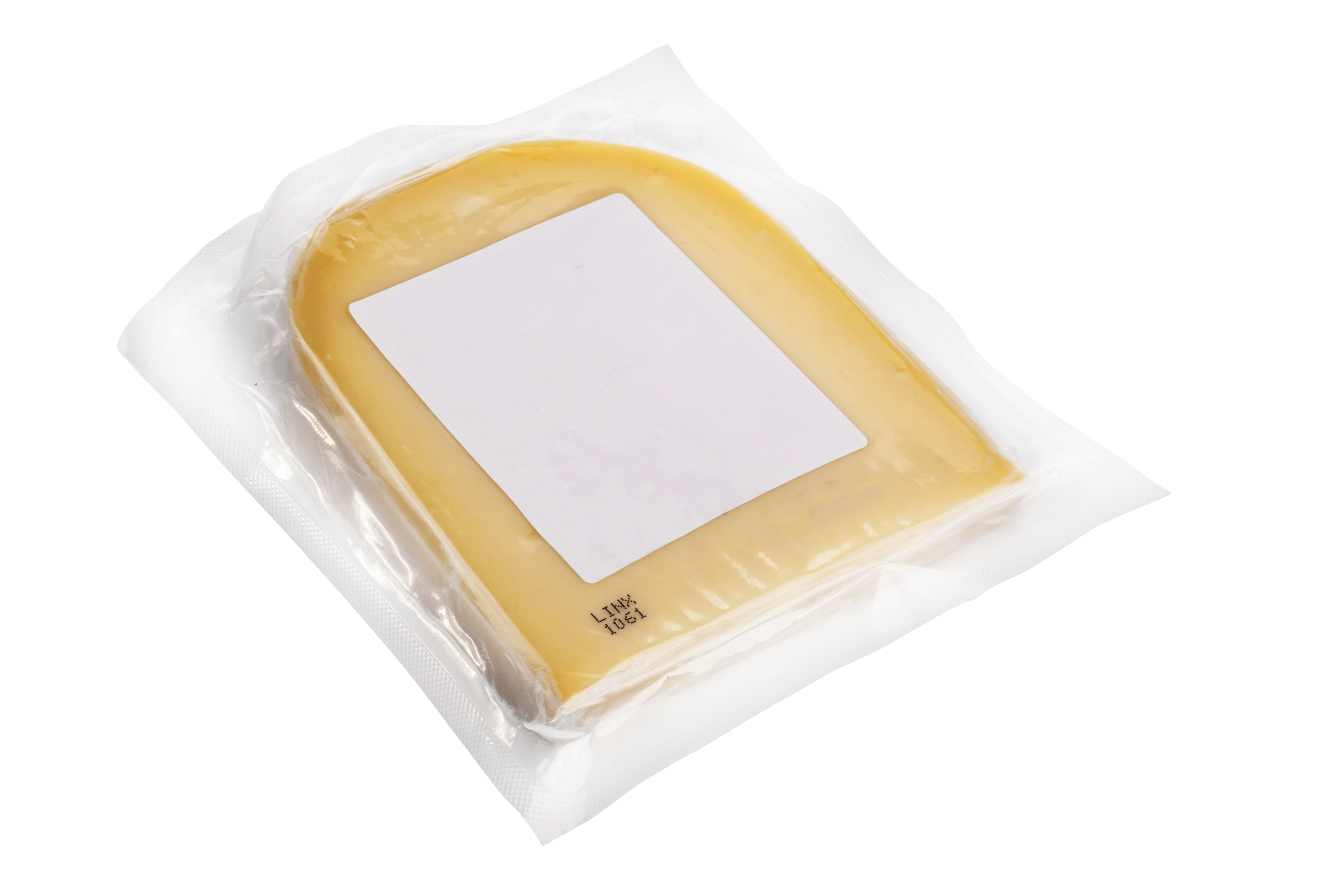
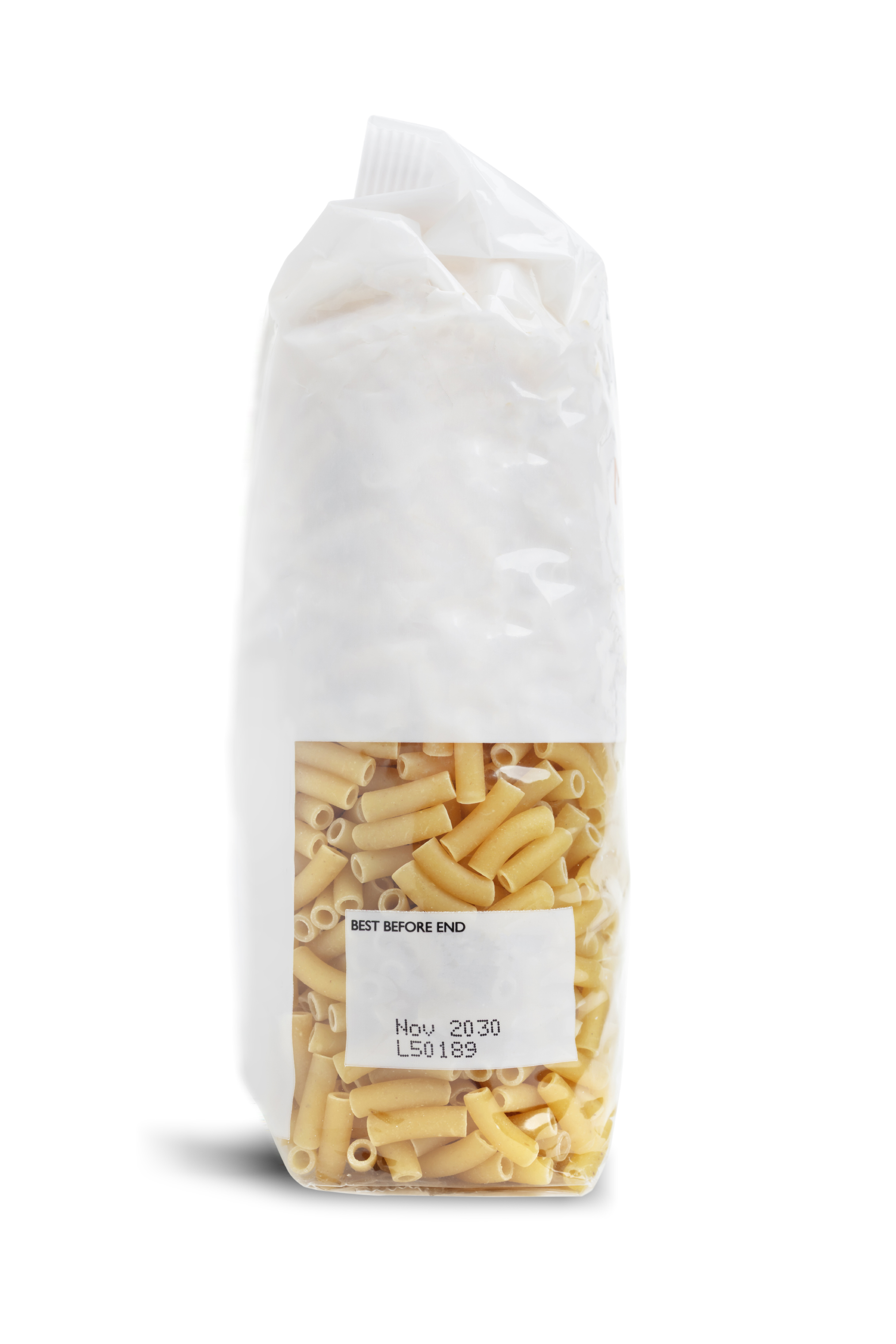
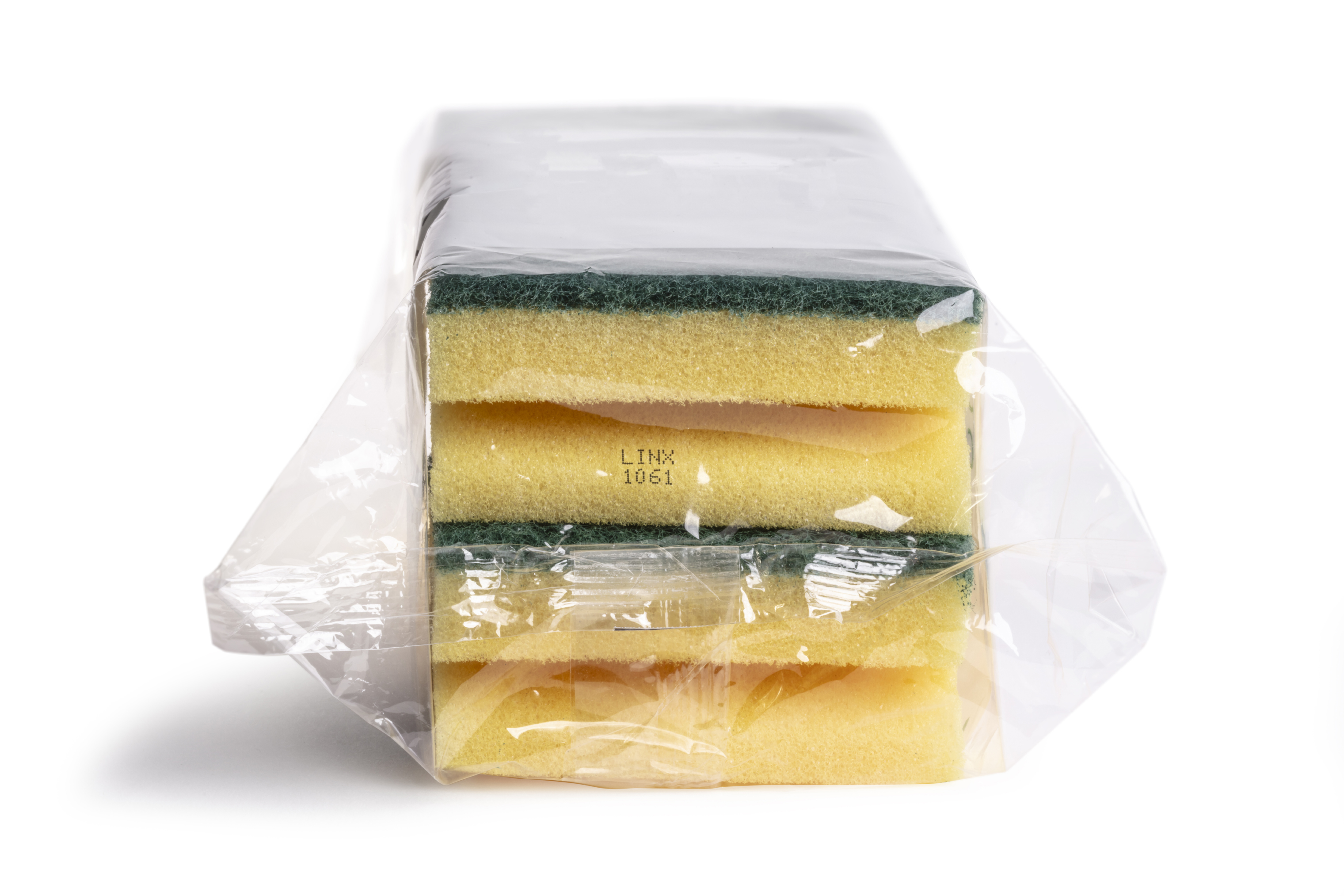
Linx 9000 Series
Reliable fast-drying inks
Features
Suitable for 24/7 operations | Data Matrix and QR codes |GS1 compliant 2D codes | GS1 code builder | High-speed production | Print up to 6 lines | Black and coloured inks
Key Benefits:
- Excellent print on uneven and any orientation
- Reliable operation in hot, dusty, wet, or non-temperature controlled environments
- High adhesion specifically designed for flexible plastics, able to print through oil or grease, fast drying and safe for food packaging
- IP65 (option) for ingress protection and washdown environments
- Consistent code quality across variable line speeds and changing production temperatures
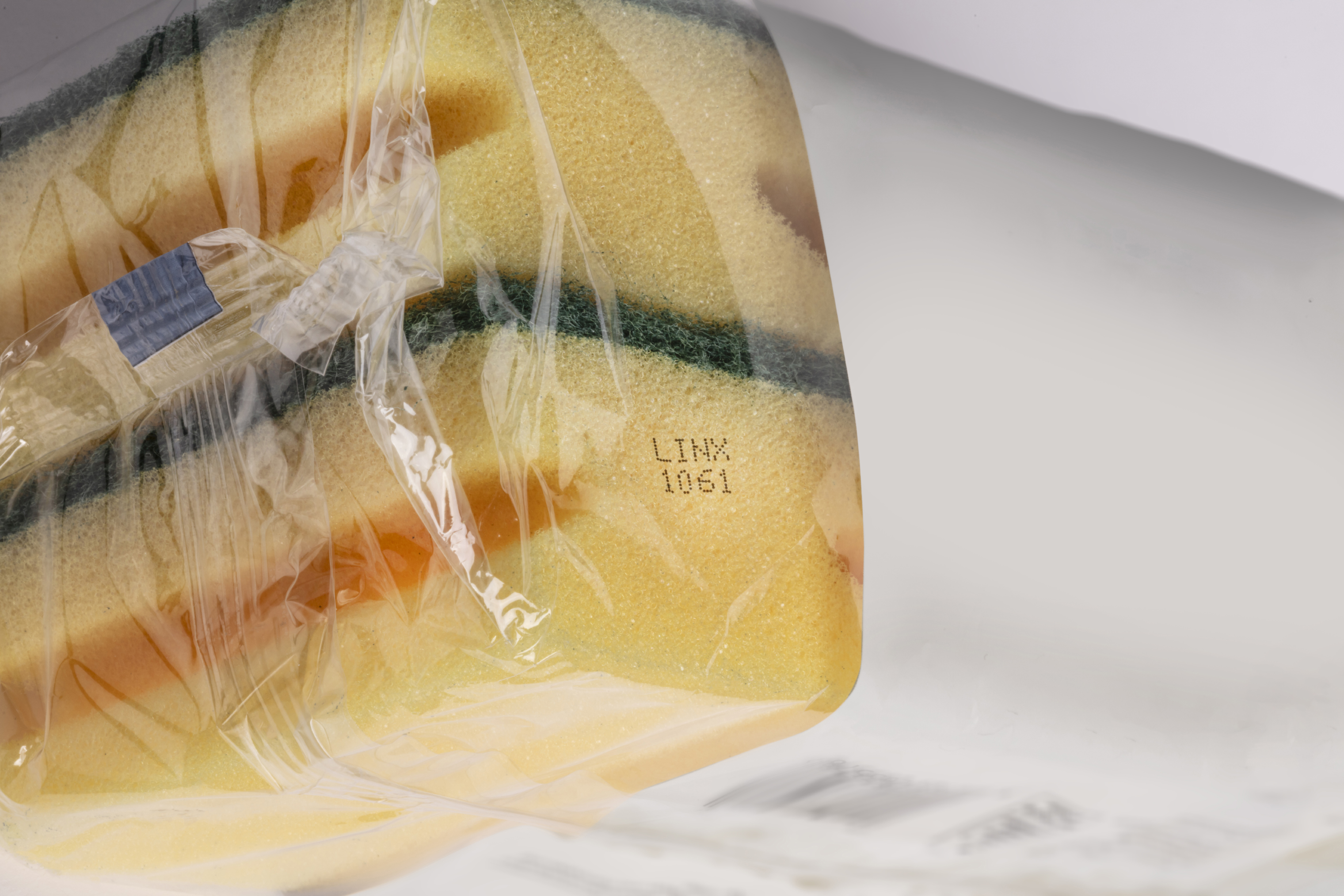
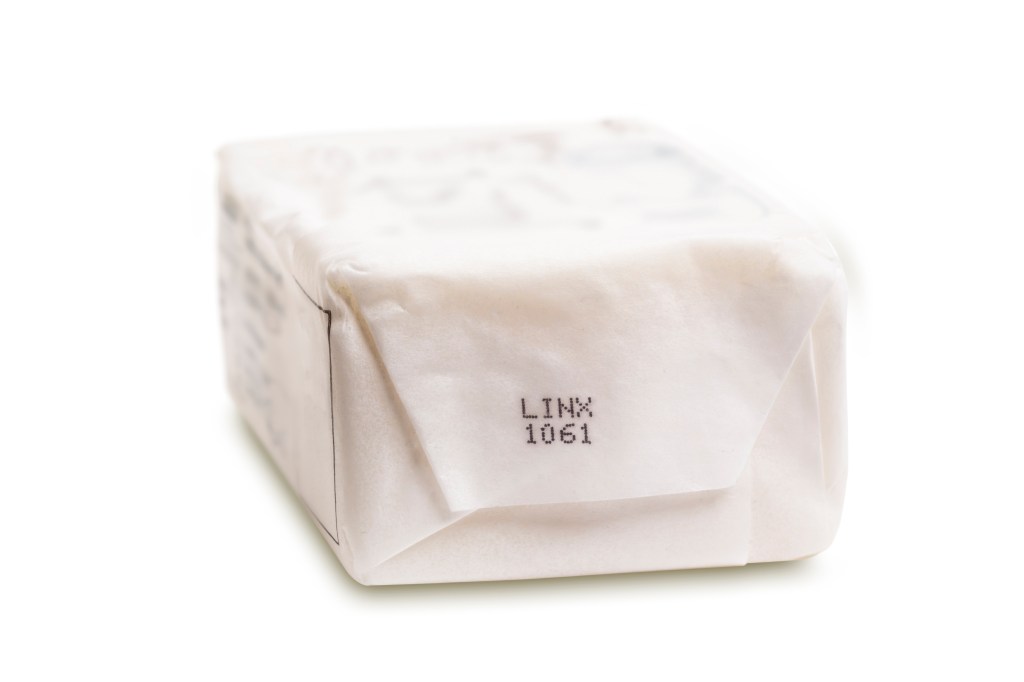
Development of 1061 Ultra Strong Plastic-Adherent Ink
The growth of flexible plastic packaging—including mono-material films and laminates—has increased the risk of poor code adhesion on low surface energy plastics such as PP and PE. Customers reported failures in QA tape tests and code degradation during handling, particularly in demanding applications like pet food packaging.
To address this, Linx developed the 1061 ultra-strong plastic-adherent ink, specifically engineered to pass tough tape tests on plastic films and deliver durable, high-adhesion codes. It adheres reliably to both flexible films and rigid plastics, with excellent resistance to rubbing and abrasion, helping ensure codes remain clear and legible throughout production and distribution. Additionally, 1061 has been proven to resist thin oil contamination, enabling reliable coding on food packaging where surfaces may be exposed to oils or residues during processing.
Available on Linx 9000 Series CIJ printers
Learn more about the challenges in marking plastics
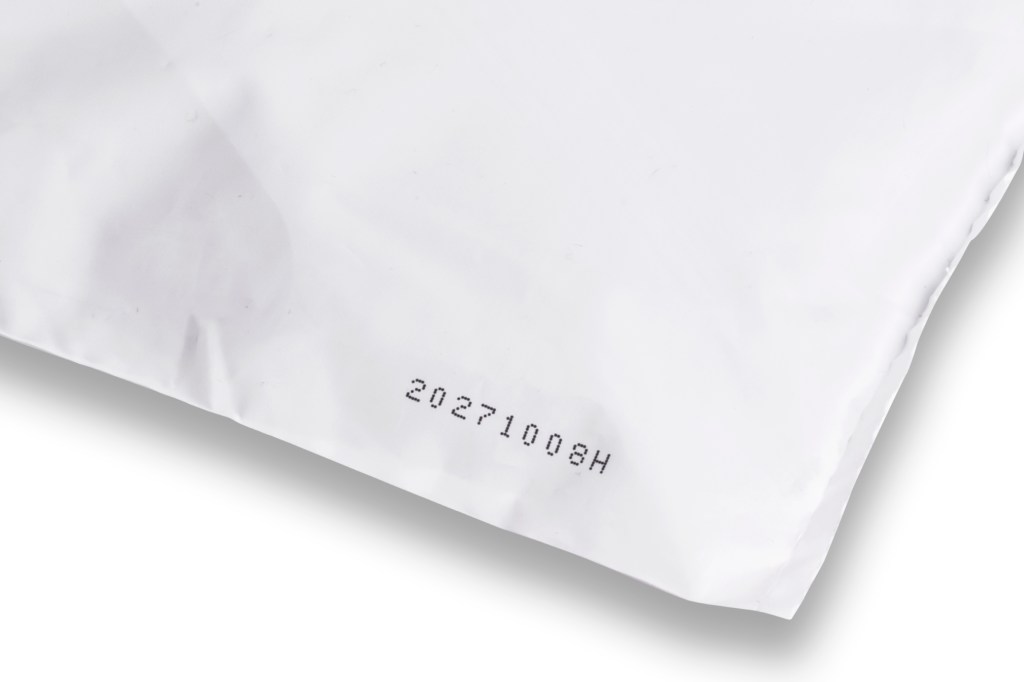
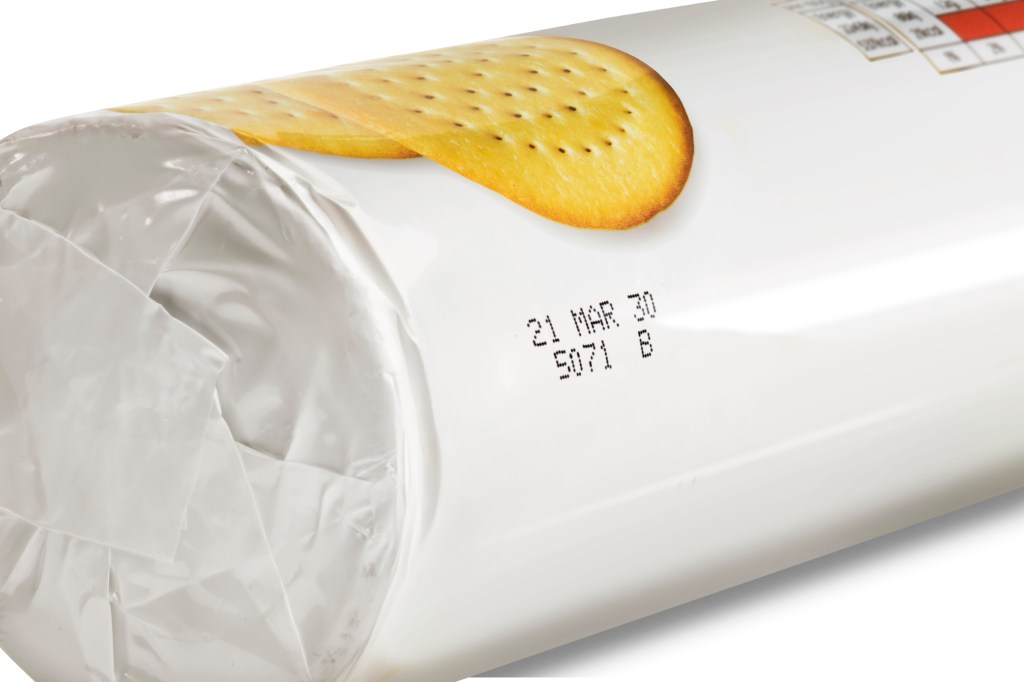


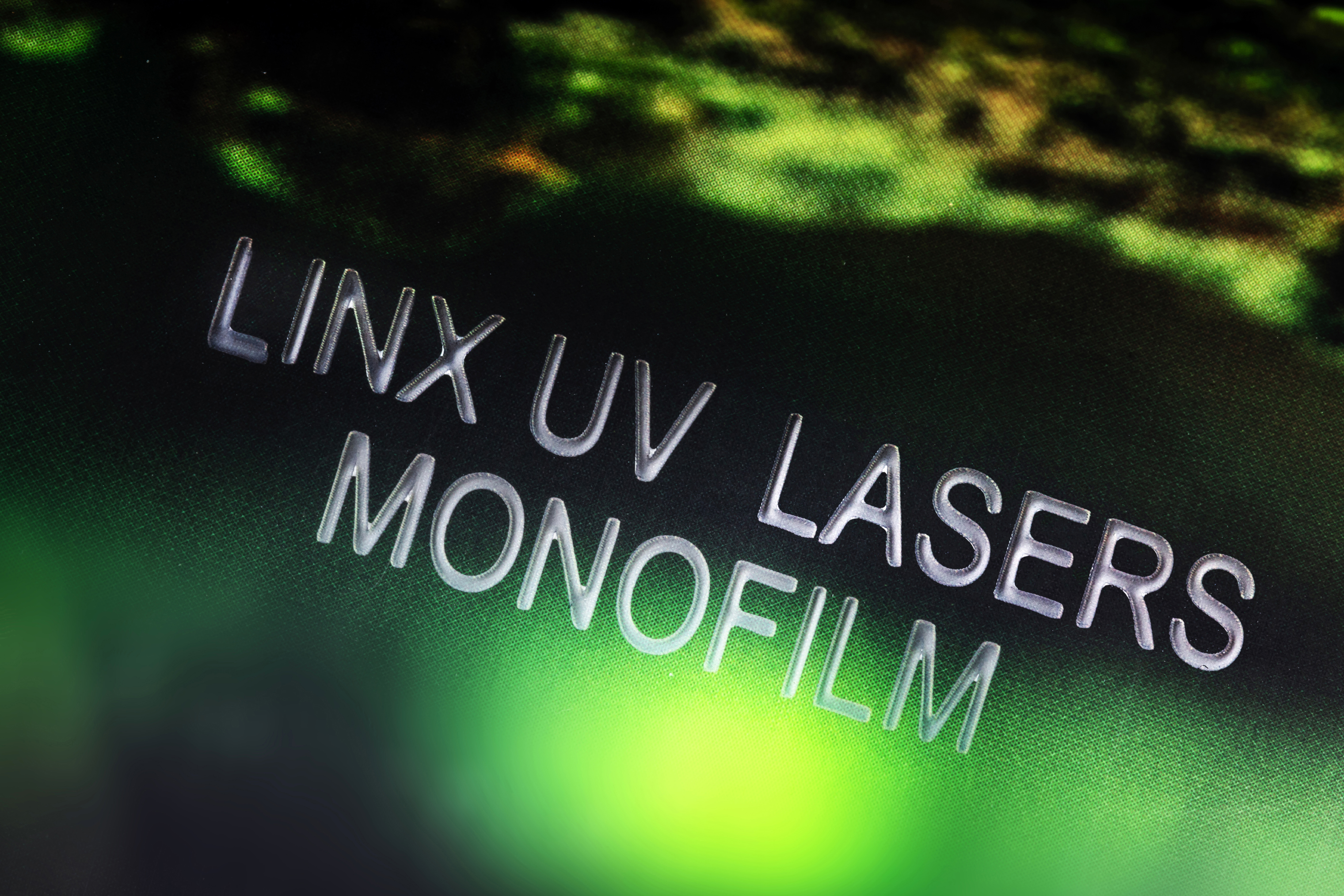

Linx UVG5
UV laser for fast throughput
Features
Suitable for 24/7 operations | Data Matrix and QR codes |GS1 compliant 2D codes | High-speed production | Batch and date coding | Easy to integrate
Key Benefits:
- Code up to 2000 characters/second, up to 600m/min
- Permanent coding that cannot be removed or smudged
- Ideal solution for flexible plastics due to reduced thermal stress applied to the packaging.
- High-contrast codes
- Zero consumables
- IP65 option for washdown or humid environments
Minimising Thermal Stress
UV lasers operate at a much shorter wavelength than other laser technologies, which is highly absorbed at the surface of plastics. Instead of relying on heat to melt or burn the material, the laser energy is absorbed at a molecular level and breaks chemical bonds directly in a photochemical process.
This is often called “cold marking”, because very little heat is generated. As a result, there is minimal heat-affected zone, significantly reducing the risk of melting, warping, or deforming thin or flexible substrates. Because UV lasers transfer far less heat to the material, they deliver clean, high-contrast marks without burning or deforming the plastic, maintain film integrity without damaging surface layers and prevent warping or weakening of thin substrates.
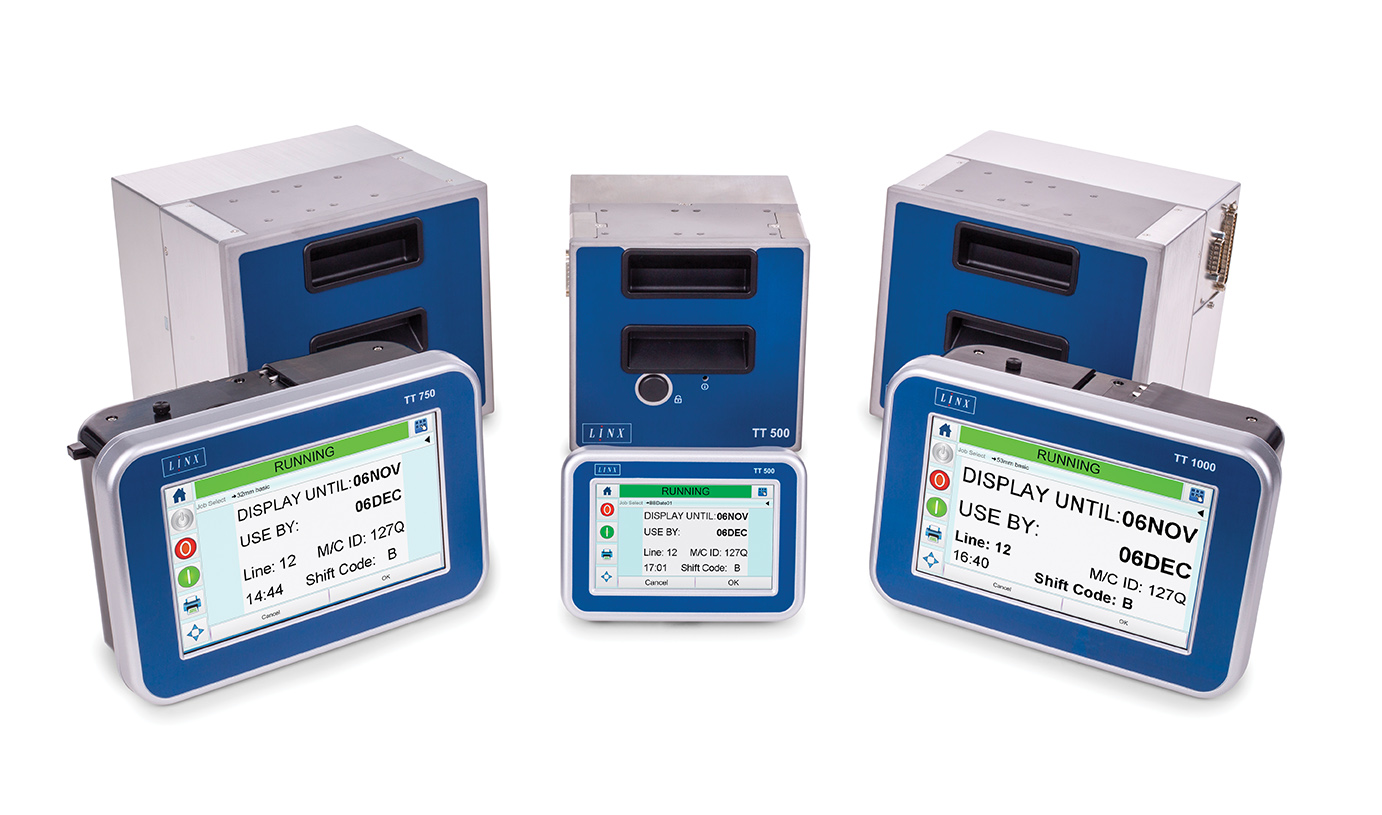
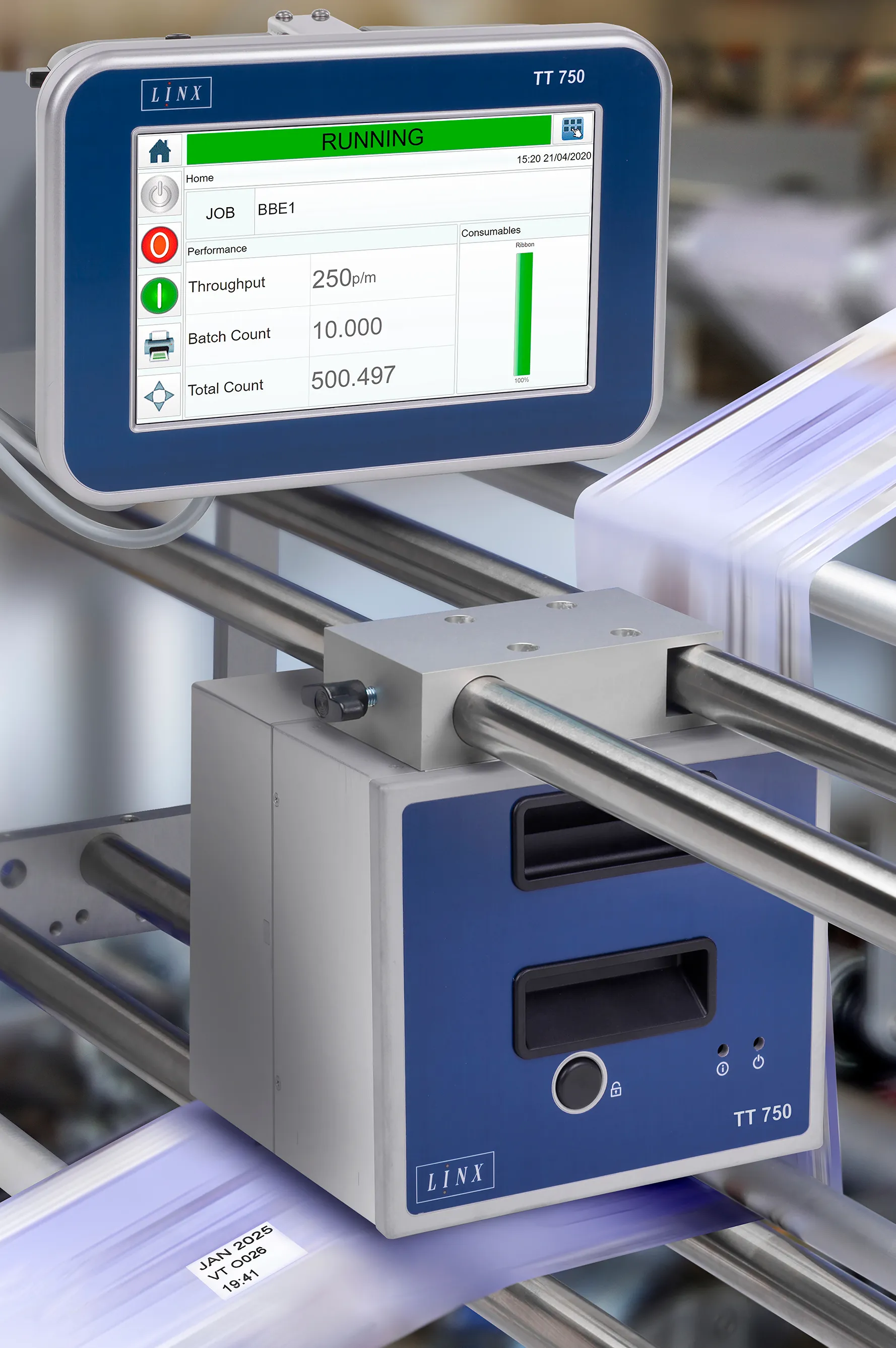
Linx TTO Series
High-resolution solution for flexible materials
Features
Suitable for 24/7 operations | Data Matrix and QR codes | High-speed production | Batch and date coding | Suitable for intermittent and continuous lines
Key Benefits:
- Choice of 32mm, 53mm or 107mm wide printheads
- Instantly dry for durable codes
- Black and coloured ribbons available for high-contrast
- Small footprint, ideal for integrating into exisiting lines
- High-speed coding, up to 1000m per second/700 prints per min
Not sure which solution is right for your film coding?
Contact us to find the best solution for your marking and coding needs
Flexible Coding for Multiple Products
Many packaging manufacturers produce a variety of products, pack sizes and customer-specific formats on the same line. Linx coding solutions can store multiple messages, barcodes and traceability codes, enabling quick changeovers while helping prevent coding errors.
Remote monitoring capabilities further simplify production management by allowing operators to manage coding equipment from a central location, reducing intervention on busy packaging lines.
Traversing Coding Systems
In some film converting and packaging applications, the printhead moves across the web while printing to create codes across wide films or to print in different positions on the product. These traversing systems can introduce additional coding challenges, particularly when the direction of travel changes between production runs or rewinding operations.
Linx printers can accommodate different print orientations and message formats, helping manufacturers maintain consistent code quality regardless of web direction. Message flipping capabilities allow codes to remain correctly orientated when production direction changes, reducing setup time and helping prevent coding errors.
Where installation space is restricted, the Linx 9000 Series is available with a right-angle printhead option. This enables the conduit to be routed away from the moving web and surrounding machinery, simplifying integration and helping protect cables in demanding production environments.
Fast drying inks, ribbon options and laser marking for high-contrast codes
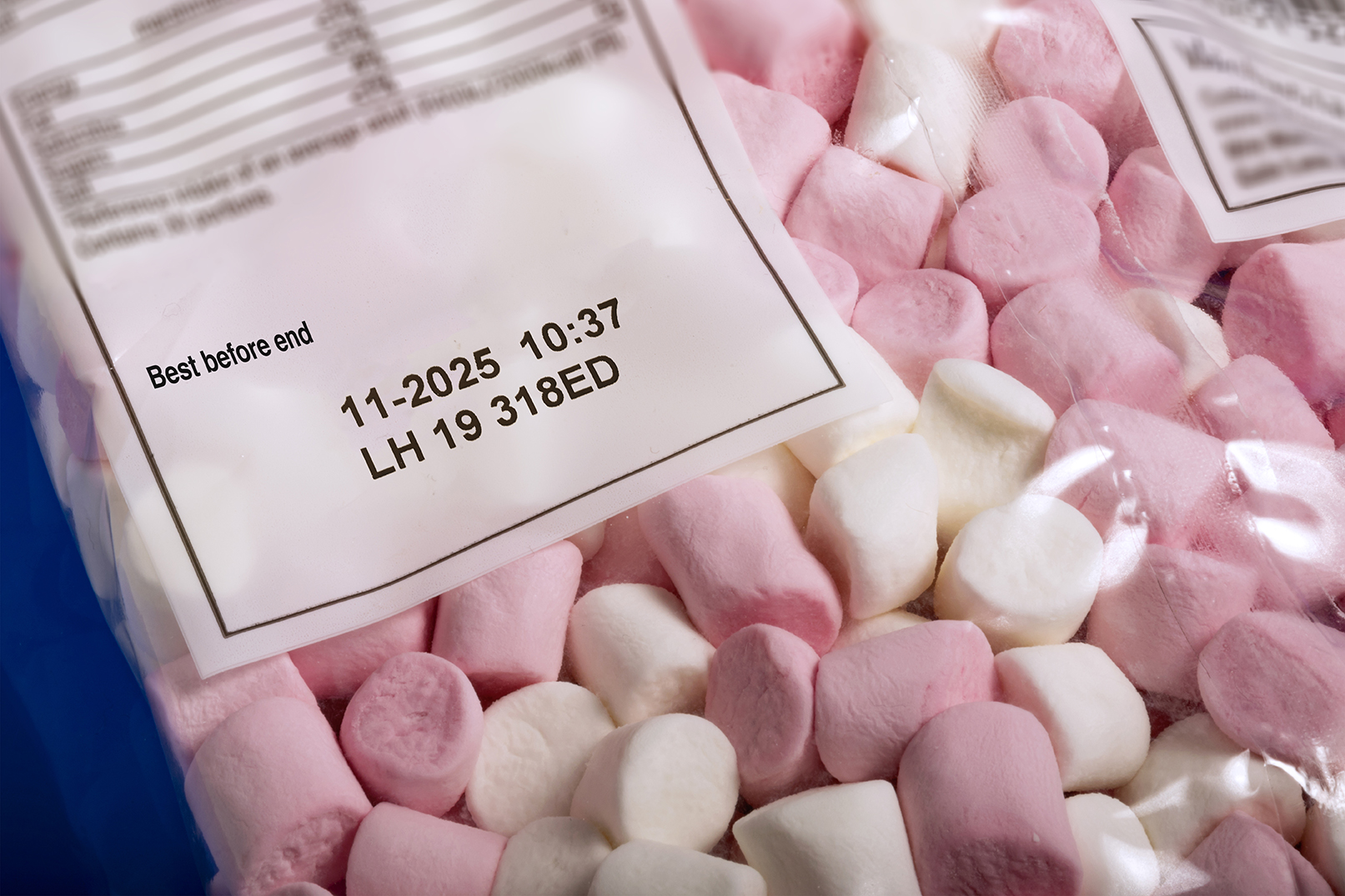
Marking on plastic pouches and packets for sweets and chocolates
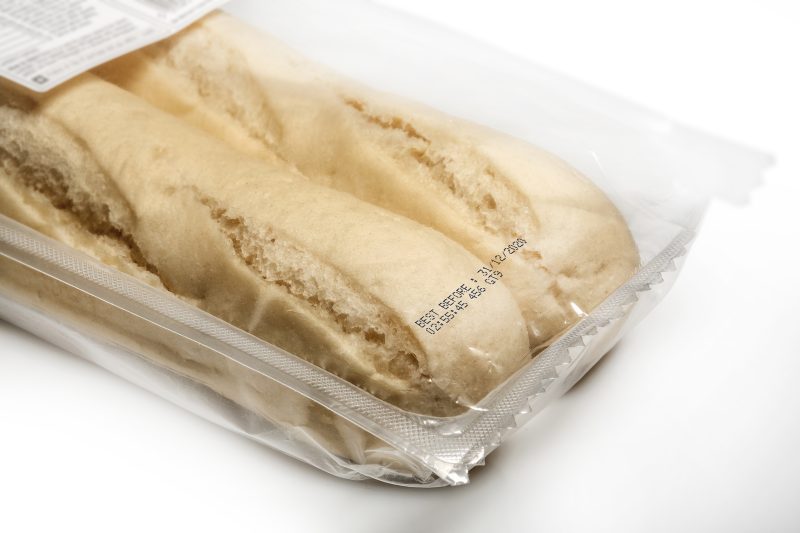
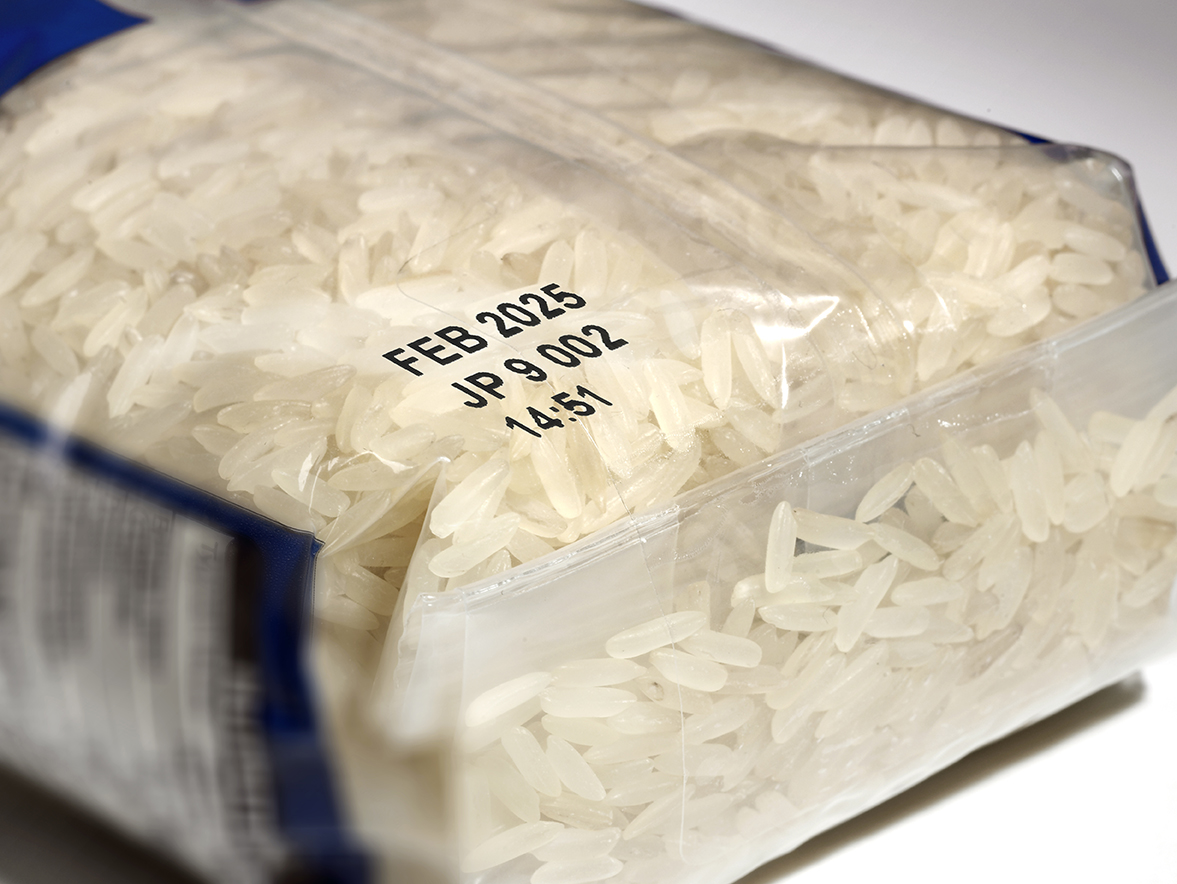
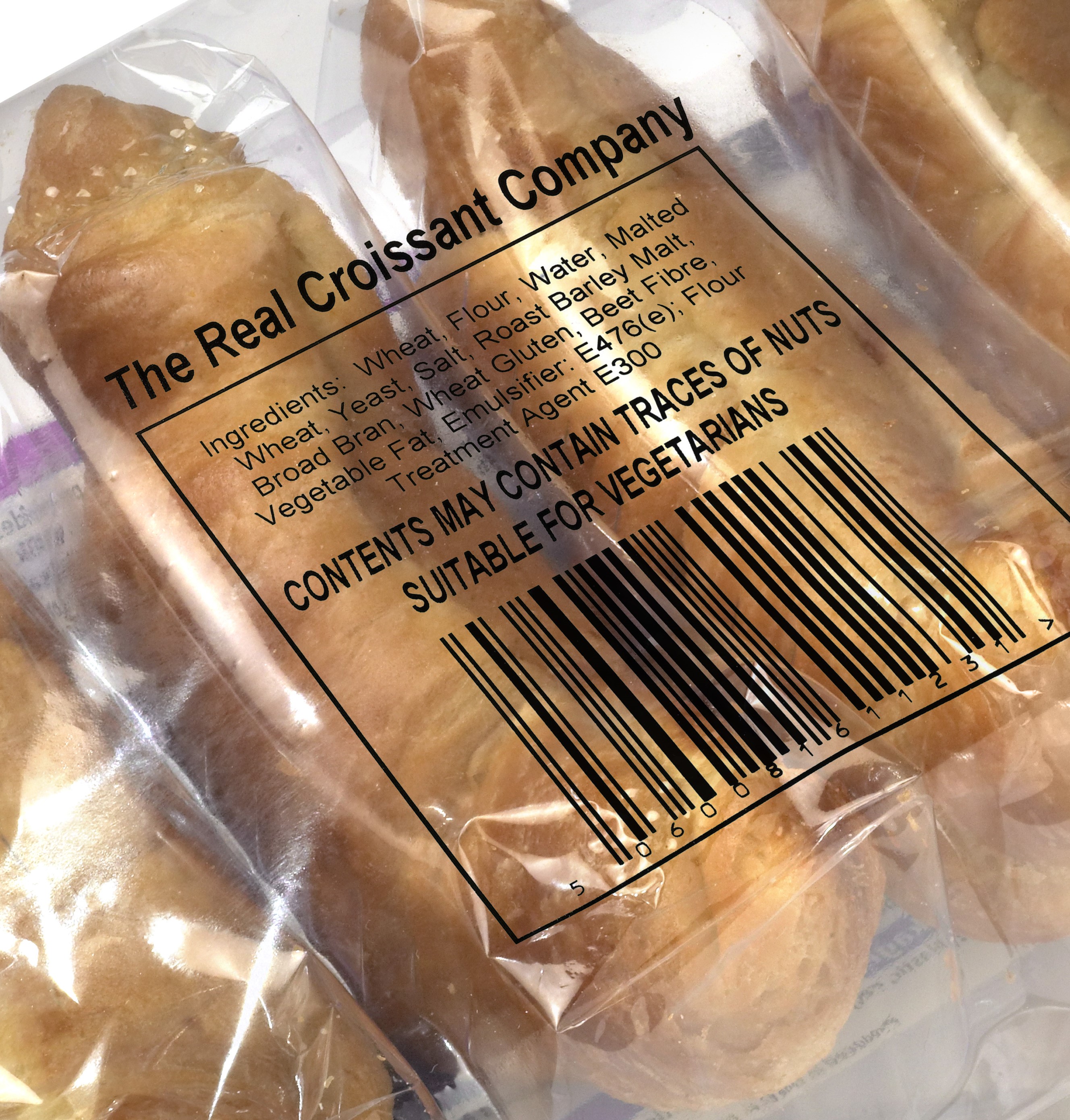
Clear codes on baked goods for batch and date coding
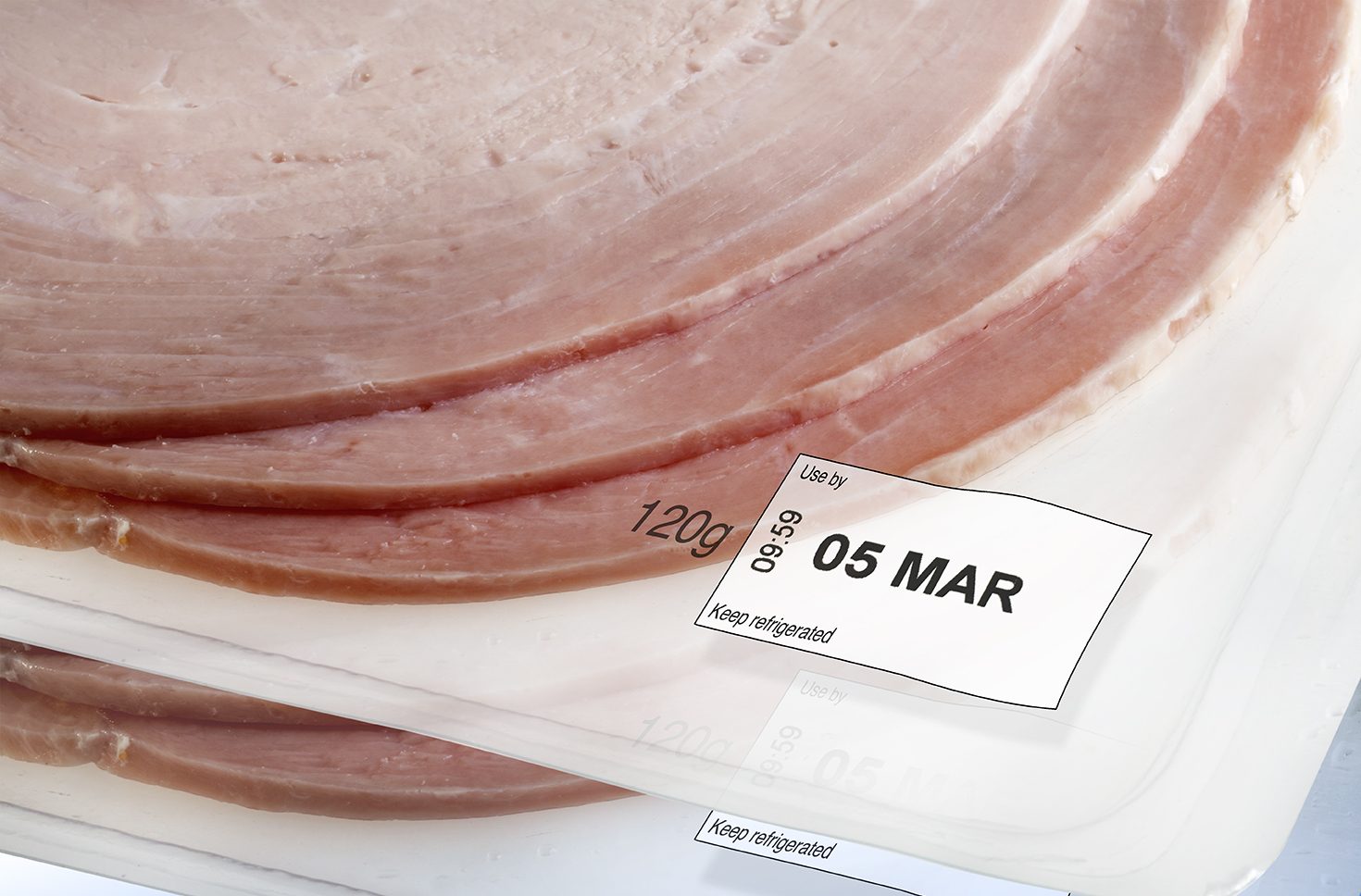
Ensure safety and traceability on meat products
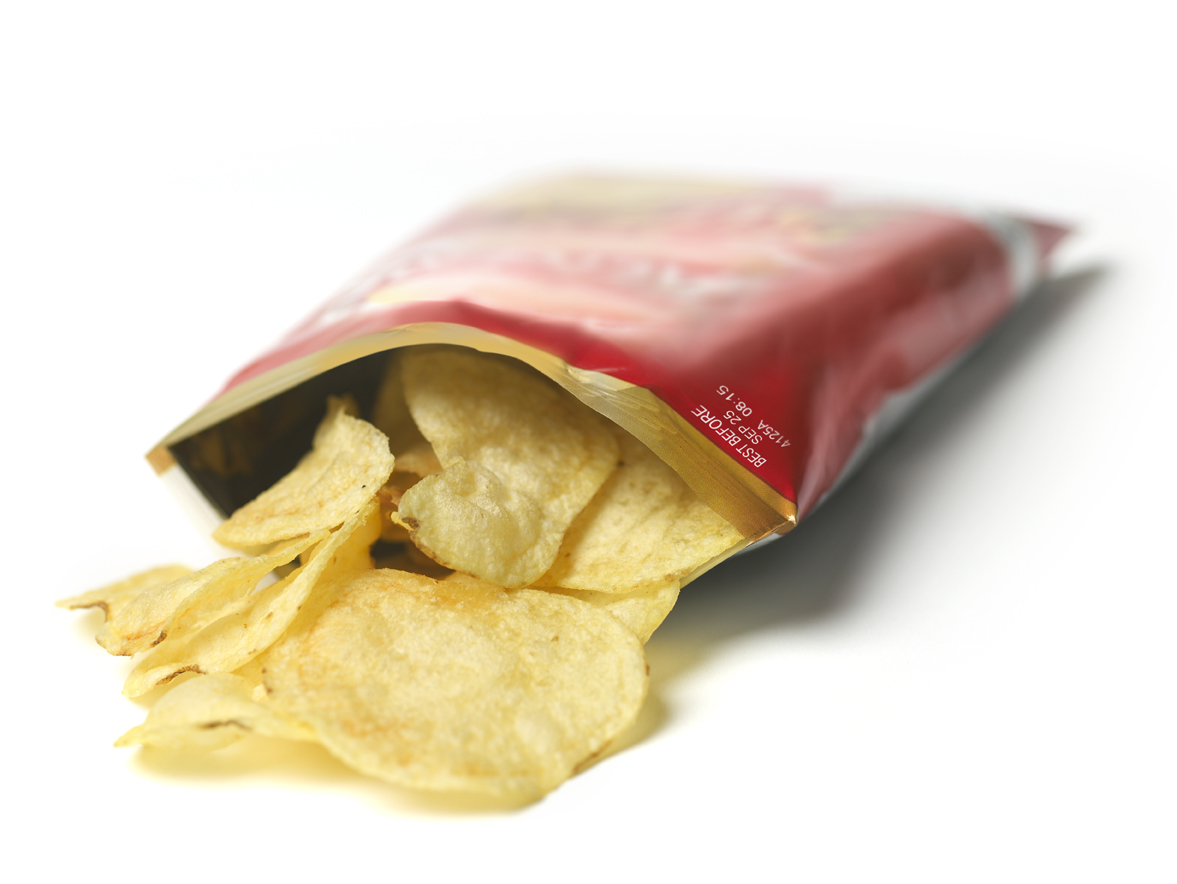
Clear marking of barcodes, ingredients and dates for snack food packaging
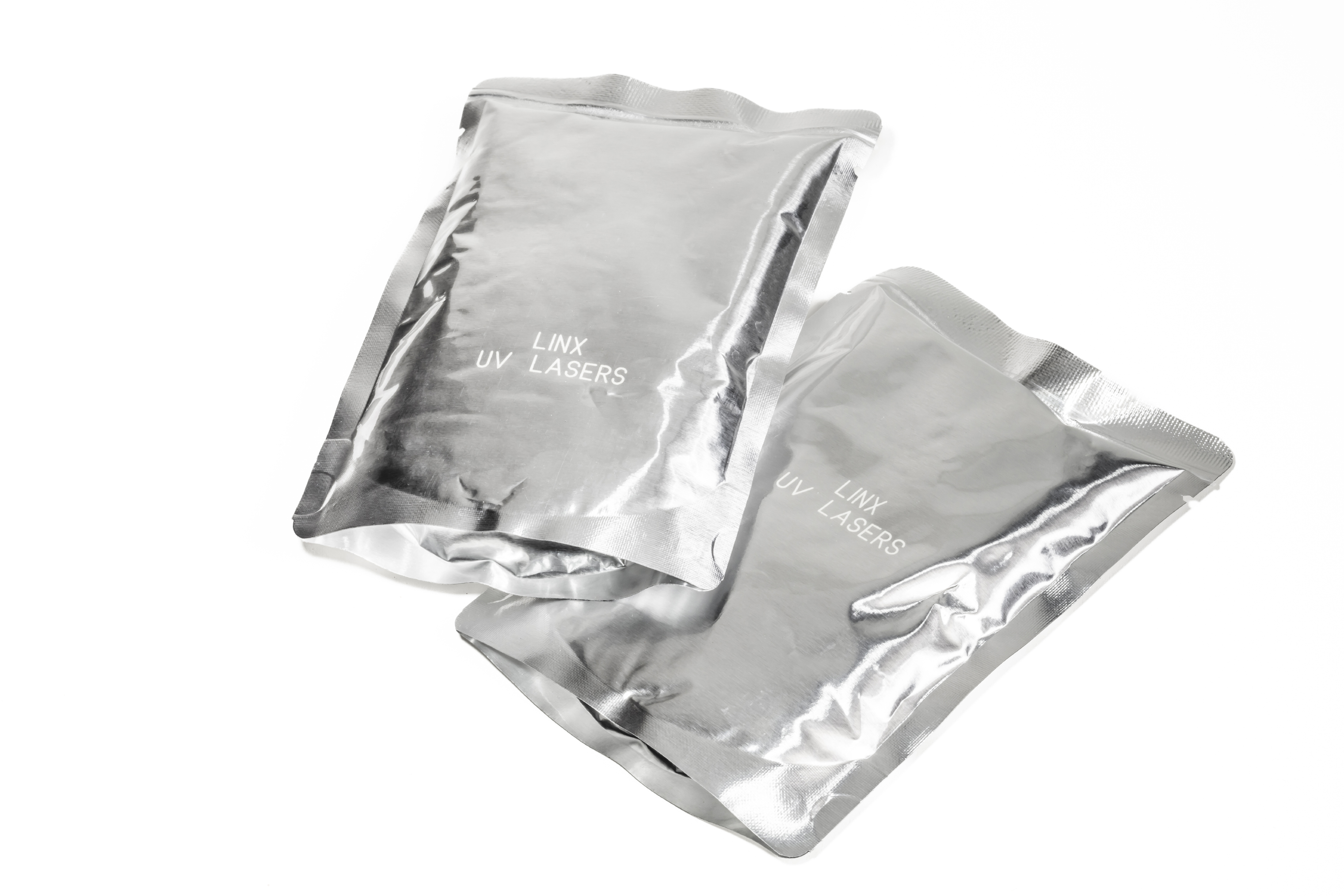
Durable codes on pet food bags and pouches
Durable codes on dairy products to ensure quality and saefty, even through oily surfaces
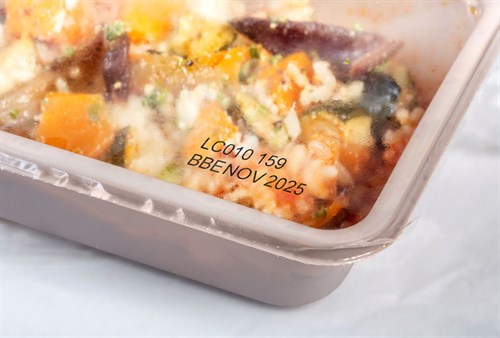
High-contrast coding on ready meal films and trays
FAQ
Flexible plastic films are used across a wide range of packaging formats, including flow wrap, pouches, sachets, and vacuum-sealed packs. These are commonly found in food, personal care, pharmaceutical, and consumer goods applications.
Manufacturers typically print variable data such as best-before dates, batch or lot codes, barcodes, and traceability information to meet regulatory requirements and support supply chain tracking.
Flexible films are often smooth, glossy, and low surface energy materials, which can make it difficult for inks to adhere properly. High-speed production lines and moving substrates can also impact print consistency and readability.
Common technologies for coding on flexible films include Continuous Inkjet (CIJ), Thermal Transfer Overprinting (TTO), and laser coding. The choice depends on factors such as production speed, required print quality, and substrate type.
Flow wrap packaging typically requires high-speed coding solutions. CIJ is often used for simple date and batch codes, while TTO is ideal for high-resolution codes, barcodes, and graphics on intermittent or continuous lines.
Pouches and sachets often have limited print space, and may be coded on the base, so precise coding is essential. TTO is widely used for applying clear, durable variable data directly onto the pouch before filling, or CIJ coding after filling.
Selecting the right technology, optimising printer setup, and using inks designed for flexible films helps maintain consistent, high-quality codes even on fast-moving packaging lines.
Depending on the process and technology, coding can be applied to the film before forming, during packaging, or after sealing, giving manufacturers flexibility to integrate coding into their production line.