

Case Study – ION Science
ION Science increases glass lamp production with a bespoke Linx laser solution
A customised Linx CSL30 laser and turntable solution helps ION Science code glass PID lamps 4–5 times faster.
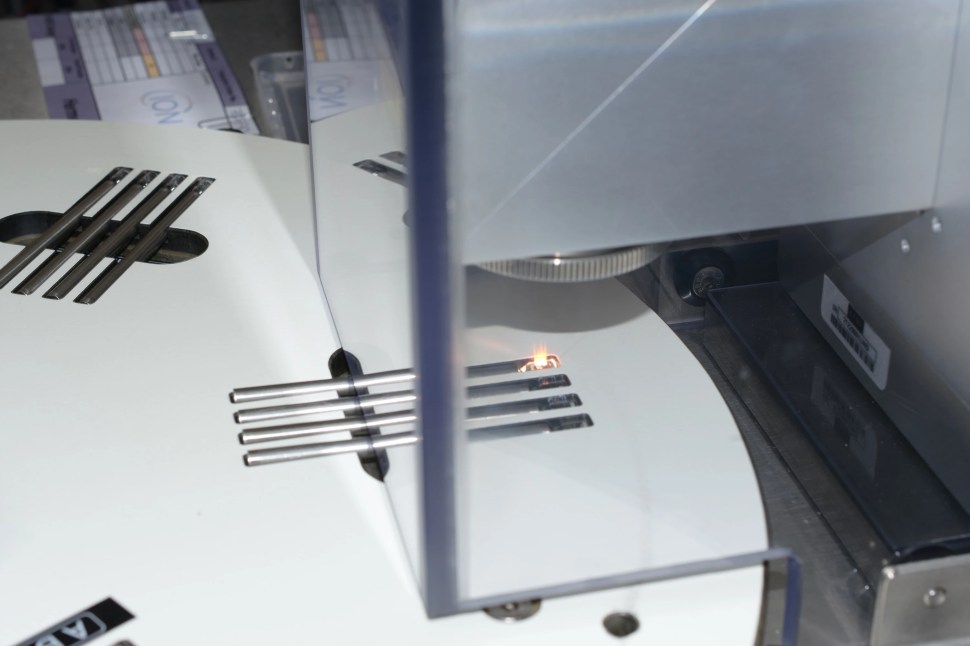
ION Science, a leading manufacturer of technologically advanced gas detection equipment and OEM photoionisation detection (PID) gas sensors, needed to increase production speed to meet growing demand for its glass lamps. The existing process required each lamp to be positioned, laser marked and removed individually. Linx developed a bespoke turntable and safeguarding solution around the Linx CSL30 laser coder, enabling multiple lamps to be processed and increasing the coding rate by 4–5 times.
| Industry | Gas detection technology |
| Printer | Linx CSL30 laser coder |
| Application | Permanent laser marking on glass PID lamps |
| Outcome | 4-5 times faster lamp coding, increased productivity and notable cost savings |
The Challenge
ION Science has worked with Linx Printing Technologies since 2012. As the business expanded and demand for its products increased, the company needed to accelerate the process of permanently marking information onto the glass lamps used in its sensors and instruments for detecting volatile organic compounds (VOCs).
The existing coding process involved manually positioning each lamp, laser marking it and then removing it before preparing the next component. This single-item approach restricted production throughput and made it increasingly difficult to keep pace with demand.
Key Issues:
- Increasing glass lamp production capacity to meet rising demand.
- Eliminating the repetitive process of manually loading and unloading individual lamps.
- Improving coding speeds without compromising marking quality.
- Producing clean, permanent codes on small glass components.
- Integrating an automated, application-specific solution safely into the existing production environment.
ION Science approached Linx to develop a more efficient coding process that would improve productivity while maintaining the quality and reliability required for its PID lamp production.
Linx Featured Products and Solutions
The Linx Solution
After assessing the application and production requirements, Linx developed a bespoke turntable-based laser coding solution designed specifically for ION Science’s glass PID lamps.
The system incorporated the Linx CSL30 30-watt CO₂ laser coder, alongside a purpose-built turntable and laser safeguarding enclosure. This configuration allowed multiple glass lamps to be positioned for coding, reducing the need for repetitive manual handling and enabling a significantly faster production cycle.
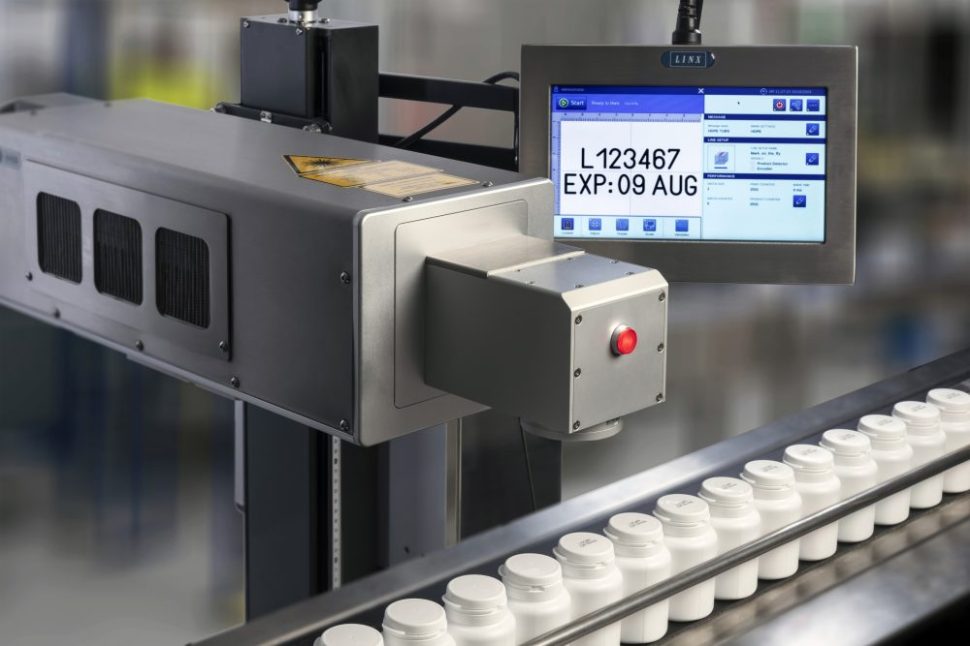
The CSL30’s versatile beam delivery options supported integration with the bespoke turntable, while its ability to produce permanent marks without coding consumables helped minimise ongoing operating costs and maintenance requirements.
What Happened Next
- 4–5 times faster coding: Significantly increased the rate at which glass PID lamps could be marked.
- Higher production output: Improved throughput by reducing the limitations of the previous manual process.
- Notable cost savings: Improved production efficiency and reduced reliance on coding consumables.
- Greater production capacity: Helped ION Science meet growing customer demand.
- Reliable, permanent marking: Maintained clean and durable codes on glass components.
- Further investment: The success of the installation led ION Science to order another laser.
Results & Business Impact
Since implementation, ION Science has benefited from:
- A 4–5 times faster lamp coding rate
- Significantly increased production output
- Enhanced productivity and notable cost savings
- Greater capacity to meet demand and support growth plans
- Clean, permanent codes with no coding consumables
- A reliable process with minimal maintenance requirements
“The turntable solution provided by Linx has significantly transformed the production of etching onto our photoionisation detection (PID) lamps which has dramatically enhanced our productivity and provided us with notable cost savings. The rate of lamp production will help us fulfil demand for our products and achieve our ambitious growth plans.”
Brian Carmichael, Engineering Head of Sensors – ION Science
Why It Worked
The Linx CSL30 laser solution delivered:
• A bespoke turntable matched to the application
• Versatile beam delivery for straightforward integration
• Fast, permanent marking on glass lamps
• The ability to process multiple products in sequence
• Low running costs and minimal maintenance
• Expert application support and purpose-built safeguarding
This provided ION Science with a dependable, application-specific coding solution that removed a production bottleneck and supported increased demand.
Conclusion
As demand for its gas detection products increased, ION Science needed a faster and more efficient way to mark its glass PID lamps. The existing manual, single-item coding process was restricting production capacity and making it harder to keep pace with business growth.
By integrating the Linx CSL30 30-watt CO₂ laser coder with a bespoke turntable and purpose-built safeguarding system, Linx helped ION Science increase its glass lamp coding speed by 4–5 times.
The result was a more productive manufacturing process, notable cost savings and increased capacity to fulfil customer demand. The success of the installation also demonstrated the value of combining proven laser coding technology with tailored application engineering to solve specific production challenges