
Coding and Marking on Metal
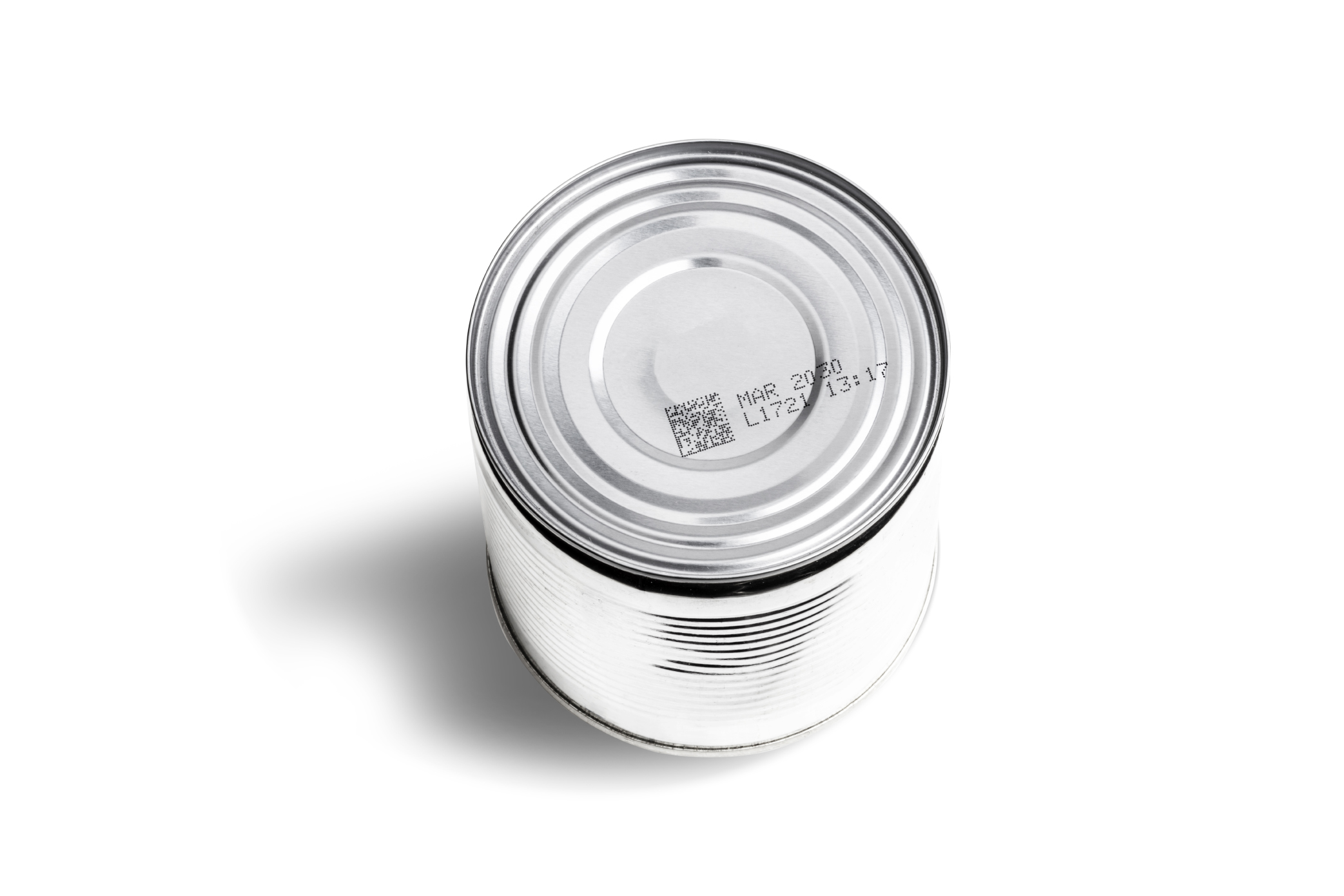
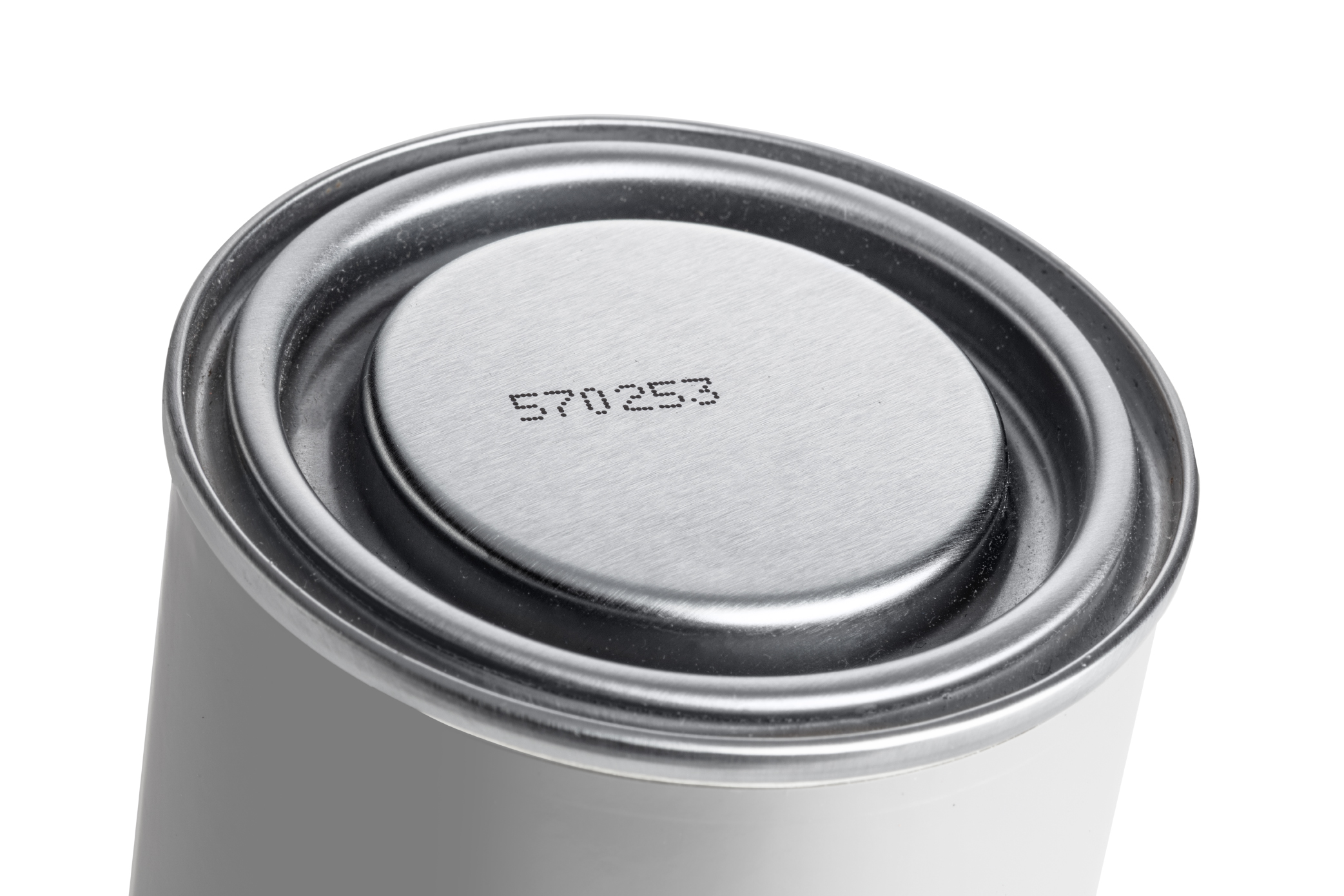
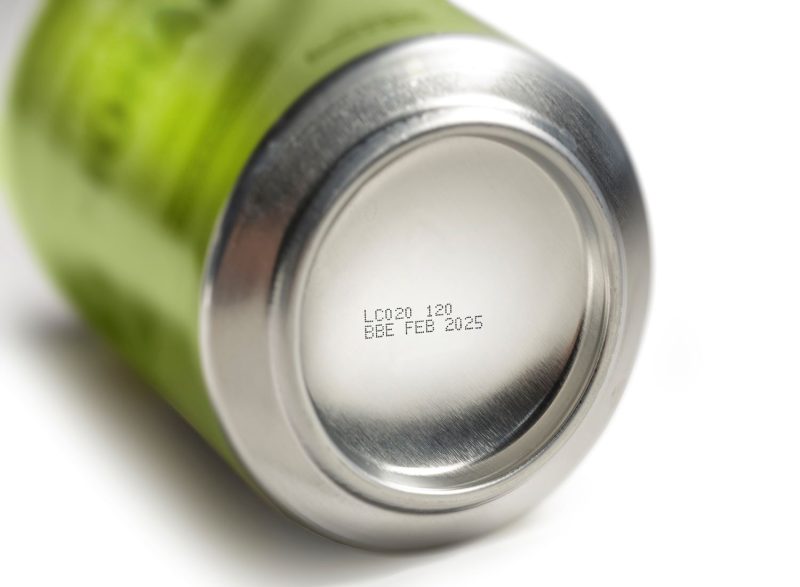
Metal coding is required for a wide range of industries including food, beverage, construction, automotive, and chemicals. Linx marking solutions can cover most product identification applications including printing dates on beverage cans and food tins, barcodes on pipework and batch information on sheet metal.
Printing onto metals, such as steel, aluminium, copper, iron and brass can be challenging: non-porous surfaces, curved surfaces, wet or hot environments, post-marking sterilisation processes and long term durability.
Challenges in Metal Marking
Metals such as aluminium and steel are non‑absorbent, meaning inks cannot penetrate the surface and must bond to it physically or chemically. This often leads to weak adhesion, smudging, or codes that can be wiped off if the ink or process isn’t optimised.
Many metal substrates (e.g. beverage cans, personal care aerosols, chemical tins) are lacquered or coated, which further reduces adhesion. These layers can cause issues such as poor bonding, fading, flaking or peeling of printed codes.
Metal parts, especially in automotive, pipe, and sheet metal applications, often carry lubricants, dust or processing residues. These create a barrier between ink and substrate, leading to adhesion failure, chipping, or inconsistent print quality.
Curved items like cans and pipes, and irregular shaped automotive parts, makes accurate print placement difficult and can distort codes (particularly barcodes or 2D codes), affecting readability and scan reliability. Cast surfaces can be pitted instead of smooth and can also distort printed codes.
Food, beverage and canning lines operate at very high speeds, requiring instant ink drying and precise placement. Any delay in drying or misprint can lead to smearing, product rejects, and significant production waste.
Cold-fill processes and temperature changes create condensation on metal surfaces (common in beverage and food applications). Moisture can prevent ink from curing properly, resulting in blurred or unreadable codes.
Food cans and some chemical containers undergo processes such as pasteurisation or sterilisation. These high temperatures and pressures can cause ink to fade, degrade or disappear if not specifically formulated to withstand them.
Metal products—particularly in chemical, personal care and automotive industries—may be exposed to solvents, oils, cleaning agents or heavy handling. Codes must resist abrasion, chemical attack and repeated contact to remain legible throughout the product lifecycle.
What is an Industrial Metal Printing Machine?
Industrial coding printers for metal products may need to be suitable for printing directly on a variety of metal shapes and surfaces in any orientation, high volume expiration date coding or batch identification, and challenging production processes such as sterilisation or post-production durability such as light fastness for parts in prolonged daylight. They can mark variable information as well as printing barcodes, Data Matrix and QR codes onto cans to enable traceability, and convey quality and safety information to the consumer.
Metal manufacturing environments can be hot, dusty, oily and difficult to access. Whether coding pressed automotive components, cast parts, aluminium extrusions or metal pipes, Linx printers deliver reliable performance where operators cannot easily reach the production line. Robust printheads and flexible product detection options help ensure accurate code placement, even when products vary in size, shape or position. As a result, manufacturers can maintain traceability standards while minimising operator intervention.
The most commonly used technologies for coding onto metal are continuous ink jet (CIJ) and laser coders. Each has unique benefits and the one that is right for you application will depend on your product material, environment and code requirements.
Our expertise in product and packaging marking & identification can help you to reduce costs and improve production rates.
Food Tin Coding
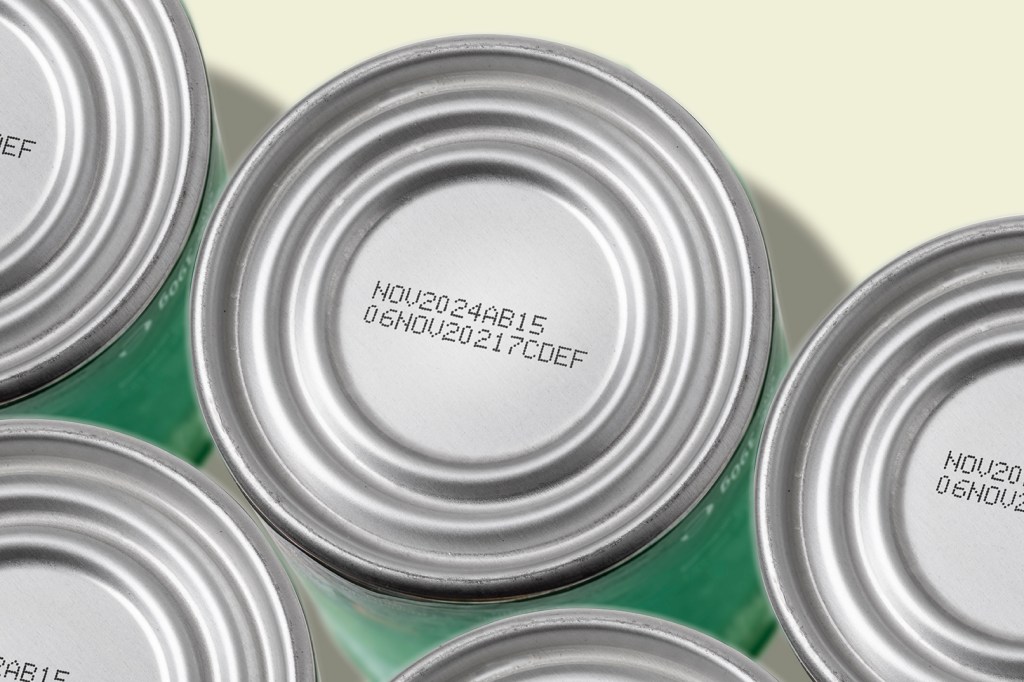
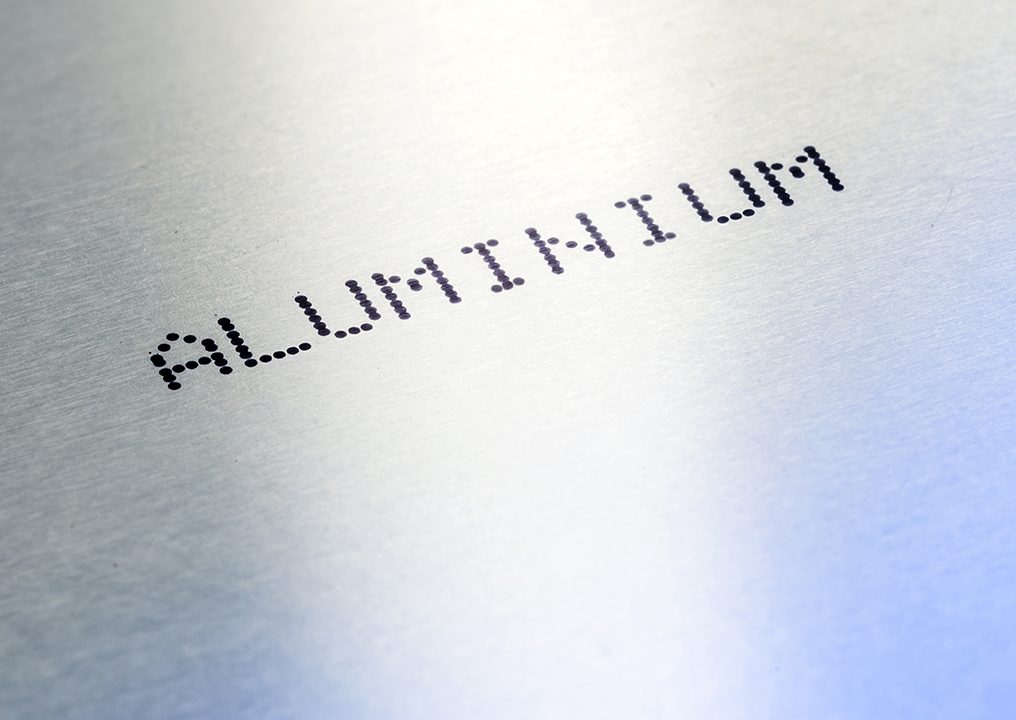
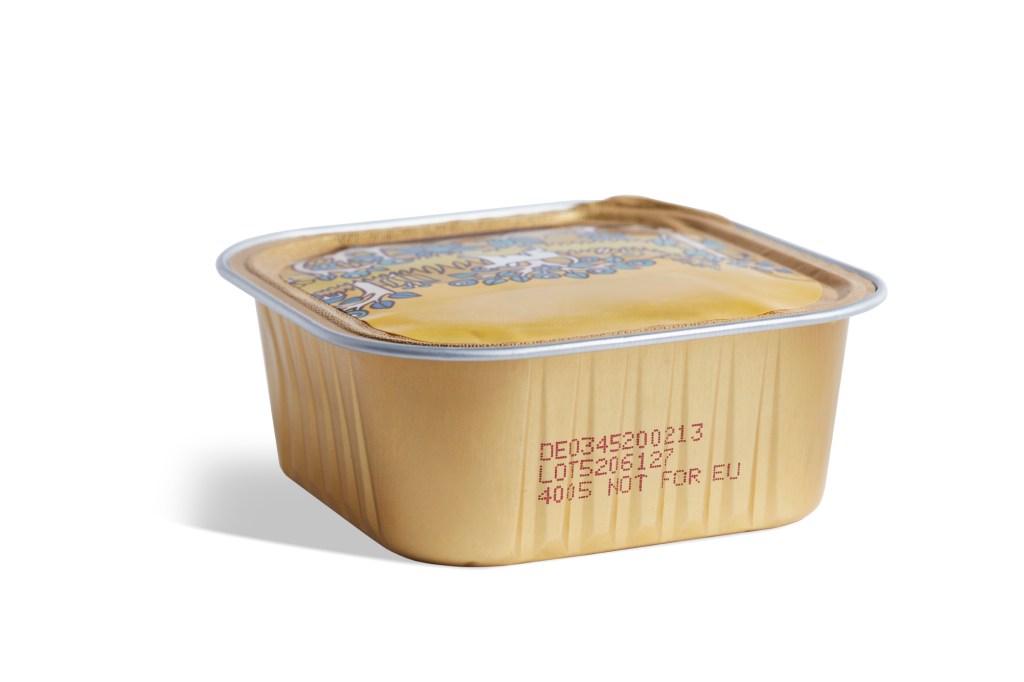
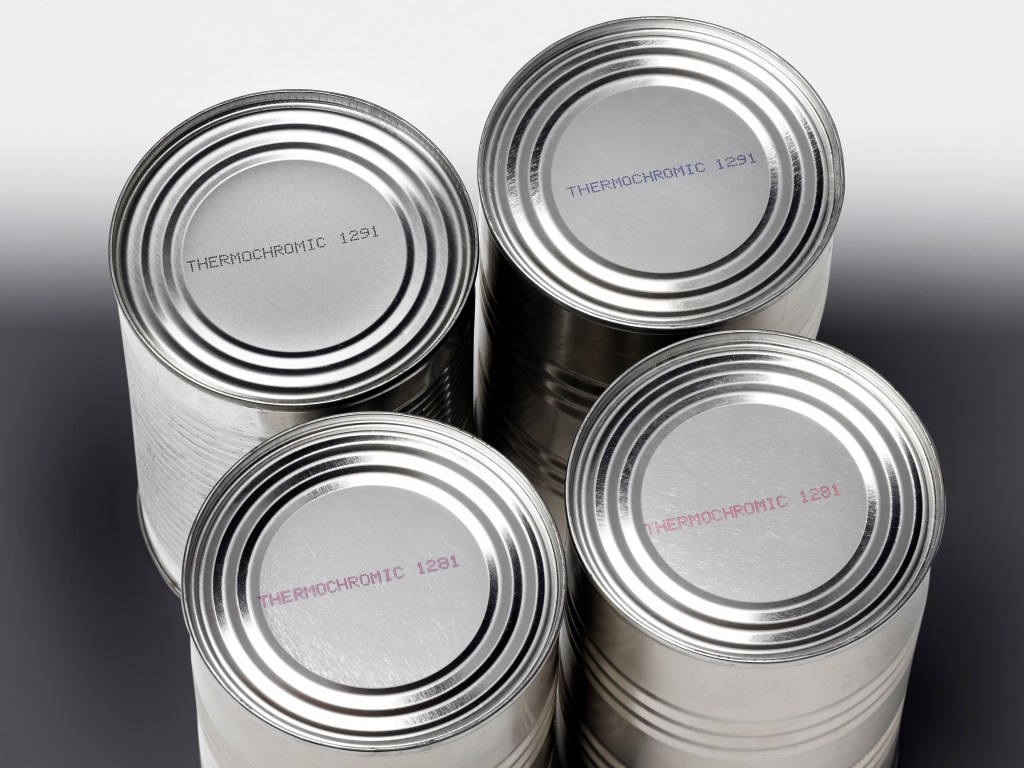
A range of specialist CIJ inks are available to enable long-lasting codes onto a range of metals metals. Retort inks can withstand heat and steam in cooking processes, thermochromic inks change colour during heating, and many inks can code through light layers of oil or grease.
Laser coders can also code onto bare or coated metals, providing rapid, permanent marking with no need for consumables. Non-contact marking can also code directly onto hot or cold materials, curved surfaces, and through condensation.
Aluminium Extrusions & Hot Product Coding
Aluminium extrusion manufacturers often code products while they are still hot and moving at production speed. At the same time, they may produce multiple tube profiles, sizes and customer-specific products on the same line.
Linx printers support a wide range of code formats, logos and traceability information. Stored messages and mistake-proof job selection help reduce coding errors during product changeovers, while remote control capabilities simplify production management.
Construction Coding
CIJ and laser coders can code sheet metal, metal pipes or moulded metal components reliably even in very high processing temperatures.
For pipe, tube and profile manufacturers, Linx printers can apply customer-specific codes, logos and traceability information across multiple product variants. Stored message selection helps prevent coding errors during changeovers, making it easier to manage contract manufacturing operations where products are supplied to multiple customers with different coding requirements.
Metal Component and Automotive Part Coding
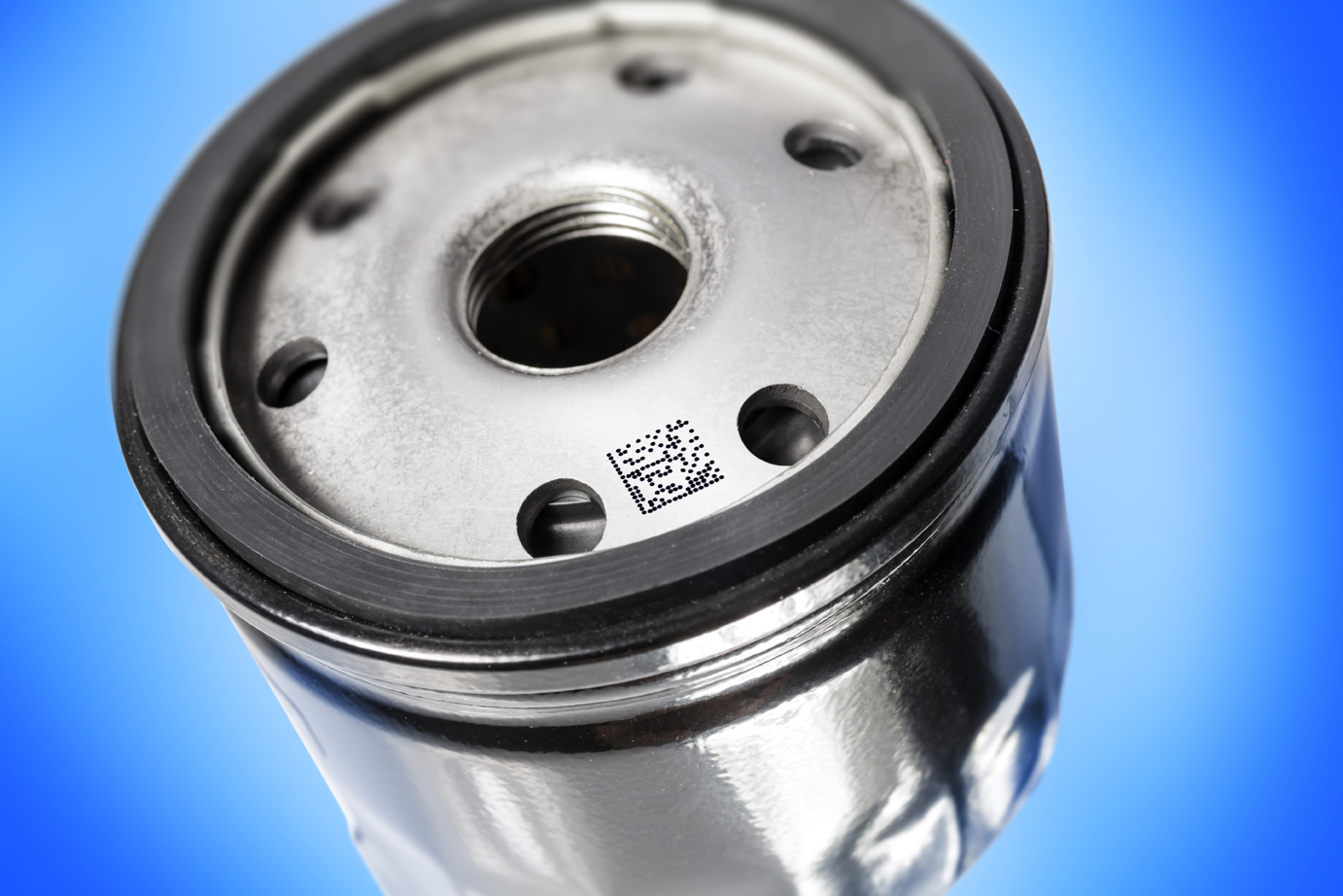
Many metal manufacturers produce a wide range of components for different customers on the same production line. These applications often require discreet traceability codes on complex-shaped parts, castings, extrusions or formed metal products, while operating in hot, oily and dusty production environments and these locations can be difficult or unsafe for operators to access.
Linx solutions enable reliable application of Data Matrix codes, serialisation information and part identification marks while maintaining production safety and efficiency.
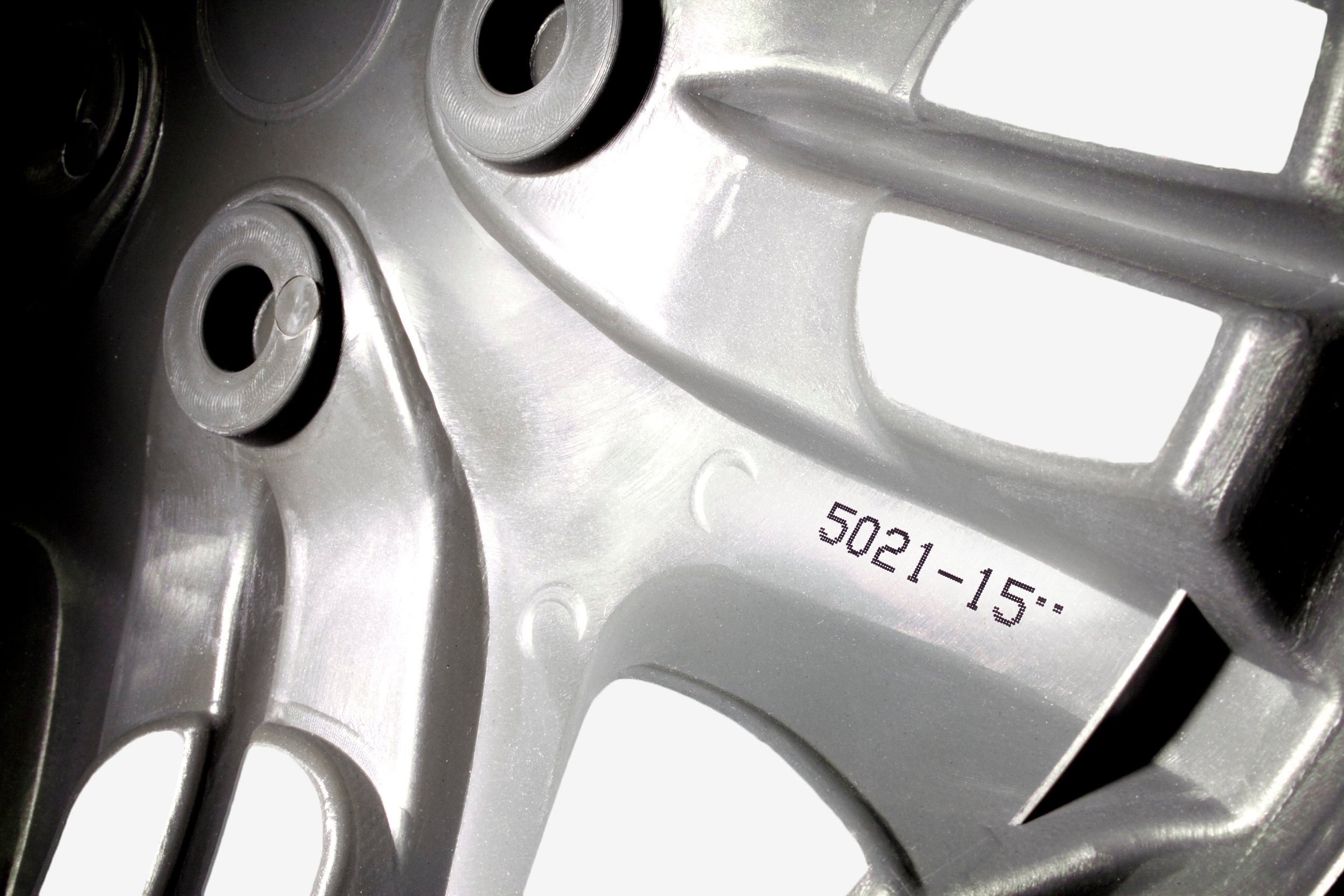
Linx coding solutions can print Data Matrix codes, serial numbers, batch information and customer-specific logos directly onto metal parts. Robust printheads and flexible mounting options enable reliable coding even when products vary in shape, size and position, or when the coding point is difficult or unsafe for operators to access.
Metal surfaces can range from smooth machined finishes to rough or pitted castings. Specialist Linx inks provide excellent adhesion across a wide variety of substrates while maintaining code legibility throughout handling, storage and distribution.
What to look for in a Metal Coding Machine
Code Content: The code requirements (batch numbers, dates, 2D codes etc.), the size, finish and the desired marking area will affect the coder most suited to your application. Consider a coder that can mark in any orientation for flexible marking on any part of your product e.g on the base. Also think about how the code requirments may change in the future or on other products you produce.
Manufacturers increasingly require Data Matrix codes for traceability and part identification. Consider a solution that can store multiple messages and coding formats to simplify changeovers between products, customers or production runs while reducing the risk of operator error.
Substrate: The reflection on bare metal can make some laser coders unsuitable; CIJ printers or Fibre laser coders can work effectively on bare metal.
Production processes: For durable codes the printing solution you choose must be able to adhere reliably and still be legible through your production and supply chain. Laser codes are permanent while for ink based printers you will need to consider retort, condensation, light-fastness, abrasion and chemical exposure.
Speed: Ensure the coder you choose can keep up with your production throughput without compromising on code quality. Drying time of ink based solutions can be an important consideration.
Production environment: Wet, hot, humid or non-temperature controlled production environments can affect the performance of your printing solution and the printed codes. In demanding conditions or washdown environments the IP rating of your coder may be key. If the production space is limited, investigate coders that are compact or can be mounted in different ways to fit the available space.
In many metal manufacturing processes, such as pressing, forming or extrusion, the coding location may be difficult or unsafe for operators to access. Remote monitoring and control capabilities can help reduce intervention while maintaining coding performance
Available budget: It is vital to consider not only the initial purchase price but also the total cost of ownership, including consumables and cost and frequency of servicing. Can the product be user maintained and repaired?
Reliability: The reliability of your coder is crucial to avoid product rework, scrappage, line downtime and loss of efficiency. Frequent breakdowns can negate any benefits of a lower purchase price coder; look for automatic cleaning or self-service features.
Linx Technologies for Metal Printing
Whatever your substrate, line speed and operating environment, Linx can provide you with a suitable coding solution for metal cans. Browse our different technologies from the options below:
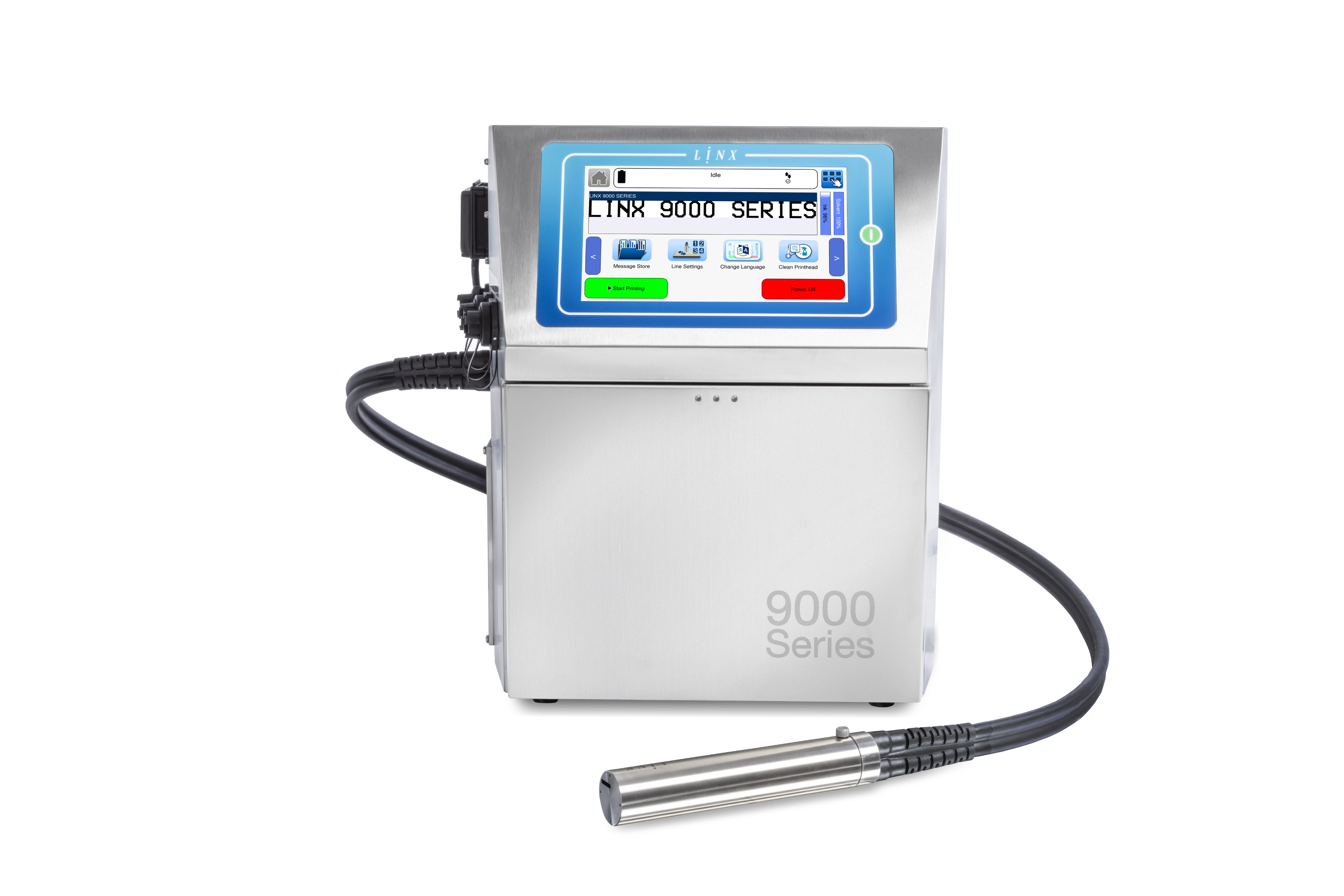
Linx 9000 Series
Great adhesion and durability
Features
Suitable for 24/7 operations | Data Matrix and QR codes |GS1 compliant 2D codes | GS1 code builder | High-speed production | Print up to 6 lines | Black and coloured inks
Key Benefits:
- Excellent print on curved surfaces and any orientation
- Reliable operation in hot, dusty, washdown, or non-temperature controlled environments
- High adhesion inks for metal and specialist inks for cold-fill, water-removable, retort and thermochromic applications
- IP65 (option) for ingress protection and washdown environments
- Print up to 20mm high codes – perfect for large metal parts
- Remotely monitor coding through Linx PrinterNet
- Store and select multiple customer-specific messages, logos and traceability codes for fast, error-free product changeovers
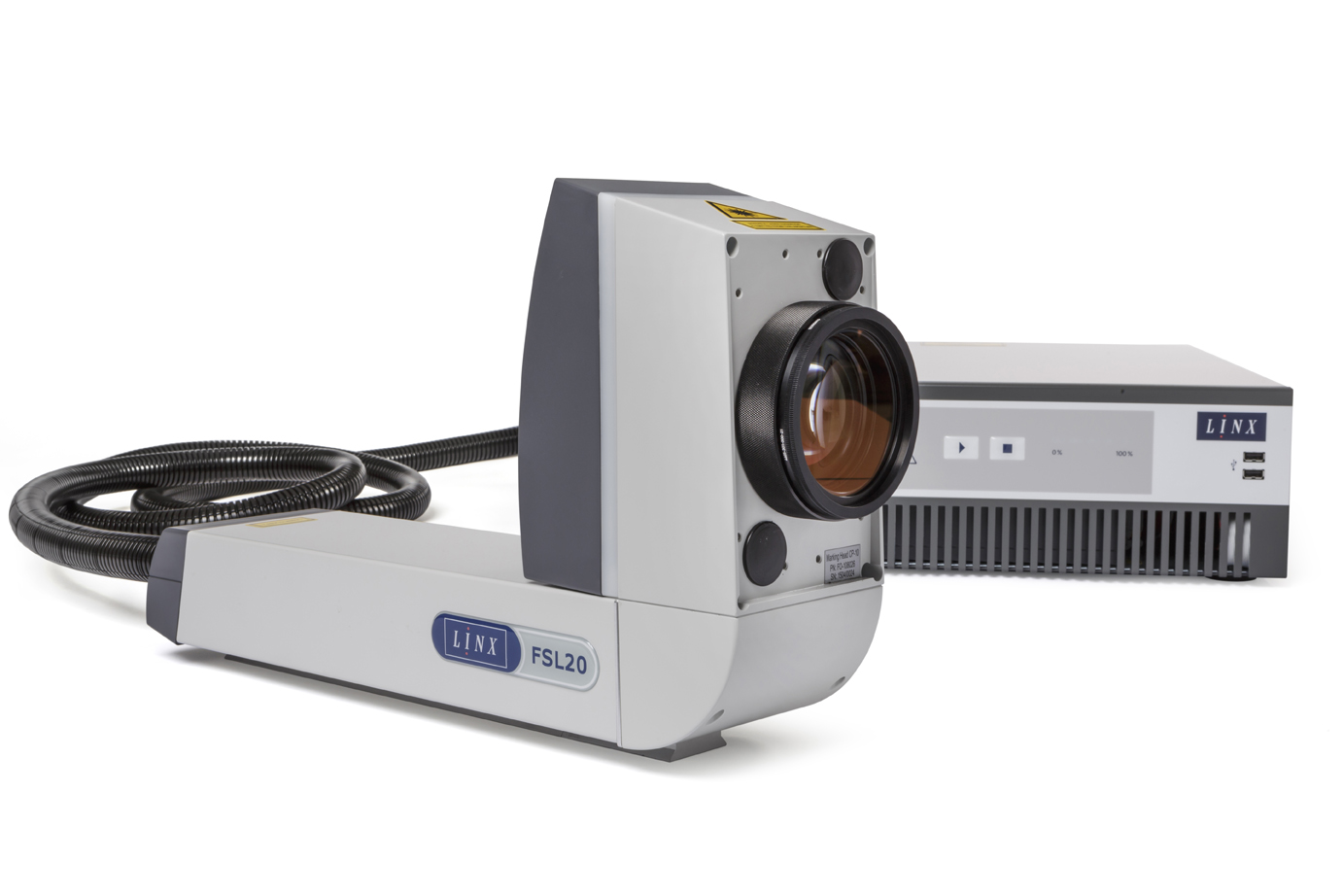
Linx FSL Series
Small spot size for coding on bare metals
Features
Suitable for 24/7 operations | Data Matrix and QR codes |GS1 compliant 2D codes | High-speed production | Choice of 4 lenses | Internal cooling system | Up to 360m/min
Key Benefits:
- Very fine spot size for quality codes, lots of information in a small space or small products
- Compact marking head for easy integration into moving and static lines
- Zero consumables
Not sure which solution is right for your coding?
Contact us to find the best solution for your marking and coding needs
Managing Multiple Products and Customers
Many metal manufacturers operate as contract producers, supplying products for multiple customers with different coding requirements. Linx solutions make it easy to switch between products, messages and code formats without disrupting production.
Whether printing customer logos, product identifiers, traceability information or industry-specific codes, Linx helps manufacturers meet changing requirements with confidence.
Durable Codes for Industrial Metal Products
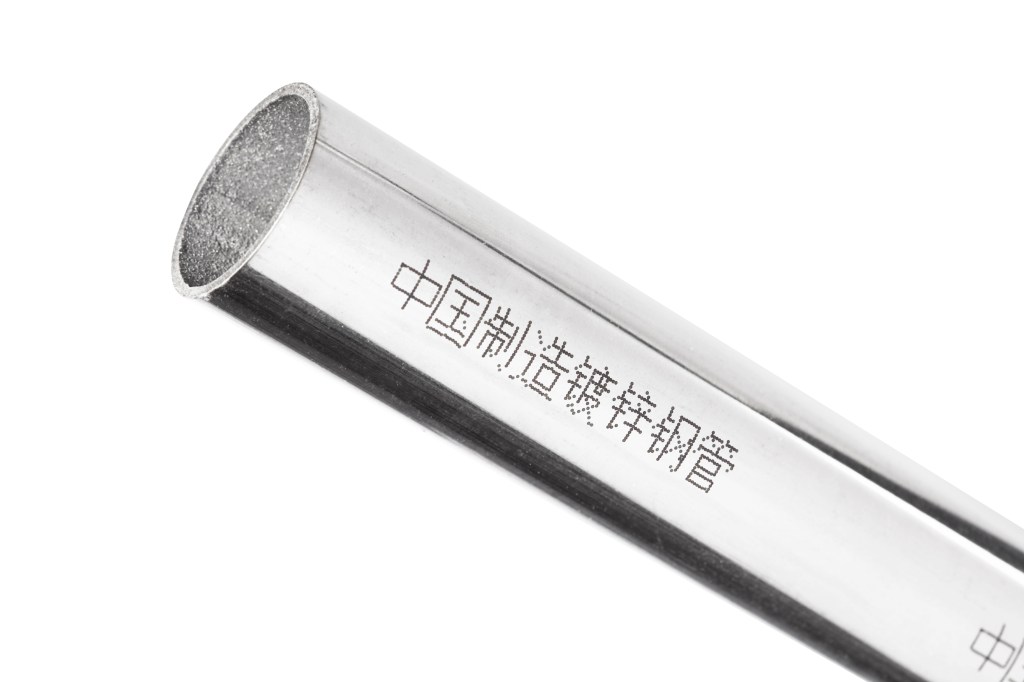
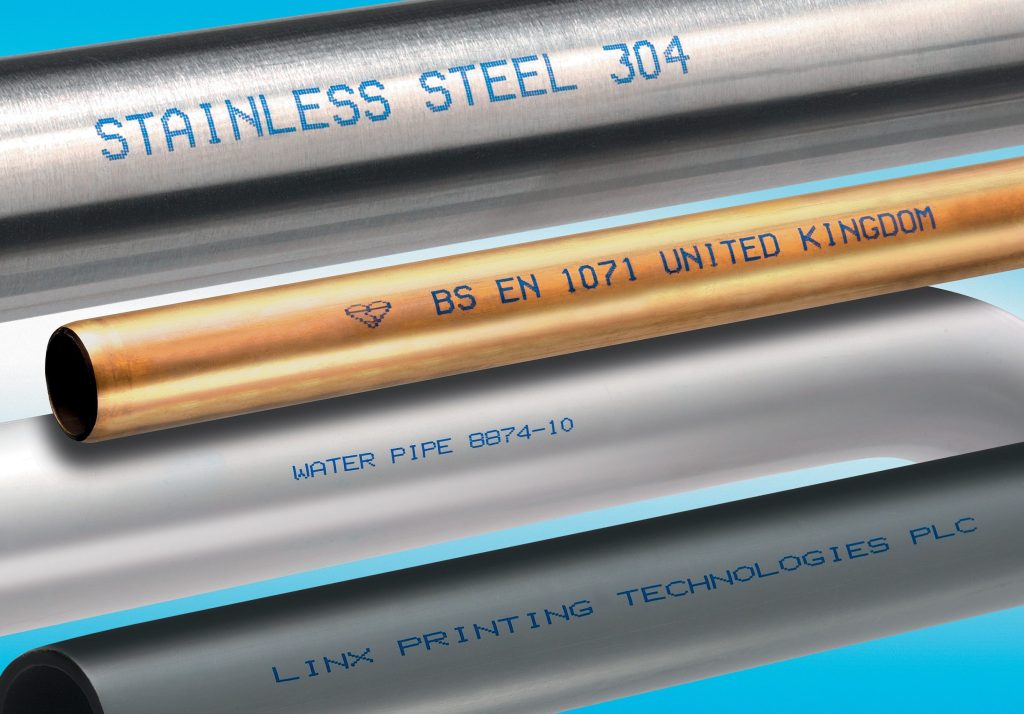
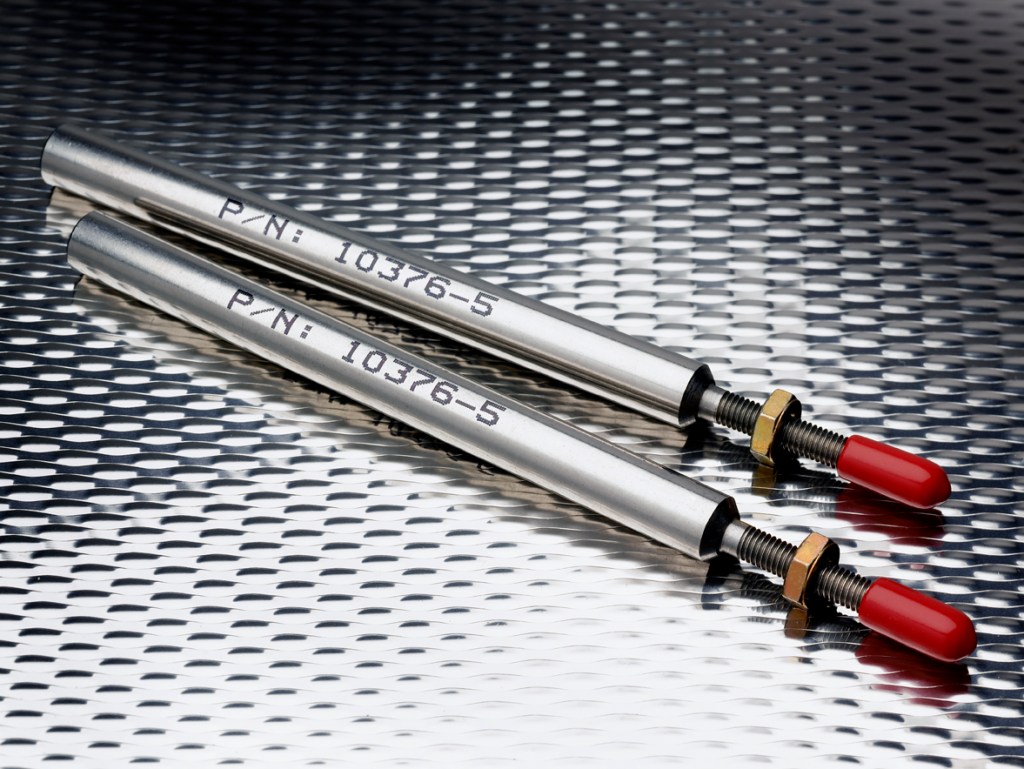
Industrial metal products are often stored outdoors or exposed to handling, abrasion and transportation. Linx high-performance inks offer excellent light fastness and adhesion, helping codes remain readable on products such as pipes, tubes and metal components throughout the supply chain. This ensures reliable traceability even when products are stacked, transported or repeatedly handled.
CIJ inks can code on many finishes and through layers of oil. Laser is ideal for permanent coding where the finished item will be subject to abrasion, light or chemicals during its lifecycle and a laser can code on many different finishes and through surface contaminants.
Thermochromic Inks for Sterilisation
Thermochromic inks are specialised inks that penetrate oily surfaces, remain indelible and permanently change colour when exposed to a specific temperature, making them particularly useful in food canning applications. During retort sterilisation, where filled cans are heated to ensure product safety, the ink changes colour once the required temperature is reached. This provides a clear, visible indication that the can has been exposed to the correct heat conditions, supporting quality assurance processes on high‑speed production lines.
These inks are designed to withstand the demanding conditions of food processing, including high temperatures, moisture and pressure, while maintaining clear and legible codes. Although they do not confirm that sterilisation has fully taken place, they offer a simple and reliable visual check that the required temperature has been reached, helping manufacturers improve process control and product safety.
Available on Linx 9000 Series CIJ printers
Removable Inks
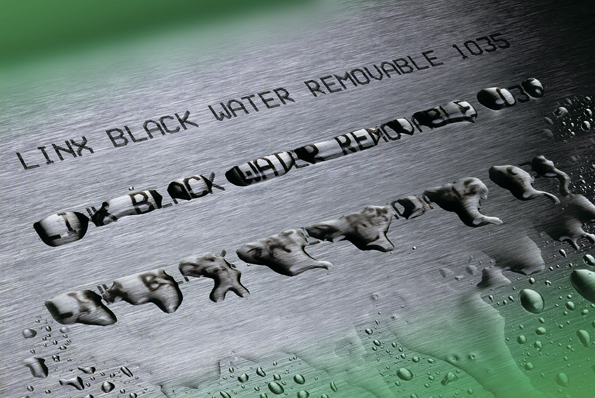
Water-removable and solvent-removable inks are widely used on metal substrates such as stainless steel beer kegs and barrels where temporary but reliable identification is required. These inks are designed to provide clear, high-contrast codes—such as batch numbers, filling dates or internal tracking marks—that can withstand challenging beverage production conditions, including condensation, handling and cold storage, without smudging or fading prematurely. At the same time, they are formulated to be removed easily during standard washing or caustic cleaning processes once the keg is returned, allowing the container to be reused and re-coded for the next production cycle.
This balance between strong initial adhesion and controlled removability is particularly important in returnable packaging systems, where markings must remain legible throughout the supply chain but leave no residue or “ghosting” on the metal surface after cleaning.
Available on Linx 9000 Series CIJ printers
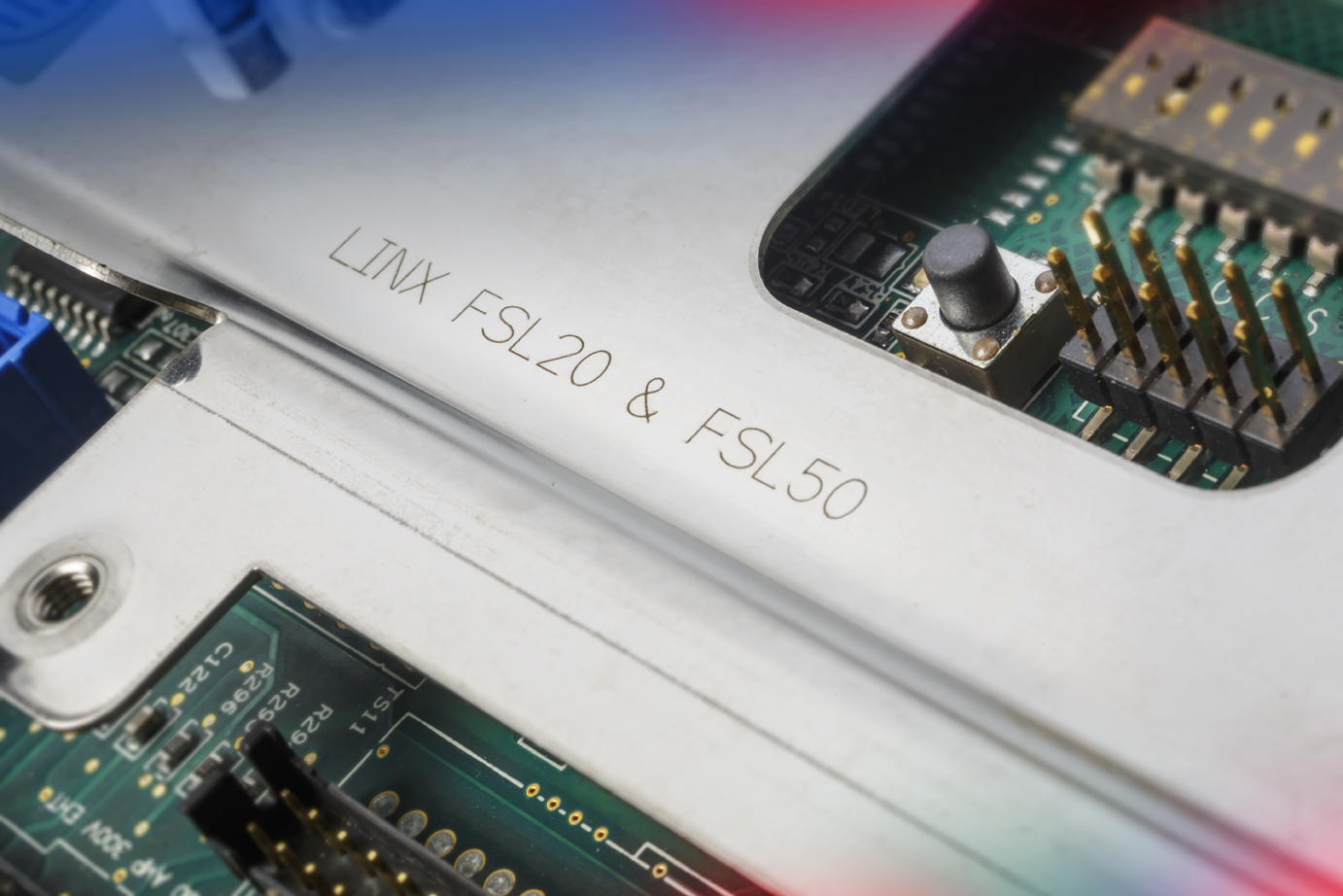
Inkjet and laser marking on metal components for automotive applications
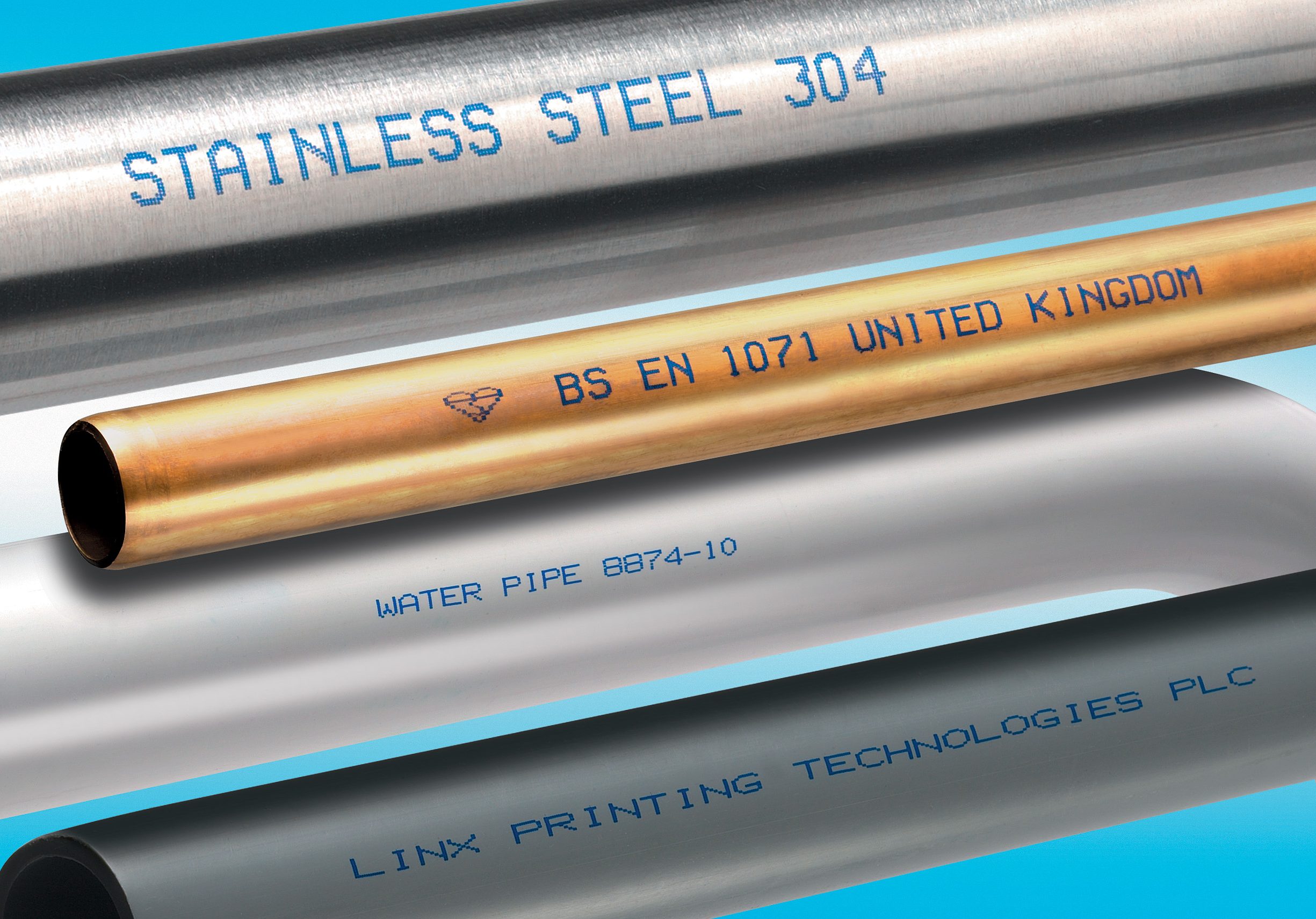
Mark a range of metal surface used in construction
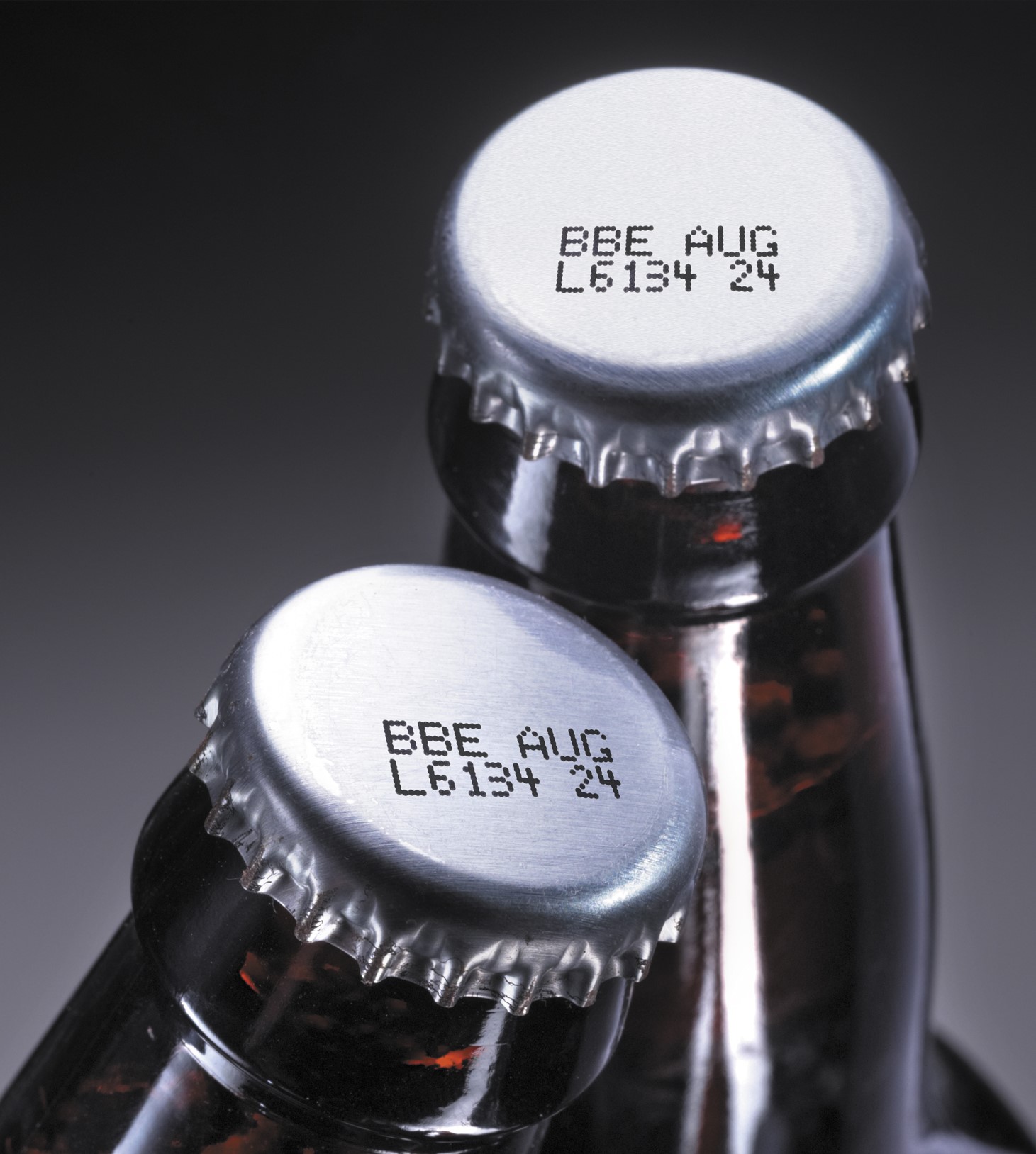
High-speed printing directly on bottles, cans and packaging for the beverage industry
FAQ
Most metals can be marked, including aluminium, stainless steel, tinplate, and coated or painted metal surfaces commonly used in packaging.
Continuous inkjet (CIJ) and laser coders are widely used. CIJ prints codes using specialised inks, while lasers create permanent marks by altering or removing the surface coating.
Codes can be highly durable, designed to resist handling, moisture, and long storage conditions, ensuring readability throughout the product lifecycle.
Yes. Both CIJ and laser systems are non-contact technologies that can keep up with high-speed production lines without compromising code quality.
CIJ offers a range of ink colours for contrast on light or dark surfaces, while lasers create contrast by removing or modifying the coating.
Yes. Certain CIJ inks are formulated to work on lightly contaminated surfaces, and laser marking is unaffected by surface oils as it removes or alters the coating.
Common codes include batch numbers, date codes, barcodes, and traceability data required for compliance and supply chain tracking.
Marking ensures traceability, regulatory compliance, and product identification, helping manufacturers manage quality, recalls, and brand protection.