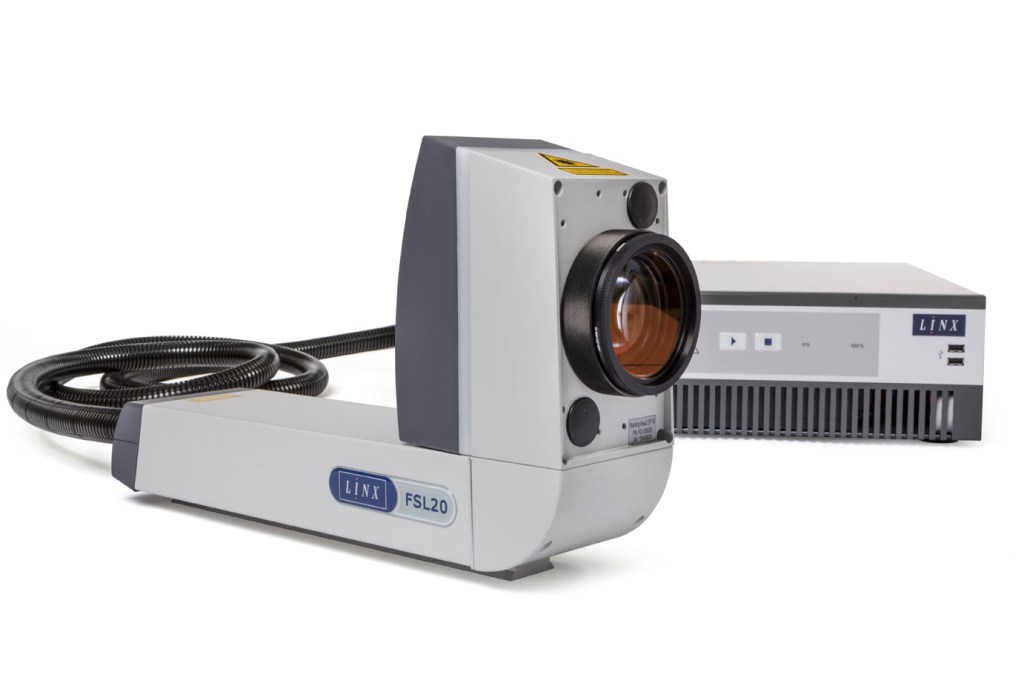
Linx FSL20 & FSL50 Fibre Laser Coders
Permanent, high-resolution coding for metal, plastic, rubber and packaging foils.
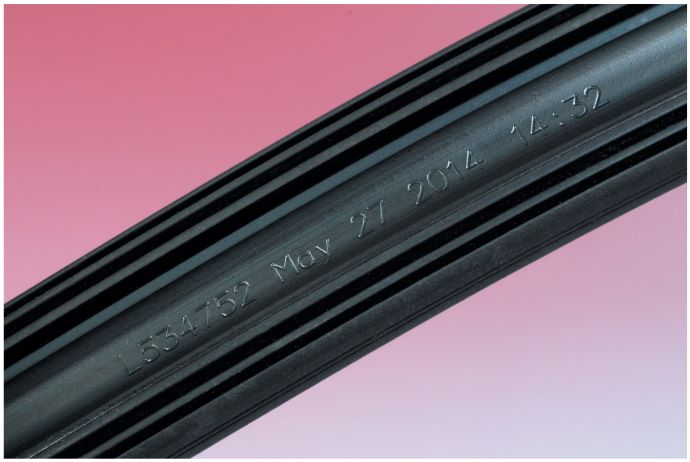
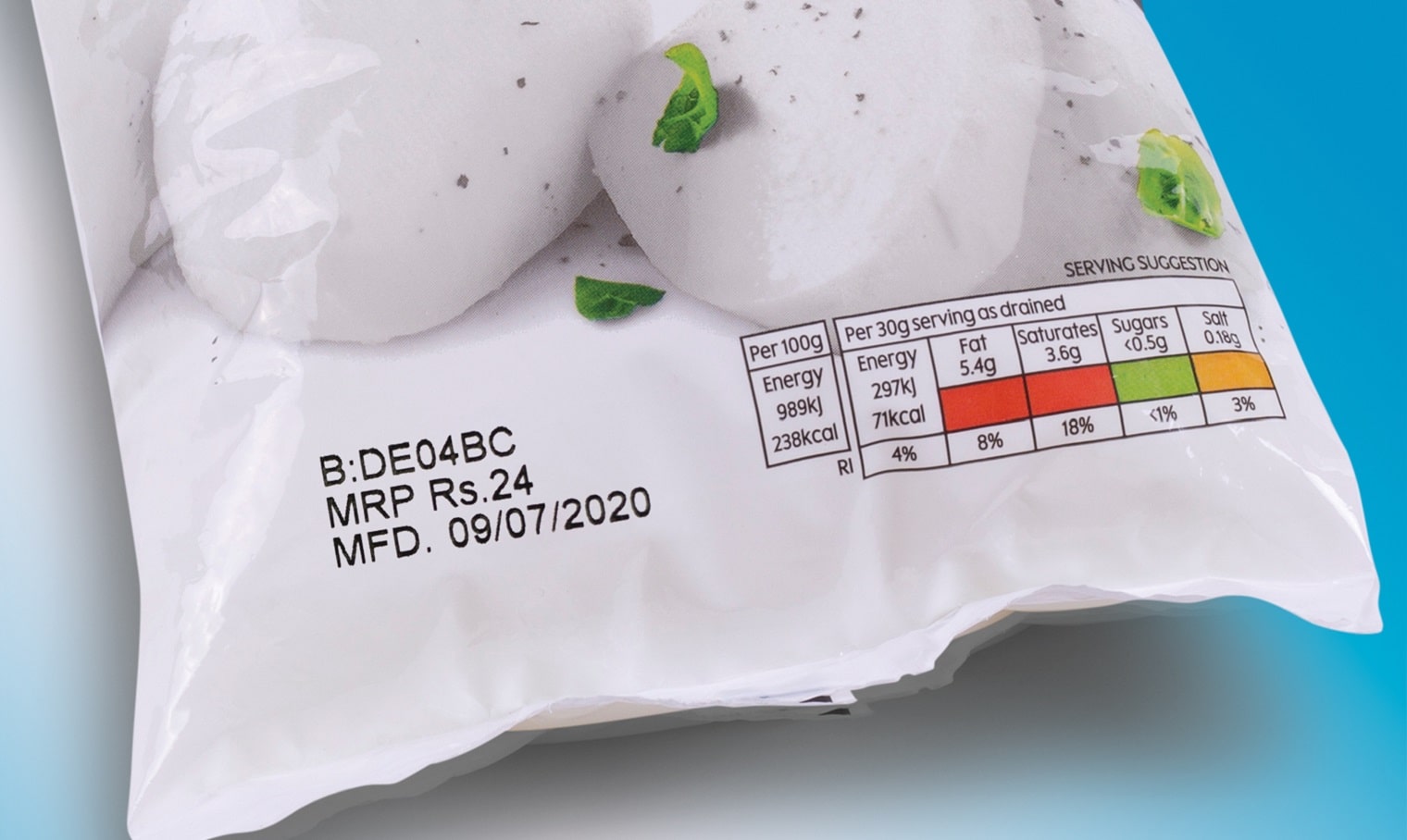
The Linx FSL20 and FSL50 fibre laser coders produce permanent, high-contrast marks on a wide range of production materials, including metal, plastic, rubber and packaging foils. They are designed for manufacturers that need reliable traceability codes, serial numbers, logos, QR codes and DataMatrix codes on small components, packaging and industrial parts.
Choose from 20W and 50W models, with a compact air-cooled design for integration into static or moving production lines. A fine laser spot size, four lens options and a laser source life of more than 100,000 hours help reduce downtime while maintaining consistent code quality.

Key Benefits of the FSL20 & FSL50
- Laser tube life of over 100,000 hours – less downtime
- Ultra-fine spot size ensures high-resolution codes
- Two beam orientation options allows coding in any direction
- Four lens options to suit your coding requirements
- Compact marking head for easy integration into moving and static lines
- Internal air cooling system for increased efficiency and less maintenance
- Fast message creation to minimise downtime during setup and changeovers
- Extremely efficient use of the laser with no compromise on code quality or speed
Applications of Fibre Laser Coding Machines (FSL20 & FSL50)
FSL20 and FSL50 fibre laser coders provide a reliable and efficient solution for industries requiring high-quality, permanent marking on a variety of materials.

FSL20 vs FSL50: Which Model is Right for Your Line?
| Feature | Linx FSL20 | Linx FSL50 |
|---|---|---|
| Nominal output | 20W | 50W |
| Best suited for | Standard permanent marking applications | Higher-energy marking needs |
| Code types | Text, logos, barcodes, QR, DataMatrix | Text, logos, barcodes, QR, DataMatrix |
| Typical users | Medical, electronics, components, packaging | Denser materials, faster marking, deeper contrast needs |
GS1-Compliant Coding for Fibre Laser Coding Machines
Linx coding and marking solutions support the application of GS1-compliant 2D barcodes across a wide range of production environments, from high-speed lines to flexible packaging and permanent marking applications.
Designed for reliability, ease of use and consistent code quality, Linx technologies help manufacturers implement traceable, scannable GS1 codes with confidence.
Including FSL20 and FSL50, this fibre laser coder range is designed for high-precision, permanent coding on harder materials such as metal, plastics and foils. Perfect for detailed DataMatrix and QR codes in industries requiring full traceability.
Resources

FSL20 FSL50 Datasheet
Laser Coding Solutions Brochure
Laser Marking Technologies
How Linx Laser Solution Can Help Your Business
Request a Print Sample
To request a sample mark, production-line assessment or demonstration of the Linx FSL20 or FSL50 fibre laser coder, please contact us.
Technical Specifications: Linx Fibre Laser Coding Machines FSL20 & FSL50

Marking Formats
- Standard fonts (Windows® TrueType®/TTF; PostScript®/PFA, PFB; OpenType®/OTF) ·
- Individual fonts such as high-speed or OCR ·
- Machine-readable codes: Bar codes: BC25,BC25I, BC39, BC93, EAN 8, EAN 13, BC128, EAN 128,Postnet, SCC14, UPC_A, UPC_E, RSS14TR, RSS14ST, RSS14STO, RSSLIM, RSSEXP Data matrix 2D codes: ECCOOO, ECC050, ECC080, ECC100, ECC140, ECC200, ECC PLAIN, QR ·
- Graphics/graphic components, logos, symbols, etc. (the most common file formats such as DXF, JPG,AI can be imported) ·
- Linear, circular, angular text marking; rotation, reflection, expansion, compression of marking contents ·
- Sequence & serial numbering; automatic date, layer, time coding, real-time clock; online coding of individual data (weight, contents, etc.)

Performance
- Line speed – 1 to 6,000 mm/s (typical). ·
- No of lines of text – Only limited by character size and marking field ·
- Character height – Up to marking field ·
- Print rotation – 0- 360 degrees ·
- Operation mode – pulsed (Q switch)
Communication
- Ethernet, TCP/IP and RS232, digital I/Os ·
- Inputs for encoders and product detector triggers ·
- I/Os for start, stop, external error, job select, trigger, trigger enable, encoder, system ready, ready to mark, marking, shutter closed, error, bad, good signals and machine/ operator interlocks

Physical Characteristics
- Material – Painted sheet metal housing ·
- Weight: marking unit/supply unit – 8kg / 19kg ·
- Laser head – IP54 ·
- Conduit length – 2.7m ·
- Minimum bend radius of conduit – 90 mm ·
- Head mounting options – 90-degree (standard) and straight-out (option) ·
- Cooling system – Air cooled with automatic overheat detection ·
- Supply voltage / frequency – Auto selection range 100 to 240 V / 50/60 Hz (auto range) ·
- Maximum power consumption – 500 VA ·
- Operating temperature range -10 – 40° C ambient ·
- Humidity range – 10% to 90% relative humidity, non-condensing
FAQs- Linx Fibre Laser Coding Machines
Fibre laser coding machines are used to permanently mark text, barcodes, DataMatrix codes, QR codes, serial numbers, logos, and date/batch codes onto a wide range of industrial materials — including metals, plastics, rubber, and packaging foils. They are commonly used in pharmaceutical, medical device, automotive, electronics, and FMCG industries where permanent, tamper-proof traceability codes are required.
Fibre laser coders such as the Linx FSL20 and FSL50 can mark on metals (including aluminium and stainless steel), rigid and flexible plastics, rubber, and packaging foils. Because the laser ablates or engraves the surface rather than using ink, the code is permanent and resistant to heat, moisture, and abrasion — making it suitable for harsh industrial environments.
The Linx FSL20 has a nominal laser output of 20W, while the Linx FSL50 has a nominal laser output of 50W. The best choice depends on the substrate, line speed, mark size and contrast requirement. Linx can test your material to confirm the right configuration.
The Linx FSL20 and FSL50 fibre laser coders are built around a laser tube with a rated lifespan of over 100,000 hours. At continuous 24/7 operation, that equates to more than 11 years of use, significantly reducing downtime and replacement costs compared to CO₂ laser coders or ink-based coding systems, which require more frequent consumable changes and maintenance.