How to Choose the Right Printer for Wire and Cable Production

In this guide
Cable materials
Understand how cable substrates affect marking performance.
CIJ vs laser
Compare both technologies and where each is best suited.
Production requirements
Consider line speed, code quality and durability.
Sample testing
See why testing your cable helps confirm the right solution.
Choosing the right printer for wire and cable marking depends on more than production speed. Cable material, colour, required code contrast, durability, line conditions and the information being printed can all influence which marking technology is most suitable.
Continuous inkjet (CIJ) and laser coder are two common technologies used for direct wire and cable marking. CIJ is well suited to fast, continuous production where manufacturers need flexibility across different cable materials, colours and code formats. Laser can be a good choice when permanent marking and reduced use of marking consumables are priorities.
This guide explains what to consider when choosing a printer for your wire and cable production line.
What is cable marking?
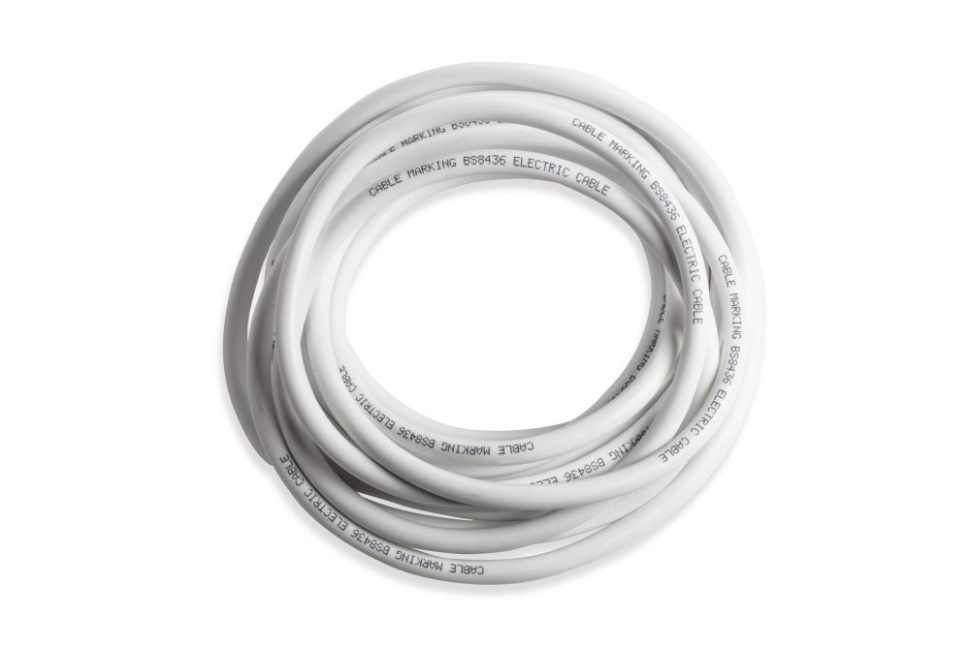
Cable marking is the process of applying identification or traceability information directly onto the outer surface of a wire or cable.
Depending on the application, manufacturers may need to print:
- Product or manufacturer identification
- Cable type and specification
- Batch or lot numbers
- Serial numbers
- Metre or sequential length marks
- Voltage or rating information
- Certification information
- Logos
- Variable production data
- Machine-readable codes where required
How do you choose the right cable marking printer?
Cable material
Consider whether you are marking PVC, PE, PP, rubber or other cable substrates, as material compatibility can affect print adhesion and marking performance.
Cable colour and contrast
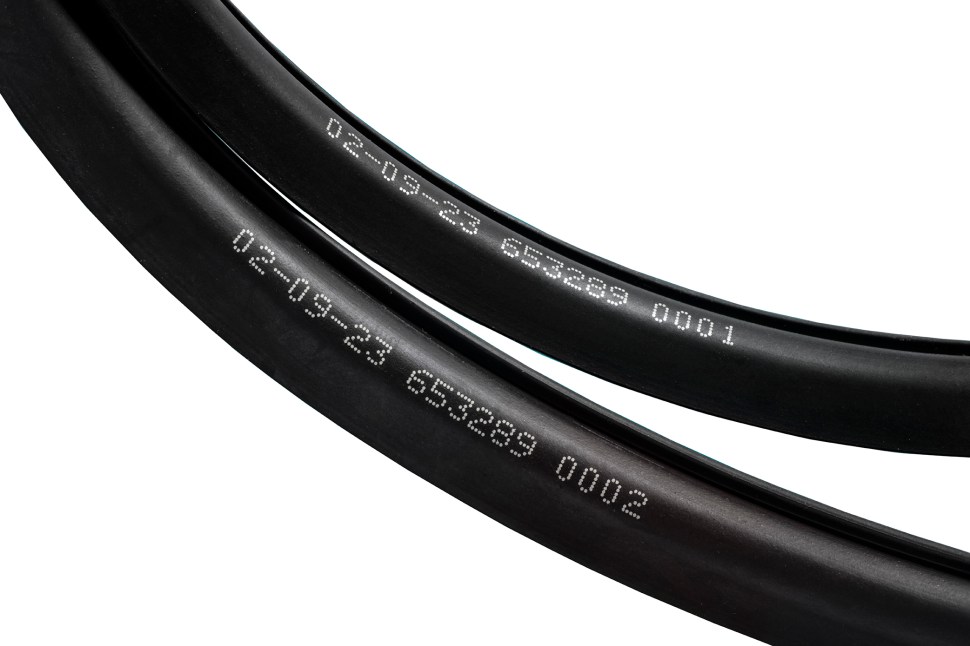
Check the level of visibility required. Dark cables may need high-contrast or pigmented inks to produce a clear, readable code.
Production line speed
Match the marking system to your normal and maximum production speed while considering code size, print frequency and cable diameter.
Required code and print quality
Consider what needs to be printed, including text, batch information, metre marks, logos, serial numbers or variable production data.
Code durability
Think about how the cable will be handled and whether the code needs to withstand abrasion, moisture, chemicals, heat or outdoor conditions.
Production environment and total cost
Consider consumables, maintenance, cleaning, operator intervention, downtime and long-term running costs — not only the printer purchase price.
CIJ vs laser: which is better for cable marking?
| Requirement | Continuous Inkjet (CIJ) | Laser Coder |
|---|---|---|
| Marking method | Non-contact ink printing | Laser interacts with cable surface |
| High-speed production | Well suited | Well suited when correctly specified |
| Variable data | Excellent | Excellent |
| Different cable colours | Flexible through ink selection | Depends on cable/laser interaction |
| Dark cable marking | High-contrast inks can be considered | Depends on achievable contrast |
| Permanent marking | Depends on ink and substrate | Permanent |
| Ink consumables | Required | Not required |
| Best suited to | Flexible high-speed production | Permanent marking applications |
Linx recommendation
Flexibility and high-speed printing are priorities
Continuous inkjet is well suited to production lines where cable materials, colours or code requirements change regularly. It offers flexible ink options and supports high-speed variable printing on continuously moving wire and cable.
Permanent identification is the priority
Laser marking can be a strong option where a permanent code and reduced use of marking consumables are important, provided the cable material is suitable for the selected laser technology.
Cable marking printer checklist
Use this checklist to gather key information about your application.
| Production requirement | What to check |
|---|---|
| Cable material | What is the cable jacket made from? |
| Cable colour | What level of contrast is required? |
| Cable diameter | How much printable area is available? |
| Line speed | What is the normal and maximum production speed? |
| Required code | Text, numbers, metre marks, logos or variable data? |
| Durability | Will the code face abrasion, water, chemicals or heat? |
| Environment | Is the production area dusty, hot or humid? |
| Integration | Does the printer need an encoder or production system? |
| Operating cost | Consider consumables, maintenance and downtime |
Test before you invest
Specifications can help narrow down your options, but they cannot fully predict how a particular cable will respond to an ink or laser.
Testing your actual cable is one of the most useful steps when selecting a cable marking printer.
A representative sample test can help assess:
- Code contrast
- Ink adhesion
- Print quality
- Character size
- Required print speed
- Drying performance
- Resistance to handling or abrasion
- Overall suitability of the marking technology
Where possible, the test should reflect the real material, colour, production speed and code requirements of the application.
Common cable marking problems and how to avoid them
Why does printing smudge on cable?
Smudging can occur when the ink is not correctly matched to the cable substrate, when drying conditions are unsuitable or when the printed surface comes into contact with other equipment before the ink has sufficiently dried.
Testing the cable with the proposed ink under realistic production conditions can help identify potential problems before installation.
How can you improve code contrast on dark cable?
Dark cable surfaces may require high-contrast or pigmented inks to produce a clearly visible code.
The correct solution depends on the substrate, cable colour and production requirements. Laser marking may also be considered where the material can produce the required contrast.
Why do cable codes become difficult to read after handling?
Cable can be exposed to winding, handling, abrasion and environmental conditions after printing.
If code durability is important, test the proposed marking method against the conditions the cable is likely to experience during production, storage, installation and use.
How can marking affect cable extrusion line efficiency?
If a marking system requires frequent cleaning, maintenance or operator intervention, it can create unnecessary disruption on a continuous production line.
Printer reliability, maintenance intervals and ease of operation should therefore be considered alongside print speed and quality.
Take Actions Now:
- Request a Print Sample to see the solution in action
- Download Product Brochure for detailed specifications
- Talk to an Expert to find the right coding solution for your retail operations