
PLASTIC BOTTLE PRINTING

GLASS BOTTLE PRINTING
Industrial Bottle Printing Machines for UK Manufacturers
Printing on bottles presents challenges most general coding machines aren’t built for: curved surfaces, wet or dusty environments, small circumference print areas, and strict UK labelling compliance requirements. Linx industrial bottle printing machines are engineered specifically for these conditions — trusted by UK manufacturers across beverages, cosmetics, pharmaceuticals, and chemicals to deliver consistent, legible codes at every production speed.
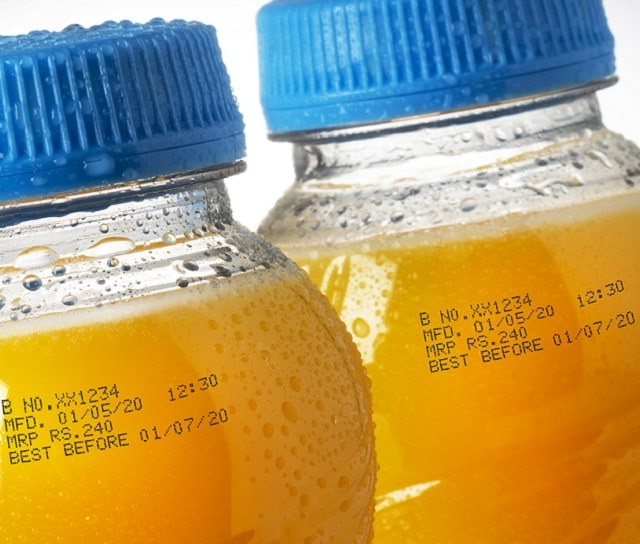
Linx industrial bottle printing machines apply expiry dates, batch codes, barcodes, and QR codes directly onto plastic, glass, and metal bottles without slowing your production line. Request a free sample print to see the difference on your bottle.
What is an Industrial Bottle Printing Machine?
An industrial bottle printing machine applies variable data: such as expiry dates, batch codes, barcodes, and QR codes directly onto plastic, glass, or metal bottles during production. In the UK, the three primary technologies are used continuous inkjet (CIJ), CO2 laser marking, and thermal inkjet (TIJ). Each suits different bottle materials, production speeds, and regulatory compliance requirements, from FMCG beverages to pharmaceutical packaging.
To find out more information and to request your samples with no obligation, click the button below.
Bottle Printing by Substrate: Which Technology Works Best?
Not all bottle printing machines work equally well on every material. The substrate the bottle’s surface material determines which coding technology will deliver reliable adhesion, the right contrast, and code durability across the product’s shelf life. Below is a guide to the most common bottle substrates used by UK manufacturers, with the recommended Linx coding technology for each.
Most common bottle material in UK beverages and FMCG. Smooth, low-porosity surface with moisture exposure in production.
Recommended technology: CIJ (standard and high-speed lines) | CO2 laser (permanent / premium codes)
Standard material for household chemicals, detergents, and personal care. Waxy surface — demands specialist adherent inks.
Recommended technology: CIJ with plastic-adherent ink
Used in pharma and cosmetics packaging. Chemically resistant — requires fast-dry or plastic-adherent CIJ ink formulations.
Recommended technology: CIJ (fast-dry ink) | TIJ (high-resolution compliance codes)
Common in industrial chemicals and some cosmetics. Flexible surface — CIJ handles well with oil-based inks at speed.
Recommended technology: CIJ with oil-based ink
Used in spirits, premium beverages, and pharmaceuticals. Non-porous — requires water-based or alcohol-resistant inks.
Recommended technology: CIJ (beverage and spirits) | TIJ (pharmaceutical glass)
Printing on caps requires small character accuracy on a curved metallic surface — often as a secondary code point.
Recommended technology: CIJ with small-character capability
Linx Industrial Bottle Printing Machines Range
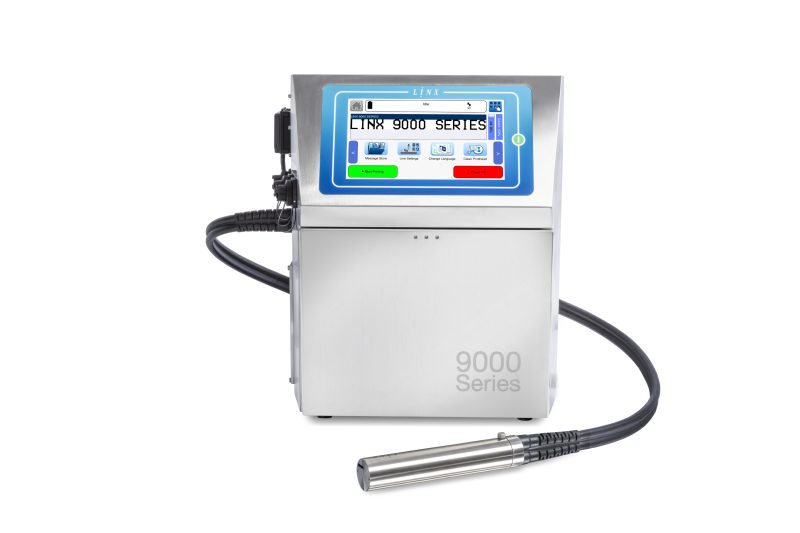
CIJ Bottle Printing Machine
Linx CIJ printers provide accurate, non-contact printing properties for any bottle shape. The diverse selection of inks includes water and oil-penetrating, fast-dry and plastic-adherent – designed for a range of CIJ printers.
Advantages:
- Durable, high-quality printing for any bottle shape
- Range of inks for specialist marking, e.g. water and oil-based, fast-dry and plastic-adherent
- Designed to integrate with your production line systems
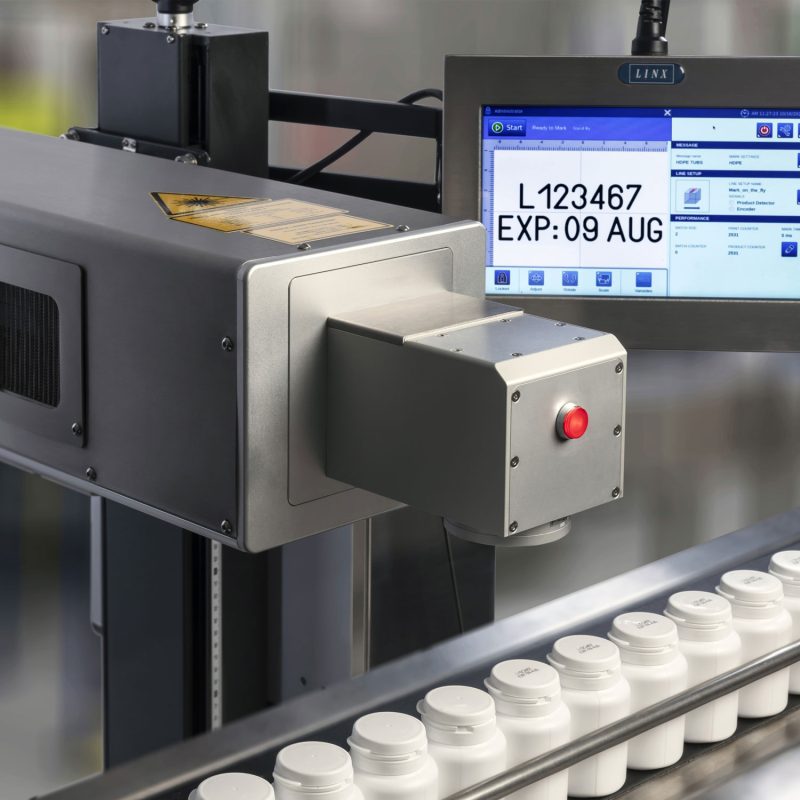
Laser Bottle Printing Machine
CO2 Laser can deliver a unique frosted effect on a bottle to produce a visible, permanent code. However, choosing the right laser requires matching the laser wavelength to the PET’s thickness.
Advantages:
- Permanent laser marking solution
- Wavelength options available to match the PET thickness
- Unique frosted effect on a bottle to produce a visible, permanent code
- Models available to engrave even on thin plastic surfaces to preserve the structural integrity of PET bottles
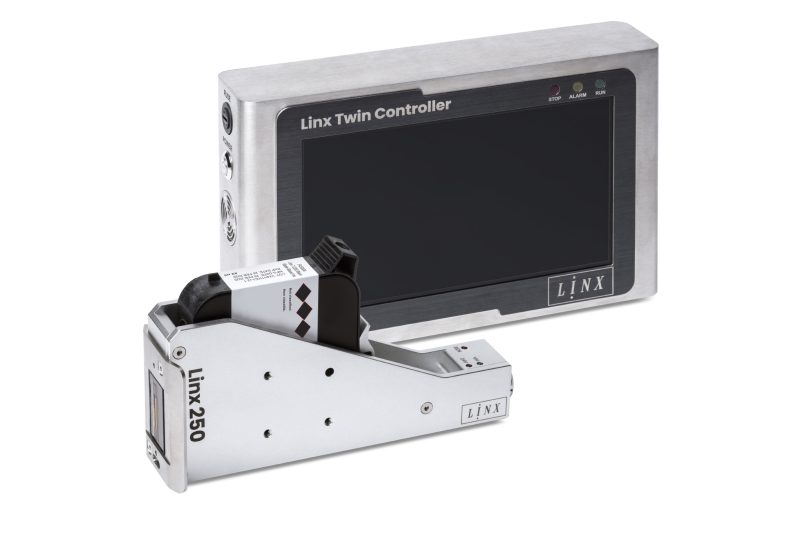
Thermal Inkjet Bottle Printers (TIJ)
Advantages:
- TIJ printers can handle various substrates, including glass, plastic, and metal, making them suitable for diverse packaging needs.
- TIJ printers can achieve resolutions up to 600 DPI, ensuring crisp and legible codes, including barcodes and QR codes.
- TIJ systems are generally smaller and lighter than Continuous Inkjet (CIJ) printers, making them easier to integrate into various production lines
Bottle Cap Printing Machine
Many industries require coding of date/time and batch or lot numbers onto the bottle cap, rather than onto the bottle or label which often presents challenges of small circumference and hard-to-code materials.
Our bottle printers are also capable of printing onto metal or plastic caps with small character printing that is legible and consistent.
Production Line Bottle Printers
For high-volume production, consistency and reliability in marking are crucial to avoid costly rework. Our bottle label printing machines are designed to integrate seamlessly into production lines, handling various line speeds. With automated functions for date, time, and batch coding, these printers reduce manual intervention. Our models offer static marking capabilities and specialized solutions such as UV visible inks and permanent laser marking, ideal for luxury branding or anti-counterfeit measures.

Glass Bottle Printing
Related Applications
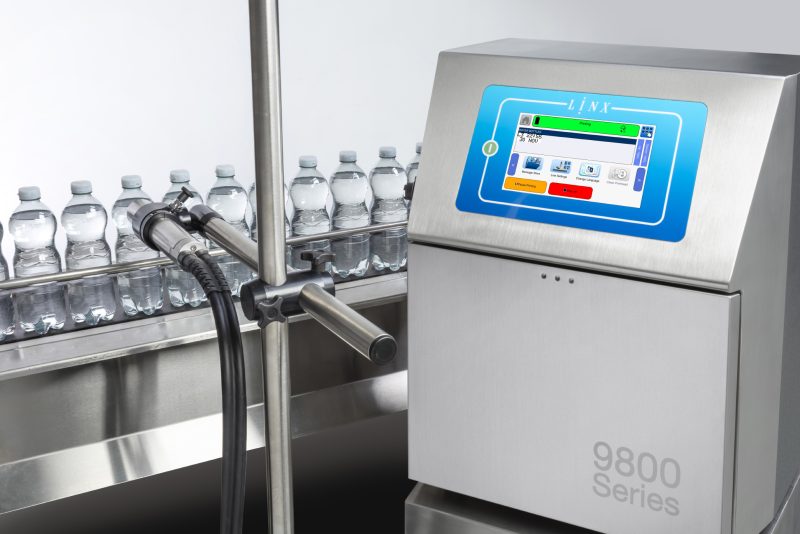
Solutions specifically designed for printing on a wide variety of plastics such as PVC, nylon, OPP, PP and PE.

Removable and permanent solutions for coding and marking onto all types of glass.
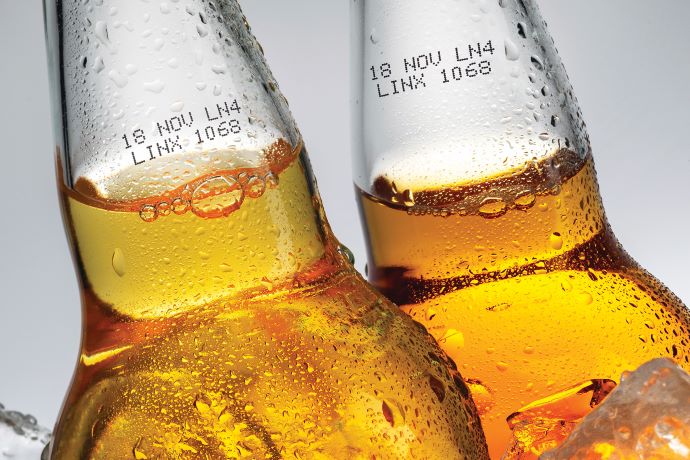
We offer a full range of beverage marking printers designed to meet the challenges faced by the beverage industry every day
Need Help Choosing the Right Solution?
Contact us now and your local Linx printing & marking expert will call you to discuss your printing requirements and provide you with a quote. Alternatively, fill in a Contact Us form or chat with us using the web chat facility.
Resources

Coding and Marking Solutions for Beverages
Decantae Mineral Water
Bruichladdich Distillery Co. Ltd Case Study

Top Ten Tips for Choosing the Right Coder
Inks Brochure
FAQ – Bottle Printing Machines
For most plastic bottle applications in the UK, a continuous inkjet (CIJ) printer is the recommended solution. CIJ machines offer non-contact printing at high line speeds, with specialist inks that adhere to PET, HDPE, PP, and PVC surfaces — even in humid or dusty production environments. For permanent, ink-free codes on PET bottles, a CO2 laser marking system is the superior choice.
Automatic expiry date and batch code printing on bottles is achieved by integrating a CIJ or TIJ printer into your existing production line. The printer connects to your line control system, reads the required date format, and jets the code onto each bottle as it passes — with no contact and no manual intervention. Linx systems support date, time, batch, and shift codes as standard, and can be updated remotely across multiple lines.
Yes. Linx CIJ bottle printing machines use non-contact inkjet technology, which means the printhead does not touch the bottle surface. This makes them fully compatible with round, oval, tapered, and irregular bottle shapes — including small-circumference bottles where contact-based systems struggle. CO2 laser systems are equally effective on curved PET surfaces, delivering consistent, high-contrast codes regardless of bottle geometry.
CIJ (continuous inkjet) bottle printing uses ink droplets jetted onto the bottle surface, making it fast, flexible, and compatible with almost any substrate or bottle colour. CO2 laser bottle marking removes a thin layer of the bottle surface to create a permanent, ink-free code — ideal for PET bottles where a frosted or etched finish is required. CIJ has ongoing ink costs; lasers have near-zero consumable costs but higher initial investment.
Yes. Linx industrial bottle printing machines are designed to integrate seamlessly with existing UK production lines, including conveyor, filling, and capping systems. Our CIJ, laser, and TIJ systems support standard industry interfaces and can be connected to production management software for centralised code control. Our UK-based technical team provides full installation support, line commissioning, and ongoing service to minimise downtime.
Industrial bottle printing machines are used across a wide range of UK industries where bottles must carry mandatory or traceability codes. These include: food and beverage (best-before and lot codes), pharmaceutical (batch numbers and serialisation codes under UK MHRA regulations), cosmetics and personal care (ingredient traceability), household chemicals (safety and compliance coding), and premium spirits (anti-counterfeit laser marking). Linx bottle coding systems are compliant with UK GS1 barcode standards and support 2D codes including QR and Data Matrix formats.