Dairy Coding and Marking Solutions for UK Production Lines
Reliable coding on milk, yoghurt, cheese and other dairy packaging
Linx dairy coding and marking solutions apply clear, accurate variable information including use-by dates, best-before dates, batch numbers, lot codes and traceability data to dairy products and packaging.
Choose from continuous inkjet, thermal transfer, laser and case-coding technologies for plastic bottles, yoghurt pots, foil lids, flexible films, cartons, sleeves and outer cases.
- Free, no-obligation print samples
- UK-based sales and technical support
- CIJ, TTO, laser and case-coding options
- Solutions for chilled, wet and fast-moving production lines
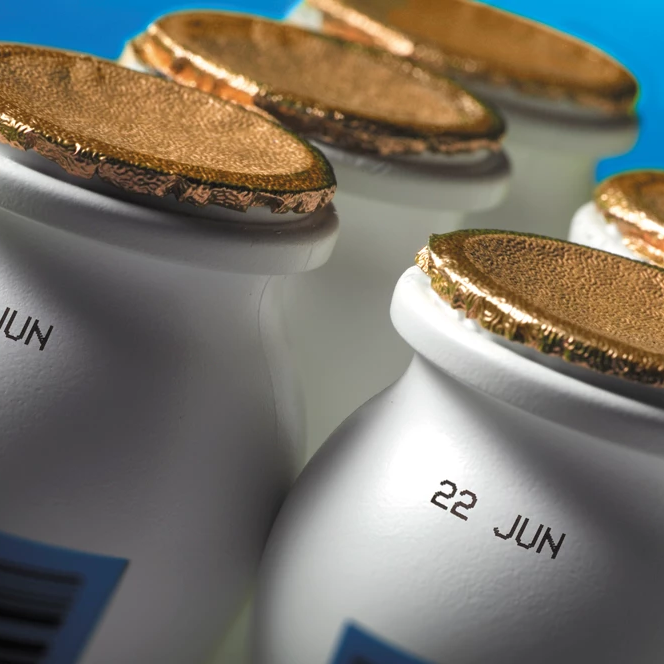
To find out more information and to request your samples with no obligation, click the button below.
Dairy product coding designed for demanding production environments
Dairy coding and marking is the process of applying variable identification and traceability information to dairy products, primary packaging and secondary packaging during production.
Dairy lines present particular coding challenges. Packaging may be cold or affected by condensation, production areas can require frequent cleaning, products often have short shelf lives, and multiple SKUs can create frequent message and line changeovers. Codes must remain clear without disrupting production or detracting from pack design.
Linx helps dairy manufacturers select a coding solution based on:
- The packaging material and surface
- Whether the surface is cold, wet, curved or flexible
- Required code content and print size
- Production-line speed
- Cleaning and washdown requirements
- Frequency of product and message changes
- Barcode or 2D-code requirements
- Integration with existing production equipment
Printing on dairy products and packaging materials
Different packaging formats require different print technologies, inks and integration methods. A print sample under realistic production conditions is the most reliable way to confirm adhesion, contrast and durability.
| Dairy application | Typical code | Technologies to consider |
|---|---|---|
| Plastic milk bottles | Use-by date, batch and line code | CIJ or a suitable laser configuration |
| Glass milk bottles | Date and lot information | CIJ or laser, subject to substrate testing |
| Yoghurt pots and tubs | Use-by date and batch number | CIJ on the container; TTO or laser on compatible lidding film |
| Foil and film lids | Date, price, batch, barcode or text | TTO, CIJ or laser depending on material |
| Cheese film and flow wrap | Best-before date and lot code | TTO or CIJ |
| Grated-cheese pouches | Date, batch and traceability data | TTO or CIJ |
| Cartons and sleeves | Date, batch, barcode or product data | CIJ, thermal inkjet or laser |
| Dark or coloured packaging | High-contrast variable code | Pigmented CIJ, subject to print testing |
| Outer cases and trays | Product, batch, barcode and logistics data | Large-character case coding or thermal inkjet |
| Multipacks | Date, batch and traceability information | Selected according to wrap, carton or label material |
Choosing a dairy coding and marking solution
Most dairy code requirements are reasonably simple at present, but future food labelling legislation always has an element of uncertainty. Choosing a future-proof Dairy Industry Printer, which allows add-ons to be integrated at any time, will enable dairy manufacturers to react quickly to changing trends, customer demands or legislation without having to invest in new equipment.
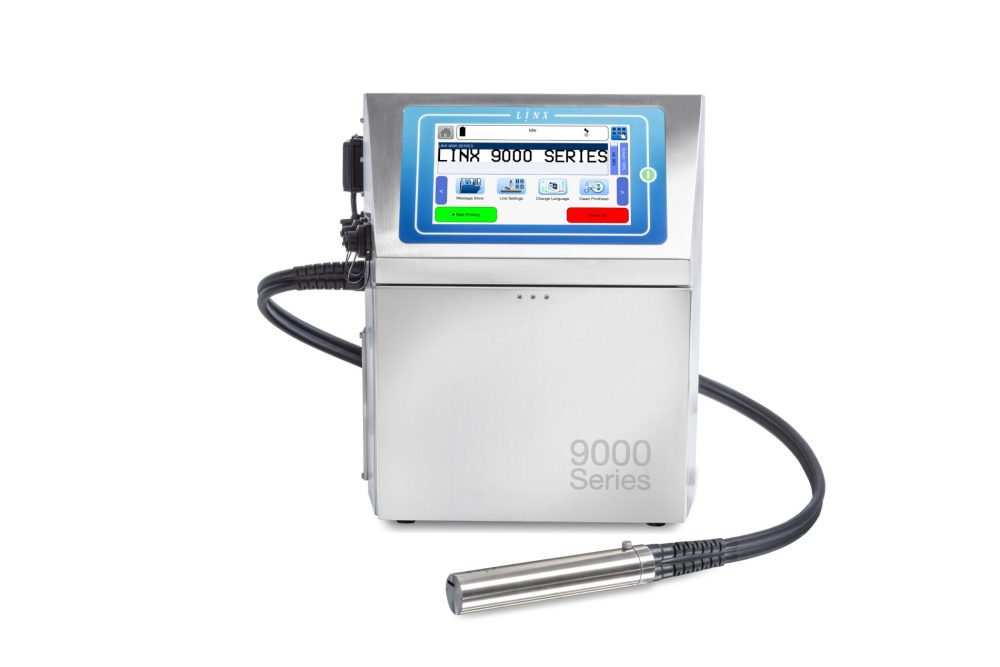
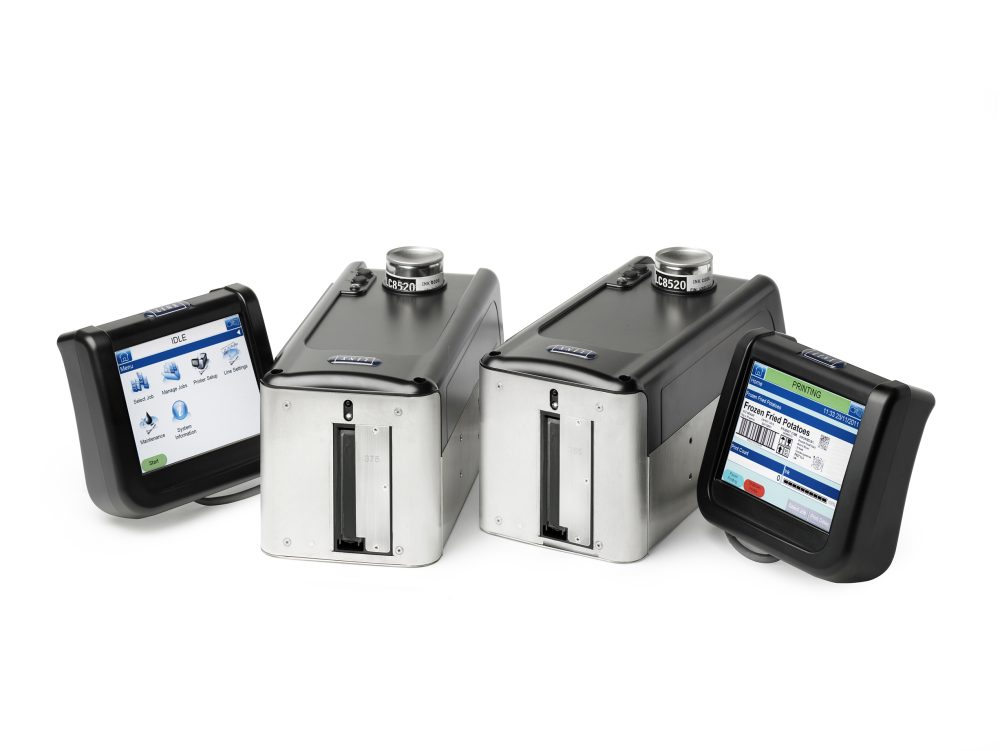
Continuous Inkjet
Fast, non-contact printing for milk bottles, pots, tubs and cartons. Ideal for applying clear date, batch and traceability codes on fast-moving dairy lines.
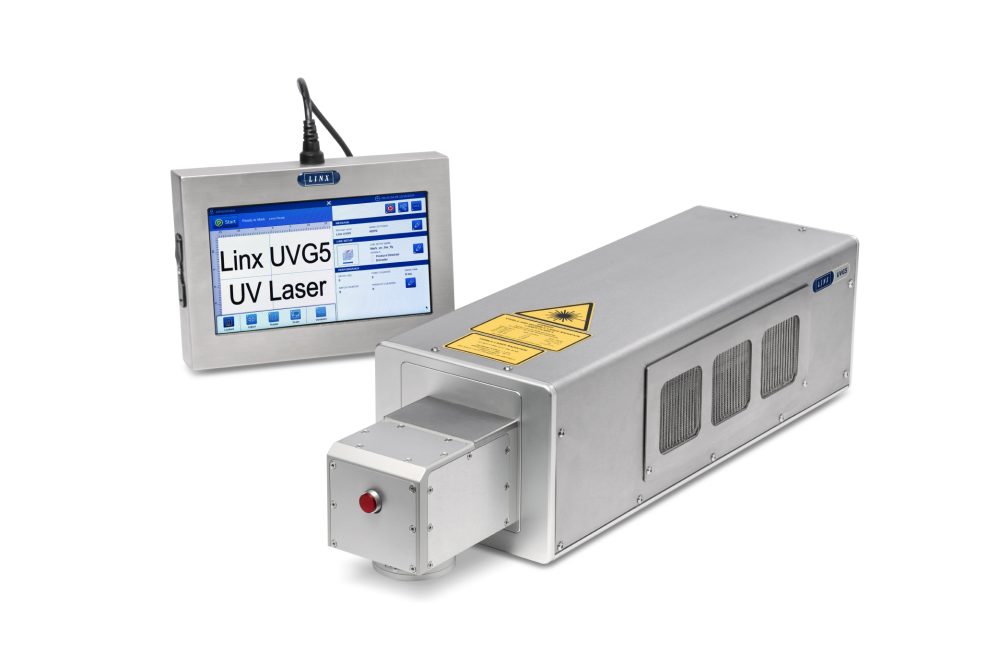
Laser Coders
Permanent, smudge-resistant coding on compatible films, cartons and bottles without using ink or ribbon.
Large-character marking printers
Large, clear batch, barcode and logistics information printed directly onto dairy boxes, trays and secondary packaging.
Reduce coding errors during dairy product changeovers
Frequent changes between flavours, pack sizes, retailers and shelf lives increase the risk of an incorrect message being selected.
Depending on the printer and line configuration, Linx can support more controlled changeovers through:
- Stored product and message setups
- Scheduled message changes
- Restricted user permissions
- External message selection
- Integration with line-control systems
- Remote printer visibility
- Barcode and 2D-code generation tools
Linx dairy solutions have also been used where manufacturers needed to store and retrieve line setups for repeat production.
Contact Us
Why not get in touch with one of our sales reps to talk about how Linx can support your coding and marking needs?
Resources – Case Study
Tnuva: High-Speed Yoghurt Pot Coding
At Tnuva Eilon Tavor, Linx CIJ printers apply best-before dates and production times to 40,000 yoghurt pot lids per hour. Automated setup and stored line configurations support fast product changeovers, while low-maintenance operation helps keep production moving.

Tnuva dairy case study
Resources – Whitepaper, Blogs and More

Choosing the Best Dairy Batch Printing Solution White Paper
UK Food Date Coding Guide: Best Before, Use-By, Batch Code – Blog
Coding for High-Humidity & Washdown Production- Blog
Linx Inks Brochure for Dairy Coding and Marking
Superior Dairy Coders from Linx UK
Milk Bottle Coding
Frequently asked questions
Common codes include use-by or best-before dates, batch and lot numbers, production times, line or factory identifiers, barcodes, QR codes and Data Matrix codes. The required information depends on the product, market and customer specification.
There is no single best technology for every dairy application. CIJ is flexible across bottles, pots and cartons; TTO is well suited to compatible flexible films; laser produces permanent marks on suitable materials; and case coders apply larger information to secondary packaging. A print test should be completed before selection.
Yes, subject to selecting a suitable printer, ink, print position and operating conditions. The actual packaging should be tested while cold and under representative condensation, storage and handling conditions.
CIJ is commonly considered for high-speed, non-contact coding on plastic or glass milk bottles. Laser may be suitable for compatible materials. Bottle material, colour, curvature, condensation and line speed should be assessed before making a recommendation.
Yes. Linx TTO, CIJ and laser technologies can be considered for compatible foil lids, flexible film, flow wrap and pouches. The correct option depends on the substrate, print stage, code content and production speed.
Yes. Linx Printing Technologies is based in St Ives, Cambridgeshire, and provides UK sales, application advice, print sampling, demonstrations, training and technical support.
Find the right coding solution for your dairy line
Whether you need milk bottle coding, yoghurt-lid printing, cheese-film coding or traceability information on outer cases, Linx can test your packaging and recommend an appropriate solution.