
UK Food Date Coding Guide: Best Before, Use-By, Batch Codes and the Right Date Code Printer
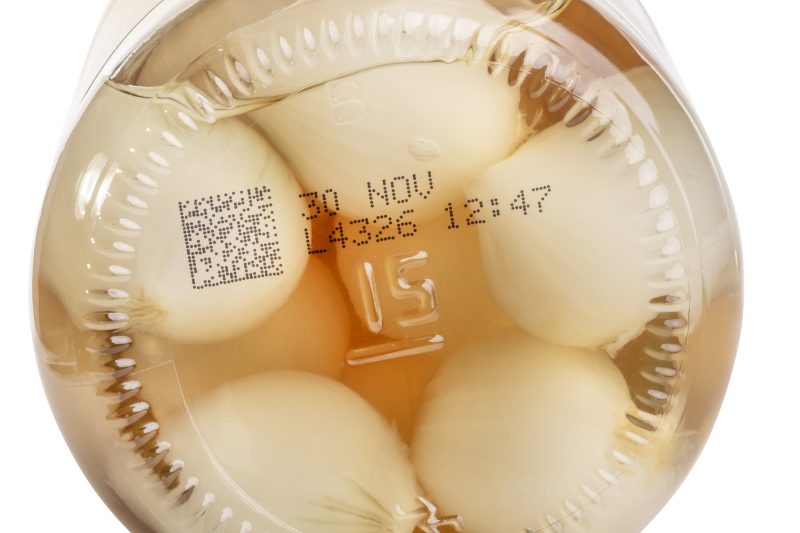
Food date coding is a small detail with a big impact. For UK food manufacturers, packers and retailers, the right code helps protect consumers, reduce waste, support traceability and avoid costly product recalls.
Whether you are printing a best-before date, use-by date, batch code or lot number, the information must be clear, accurate and durable enough to remain readable throughout the product’s shelf life.
This guide explains the key UK food date coding rules in 2026 and gives a simple overview of how to choose the right date code printer for your packaging line.
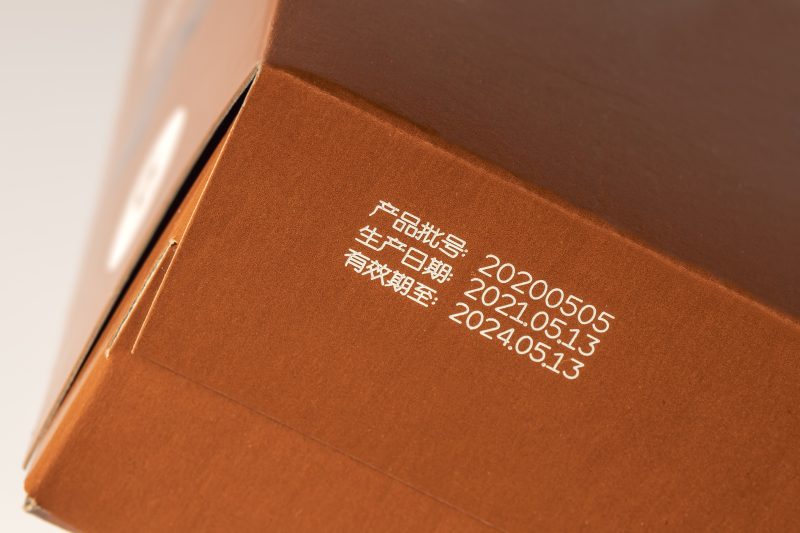
Why food date coding matters
Food date coding is not only about meeting labelling requirements. It also supports:
- food safety
- stock rotation
- product quality
- retailer compliance
- traceability
- withdrawal and recall management
A missing, incorrect or unreadable date code can lead to rejected stock, production delays, customer complaints or product recalls. For short shelf-life chilled products, a coding error can become a serious food safety issue.
Best before vs use-by: what is the difference?
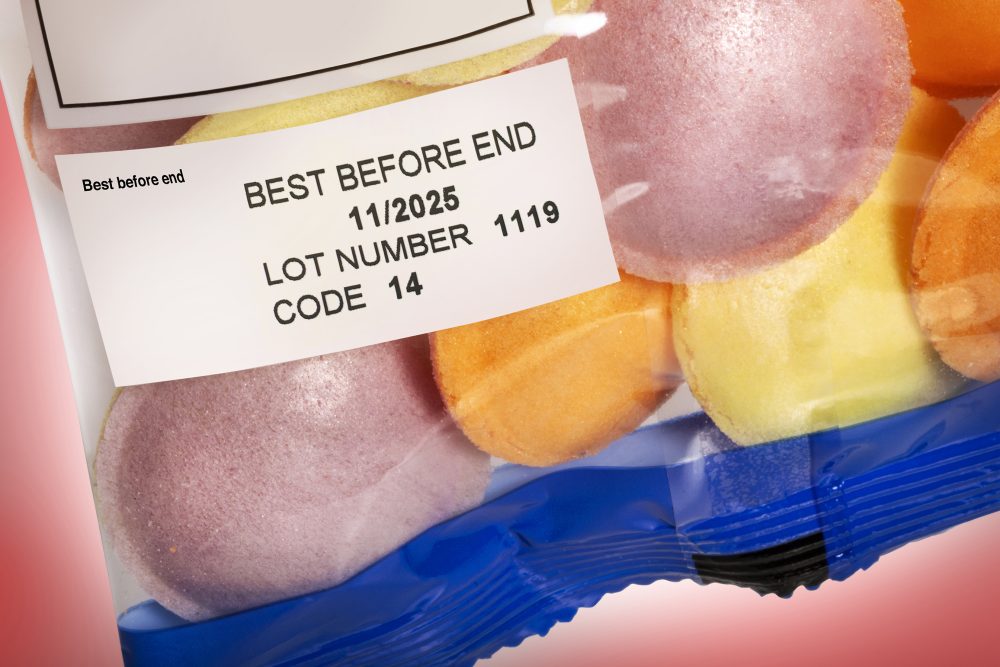
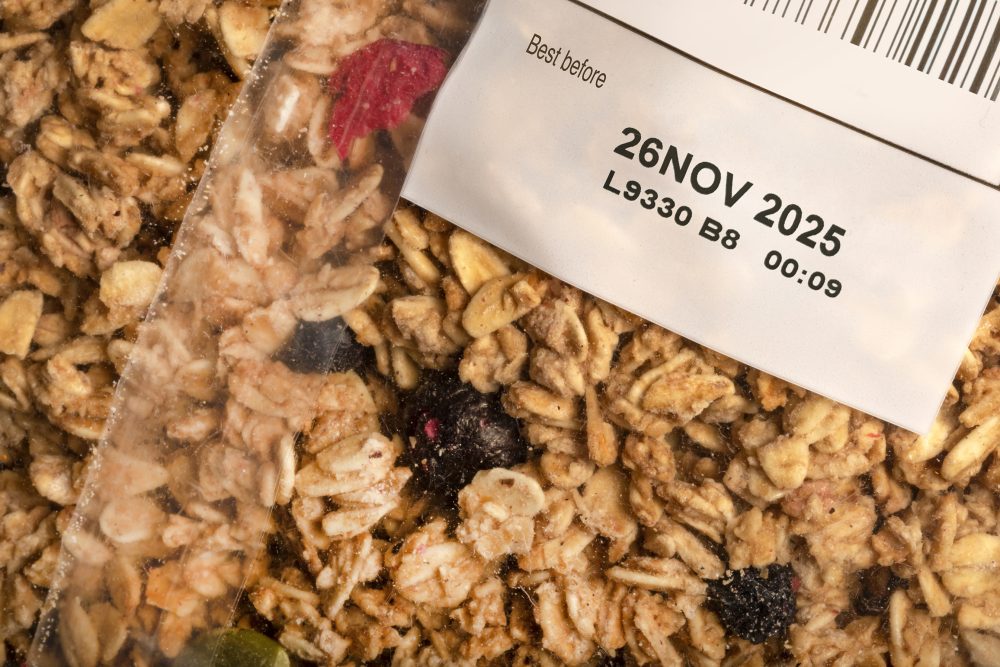
The most important distinction is simple:
Use-by dates are about safety. Best-before dates are about quality.
| Date mark | Meaning | Common examples |
| Use by | The food should not be eaten after this date for safety reasons. | Fresh meat, cooked meats, ready meals, prepared salads, and some dairy products. |
| Best before | The food may still be safe after this date, but quality may be reduced. | Frozen foods, dried foods, tins, pasta, rice, snacks and some cheeses. |
| Best before end / BBE | Used for longer-life products where month/year or year may be enough. | Ambient, canned, dried or long shelf-life foods. |
| Batch / lot code | Identifies a production batch for traceability. | Most prepacked foods. |
What is a use-by date?
A use-by date is required for foods that could become unsafe after a short period, even if they look or smell normal.
Typical examples include chilled ready meals, fresh meat, poultry, fish, cooked meats, soft cheeses and prepared salads.
Example formats:
- Use by: 23 June 2026
- Use by: 23/06/2026
- Use by: see front of pack
For consumer clarity, writing the month in words can help avoid confusion, especially where numeric dates could be misread.
What is a best-before date?
A best-before date tells the customer how long the product is expected to remain at its best quality. After this date, the food may lose flavour, texture, colour or freshness, but it is not automatically unsafe.
Example formats:
- Best before: 23 June 2026
- Best before end: June 2026
- BBE: 2026
- Best before: see base of pack
Best-before dates are common on dry, frozen, canned and longer-life foods.
What are batch codes and lot codes?
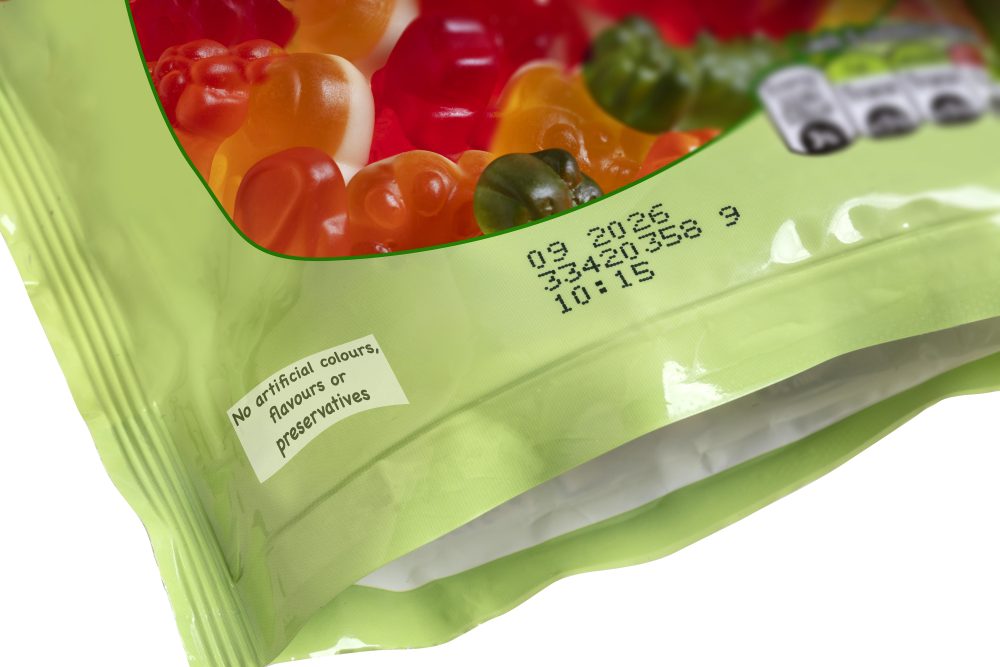
A batch code or lot code identifies a group of products made, packed or processed under similar conditions. This helps a business trace affected products if there is a quality or safety issue.
Example batch code formats:
- L260618A
- LOT 18JUN26-B
- BATCH 026170
- L2 18/06/26 SHIFT B
In many cases, a clear batch code can reduce the scale of a recall because the business can identify exactly which products are affected.
Common food date coding mistakes
Food businesses should avoid these common errors:
- Using the wrong date mark: Do not use a best-before date if the product needs a use-by date for safety reasons.
- Printing unclear dates: Avoid formats that consumers may misunderstand. A date such as 06/07/26 can be confusing without context.
- Manual date entry errors: Typing dates manually increases the risk of wrong days, months or years. Stored templates and automatic date calculation can reduce mistakes.
- Poor print placement: Codes printed on seals, folds, dark artwork or curved areas may become hard to read.
- Codes that rub off: Food packaging may face chilling, freezing, condensation, handling and transport. The code must remain legible.
- Missing batch traceability: A date alone may not provide enough traceability for every production environment. A separate lot or batch code is often useful.
Choosing the right food coding printer
The right food date code printer depends on your packaging type, line speed, environment and code requirements. You do not need the most advanced printer; you need the one that prints clearly and reliably on your actual product.
| Printer type | Best for |
| Continuous inkjet/ CIJ | Fast lines, bottles, cans, jars, pouches, trays and curved surfaces. |
| Thermal inkjet / TIJ | Cartons, labels, sleeves and high-resolution text or barcodes. |
| Thermal transfer/ TTO | Flexible films, flow-wrap, VFFS bags and lidding film. |
| Laser coding | Permanent, ink-free marks on suitable materials. |
| Large character marking printers /case coders | Outer cases, cardboard boxes, pallets and logistics labels. |
UK food date coding in 2026 comes down to three essentials: accuracy, legibility and traceability.
A use-by date protects consumers from unsafe food. A best-before date protects product quality expectations. A batch or lot code helps your business trace products quickly if something goes wrong.
The right date code printer should make this process easier, not more complicated. Choose a system that works with your packaging, your production speed and your compliance needs.
Take Actions Now:
- Request a Print Sample to see the solution in action
- Download Product Brochure for detailed specifications
- Talk to an Expert to find the right coding solution for your retail operations