
Food Packaging Printers and Coding Machines
Print clear, reliable best-before and use-by dates, batch and lot codes, barcodes and 2D codes across flexible film, cartons, bottles, cans, labels and outer cases.
Linx helps food manufacturers select the right printing technology, ink and integration for their packaging material, production speed and operating environment. Test the proposed code on your own packaging before choosing a solution.
Match the printer and ink to your substrate, line speed and environment.
Print dates, batch codes, barcodes, QR codes and Data Matrix codes.
UK Application Support
Packaging sample testing

Service and training

Remote monitoring
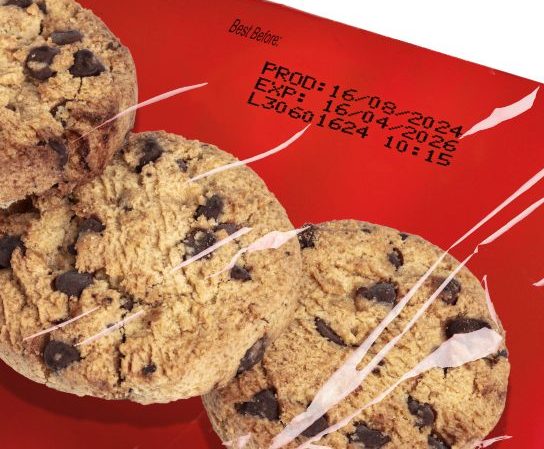
See how your code could look and perform on your own packaging. Send us your packaging and code requirements to receive a free, no-obligation print sample.
Choose the right food coding machine for your packaging
There is no single best printer for every food packaging line. The right technology depends on the packaging material, available print area, code content, line speed, production environment, required print durability and how the coder will integrate with the packaging equipment.
| Packaging or application | Technologies to consider | Typical selection factors |
|---|---|---|
| Flexible film, flow-wrap, pouches and VFFS/HFFS lines | TTO; CIJ for selected applications | Film type, print position, intermittent or continuous motion, code size and ribbon or ink performance |
| Bottles, jars, cans and rigid plastic packs | CIJ or laser | Material, curvature, condensation, line speed and permanence |
| Cartons, sleeves and labels | TIJ, CIJ or laser | Surface coating, resolution, print area, contrast and code content |
| Corrugated cases and outer boxes | Large-character case coding | Direct-to-box printing, barcode size, print height and replacement of labels or pre-printed cartons |
| Eggs, cheese and selected food products | CIJ with an approved direct-food ink and application setup | Food type, ink formulation, intended contact, jurisdiction and traceability requirements |
Application note: Final technology and ink selection should be confirmed through packaging tests and an integration review. Surface treatments, coatings, condensation and production conditions can materially affect print quality.
What can food packaging printers print?
Depending on the selected technology and configuration, a food coding system can print:
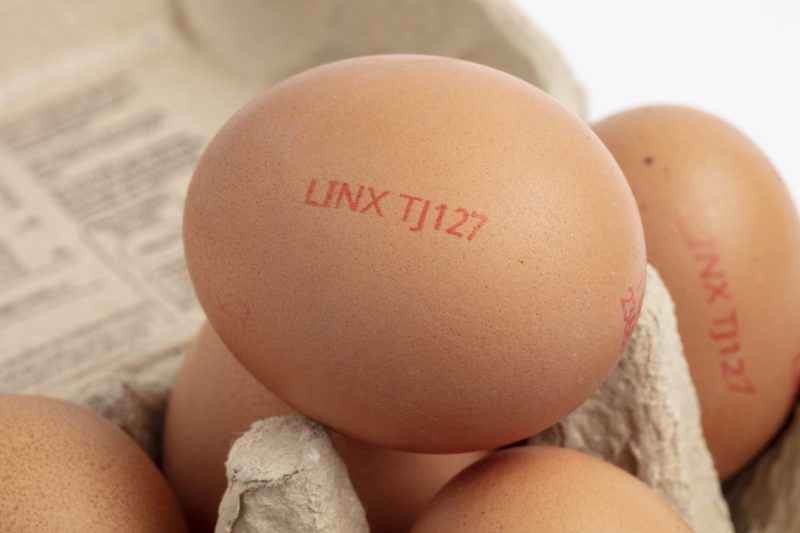
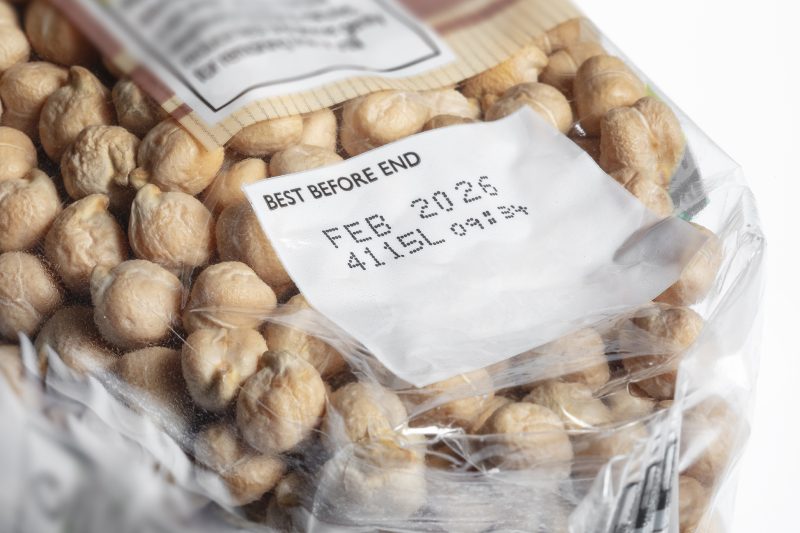
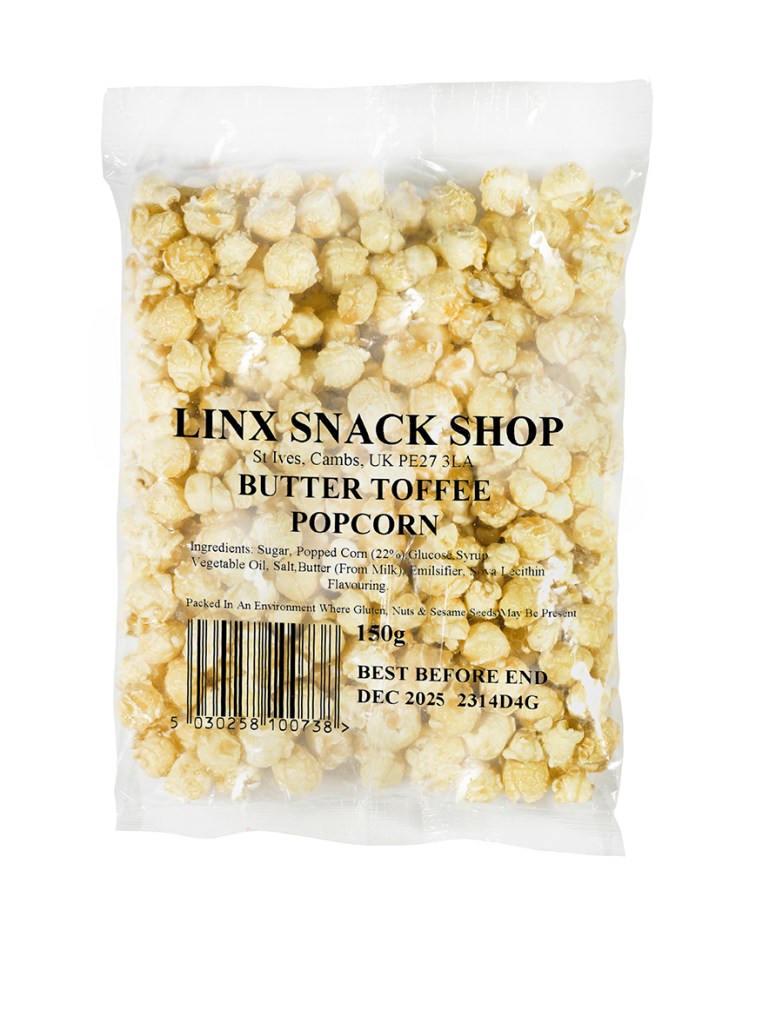
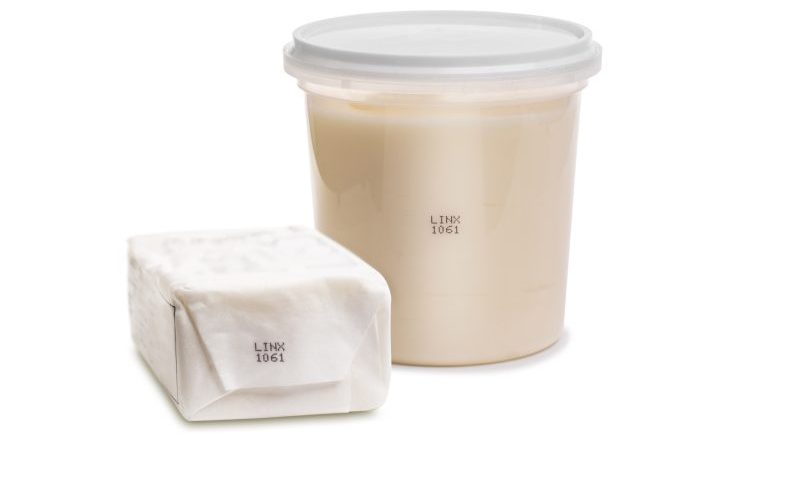
- Best-before and use-by dates
- Batch and lot identifiers
- Product, shift, line and production identifiers
- 1D barcodes
- QR codes and Data Matrix codes
- GS1-compatible 2D codes where supported
- Product descriptions, ingredients or variable text
- Logos and larger case-marking graphics
Food packaging printing technologies
Linx printers for food packaging are suitable for coding on a wide range of packaging materials used by food manufacturers, including paper labels, cardboard and plastic packaging, bottles, and even directly onto food products themselves such as eggs or cheese.
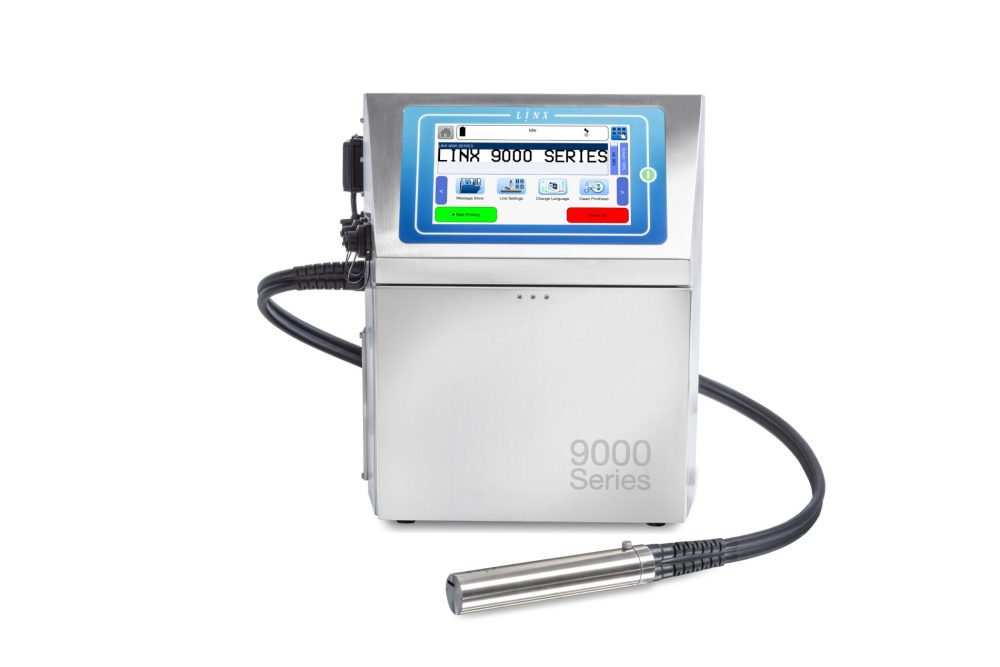
Continuous Inkjet (CIJ) Printers
Versatile, non-contact printing for bottles, cans, cartons, plastics and other fast-moving products. Ideal for dates, batch codes and traceability information.
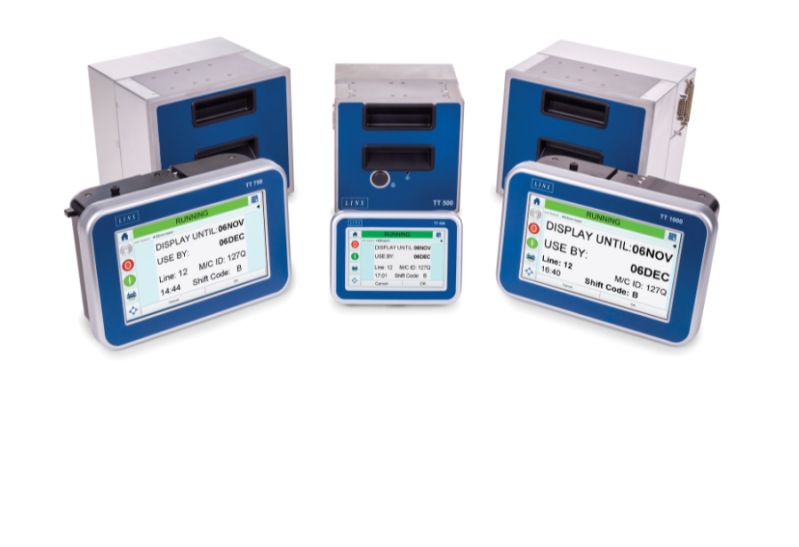
Thermal Transfer Overprinters
High-resolution printing for flexible films, pouches, labels and flow-wrap packaging. Ideal for text, barcodes, 2D codes and graphics.
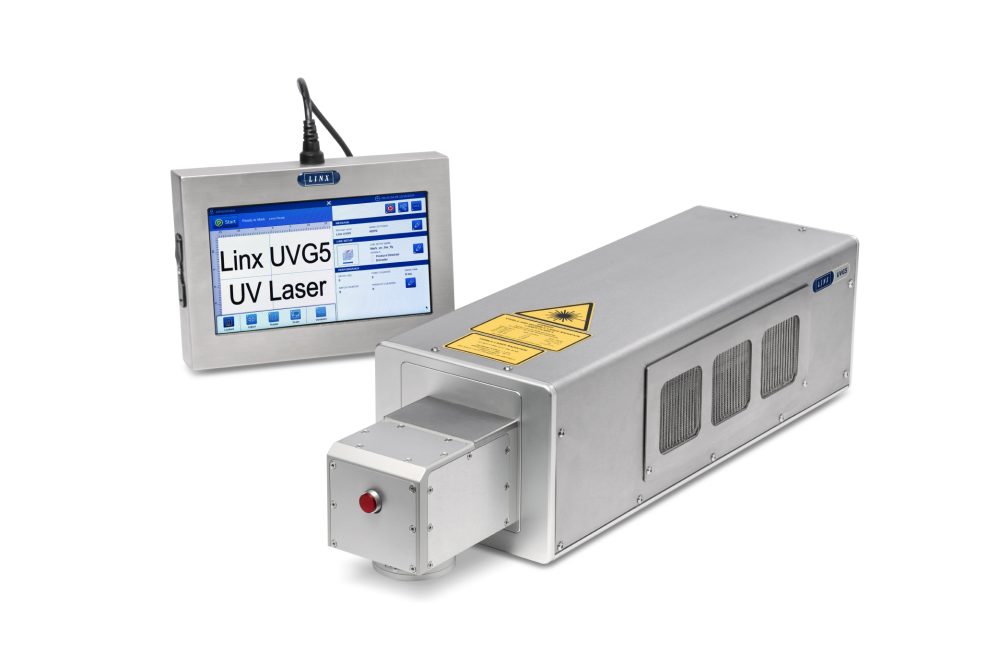
Laser Coding Systems
Permanent, high-quality marking on compatible films, cartons, glass, metal and plastics, without ink or ribbon consumables.
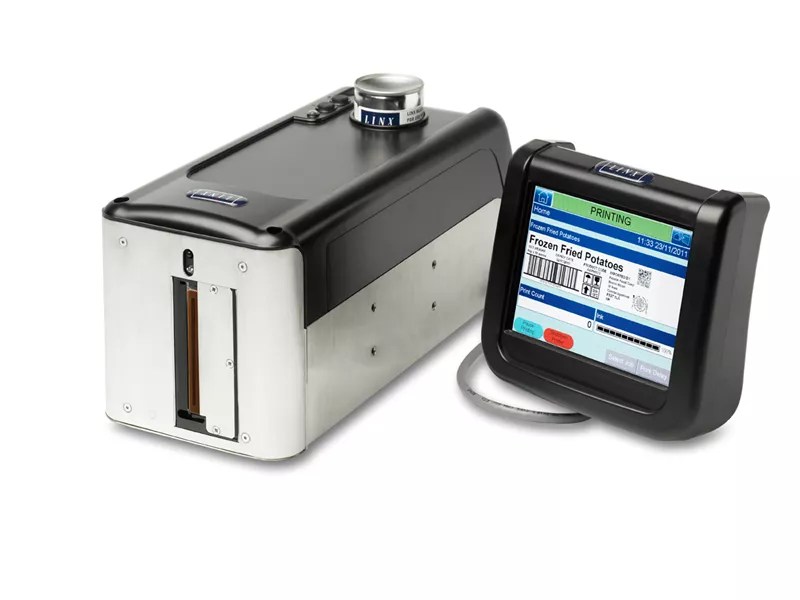
Large-Character Case Coders
Print product information, dates, barcodes and logos directly onto corrugated boxes and outer cases, reducing the need for labels.
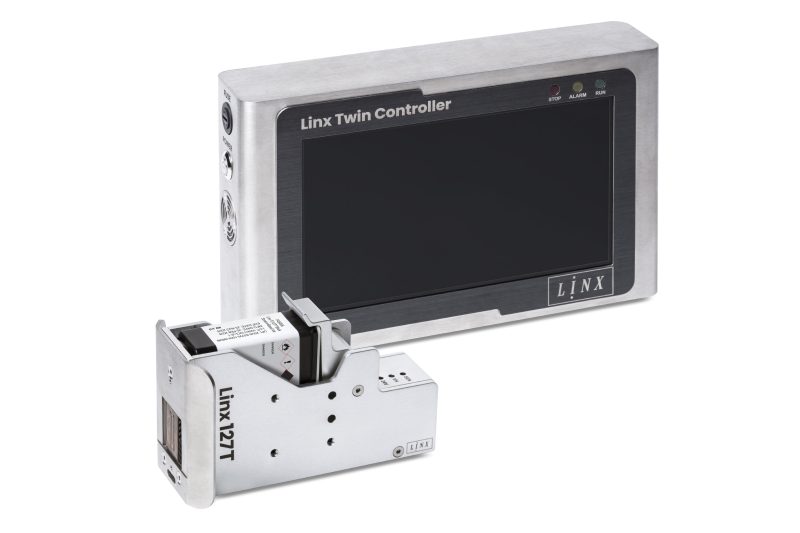
Thermal Inkjet Printers
Compact, high-resolution printing for cartons, sleeves, labels and other consistently presented packaging. Suitable for text, barcodes and QR codes.

Inks and Fluids
Application-specific inks and fluids for reliable adhesion, contrast and code durability across different packaging materials and production environments.
Not sure which printing technology fits your line?
Tell us your packaging material, code requirements, production speed and operating environment. A Linx specialist will help identify the most suitable printer and ink options for your application.
Printing directly onto food
Linx configurations can print directly onto food products such as eggs and cheese using dedicated food-grade inks.
Direct-food printing must be treated as an application-specific decision. The exact food product, ink formulation, intended contact, destination market, production process and supporting technical documentation should be reviewed before implementation. The term “food grade” should not be interpreted as blanket approval for every food, jurisdiction or contact condition.
Linx currently provides a dedicated food-printing application and supporting food-grade ink information for direct coding applications.
Prepare for GS1 2D barcodes and richer traceability
As businesses adopt more data-rich packaging, QR codes and Data Matrix codes can carry or connect users to more information than a traditional linear barcode.
Depending on the data structure and application, 2D codes can support batch and expiry information, traceability, product authentication, recycling guidance and consumer-facing digital content.
Linx is listed as a GS1 UK Approved partner and offers coding technologies capable of applying GS1 2D codes in suitable configurations.
Resources – Case Study
Licensed Homebake Packer Filler: coding on homebake packaging
A leading licensed homebake packer filler based in Oxfordshire required a reliable and efficient coding solution for it’s homebake finishing line, which operates at speeds of up to 40 units per minute, running 8-hour shifts, five days a week.
After trialling the Linx 8920 CIJ printer, they had a printer that integrated seamlessly into production while reducing maintenance and operating costs.

Homebake Packer Filler
Quality Foods: clear coding on bacon case
Scottish bacon supplier Quality Foods uses a Linx IJ355 to print the product name, pack size, product code and best-before date directly onto cardboard cases.
The Linx case study reports that the system codes 2.8 boxes per minute, with the line operating 50 hours per week throughout the year. Quality Foods identified clear printing, reliability and low ownership cost among its selection factors.
Quality Foods
Mar-Ne-Váll: direct case coding at up to 30 boxes per minute
Frozen-food producer Mar-Ne-Váll moved from labelling boxes to direct case coding following a production-line trial.
Its Linx IJ355 prints text, logos and EAN13 barcodes on up to 30 brown boxes per minute. The Linx case study reports reduced maintenance stoppages and savings on consumables following the installation.
Mar-Ne-Váll
Resources – Whitepaper, Blogs and More

Coding Systems for Lean Production White Paper
UK Food Date Coding Guides 2026-Blog
Choosing the Right Industrial Ink for Food Coding- Blog
Food Manufacturers Turning to Continuous Ink Jet- Blog
Laser Coding can be Beneficial for the Food and Beverage- Blog
Smart Coding Solutions for Confectionery & Snack- Blog
Linx Inks Brochure for food coding and marking
Linx Food Infographic
FAQ- Food Packaging Printers
The best technology depends on the packaging material, line speed, code size, production environment and required durability. CIJ is versatile across many surfaces and shapes; TTO is commonly used on flexible film; TIJ provides high-resolution printing on suitable flat packaging; laser creates permanent marks on compatible materials; and large-character printers are commonly used on outer cases.
TTO is often the first technology considered for flow wrap, pouches, labels, foils and flexible films because it can produce high-resolution variable information. CIJ or laser may suit selected films and line arrangements. The material, coating, packaging-machine movement and print position should be tested before selection.
Selected systems can print directly onto products such as eggs and cheese using dedicated food-grade inks. The exact food, ink formulation, contact condition, production process, intended market and technical documentation must be reviewed before implementation.
Moisture, condensation, dust, temperature and cleaning routines can affect printer reliability, ink adhesion and code quality. The assessment should consider printer protection, mounting position, consumable selection and the condition of the packaging at the moment it is printed.
The rules vary by product and market. In Great Britain, required information can include date information, lot identification, ingredients, warnings, storage instructions and responsible-business details. Prepacked foods usually require either a best-before or use-by date, although exemptions apply. The food business remains responsible for confirming the requirements for its products.
Yes. Linx offers free, no-obligation print samples for new and existing customers. Testing can help assess code appearance, adhesion and compatibility with your packaging material and production conditions.
Test your code on your packaging before you buy
Send us your packaging material and production requirements. A Linx application specialist will assess the application, recommend suitable technologies and arrange a free, no-obligation print sample.