Metal Part Marking Printers and Coders
Metal parts need codes that survive heat, oil, coolant, abrasion and handling for the life of the part. Whether you are marking brake components, extruded profiles, fasteners, tubes, electronic housings or coated sheet, the right method depends on the metal, the finish, the code you need and how the part moves on your line.
Linx supplies two proven approaches for marking metal:
- Laser marking for permanent marks directly in or on the metal surface, with no ink or solvent.
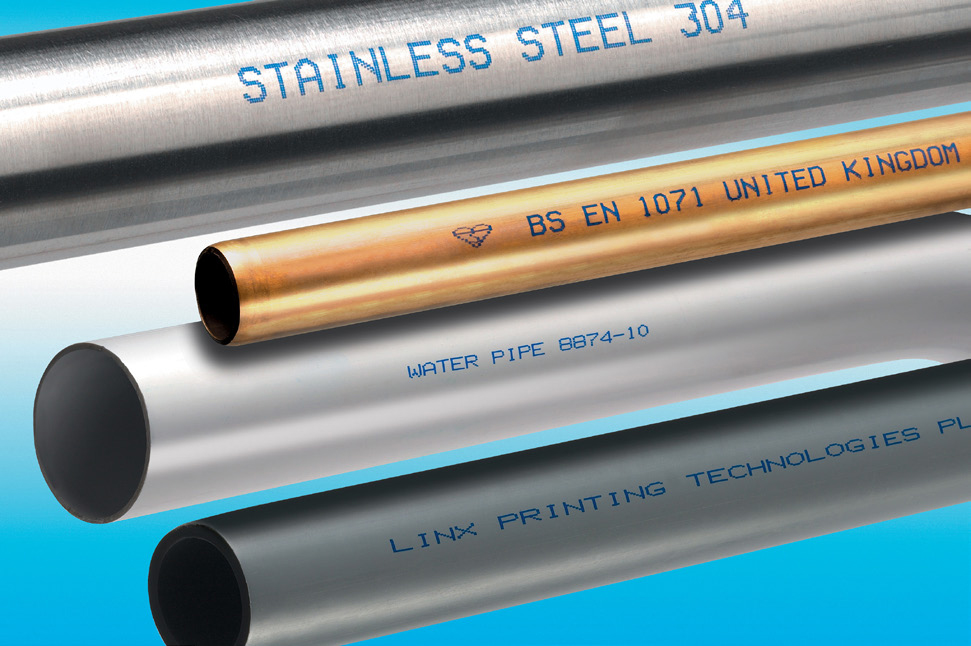
- Continuous inkjet (CIJ) coding for fast, non-contact coding on flat, curved or awkward surfaces, using inks formulated for metal.
To find out more information and to request your samples with no obligation, click the button below.
Metal Marking Technologies Compared
| Fibre laser | CO2 laser | Continuous inkjet (CIJ) | |
| Best for | Bare metals: steel, stainless steel, aluminium, copper, brass | Painted, coated, lacquered or varnished metal | Mixed metal parts, curved surfaces, lids and closures, tubes, fast lines |
| How the mark is made | Laser energy alters or removes the metal surface (for example annealing, etching or engraving, depending on settings) | Laser removes or changes the top coating layer to expose a contrasting mark | Non-contact ink drops applied to the surface |
| Permanence | Permanent; part of the surface | Permanent within the coating layer | Surface ink; durability depends on ink, surface cleanliness and downstream processing |
| Consumables | No ink or solvent; fume extraction and routine maintenance apply | No ink or solvent; fume extraction and routine maintenance apply | Ink and solvent |
| 2D codes (Data Matrix, QR) | Strong choice for compact, high-contrast 2D codes | Suitable on coated surfaces | Suitable; code size and print quality depend on model and substrate |
| Surface condition | Cleaner surfaces give the most consistent contrast | Depends on coating type and thickness | Oily or lubricated surfaces need the right ink and a sample test |
| Things to plan | Laser safety enclosure, fume extraction, part presentation and focus distance | Laser safety enclosure, fume extraction, part presentation and focus distance | Ink choice, drying and adhesion, printhead distance, ink and solvent supply |
| Linx range | Linx FSL20 and FSL50 | Linx CSL10, CSL30 and CSL60 | Linx 9000 series |
Note: Results depend on the alloy, finish, code size and line speed. A print sample on your own parts is the fastest way to confirm contrast, readability and durability. If another method, such as dot peen, suits a safety-critical or deep-mark requirement better, our specialists will tell you.
Linx Metal Part Marking Printers and Machines
Fibre Laser Marking
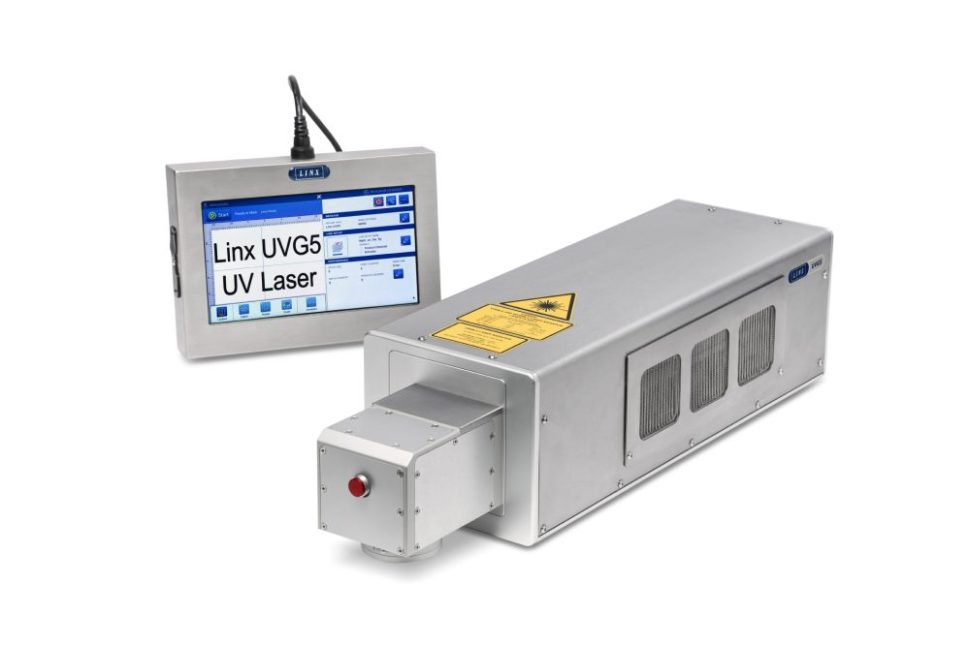
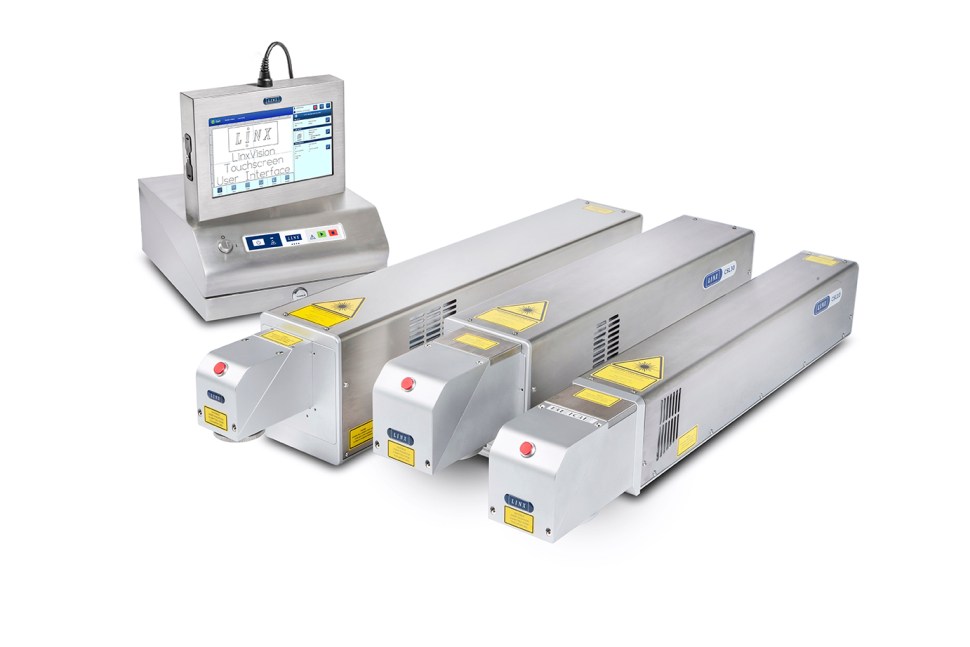
Linx FSL20 and FSL50 Fibre Laser Marking Machines
Mark steel, stainless steel, aluminium, copper and brass with permanent, high-contrast codes. Fibre lasers are well absorbed by metal and suit small, detailed codes such as Data Matrix, serial numbers and part numbers. Best for bare metal components, tubes, plates and machined or formed parts.
CO2 Laser Coding
Linx CSL10, CSL30 and CSL60 CO2 Laser Coders
Create clear, permanent marks on painted, lacquered or varnished metal. The laser removes the top layer of the coating to expose a contrasting code, which is why CO2 lasers are widely used on extruded and painted profiles, coated sheet and coated components.
Continuous Inkjet (CIJ)
Inkjet Part Marking: Linx 9000 Series CIJ Printers
A fast, non-contact inkjet part marking machine for metal lids, closures, tubes, pipes, wires, cables and coated metal. It copes with curved surfaces, moving parts and awkward positions, with right-angle printheads for tight spaces and IP65-rated casings for wet and dusty environments.
Get your Metal Parts Marked before You Buy
Tell us about your metal, your code and your line. A UK specialist will recommend a suitable technology and arrange a free print sample. We can also arrange a site survey and no-obligation quote.
Coding and Marking on Steel, Aluminium and other Metal Components
1. Steel and stainless steel
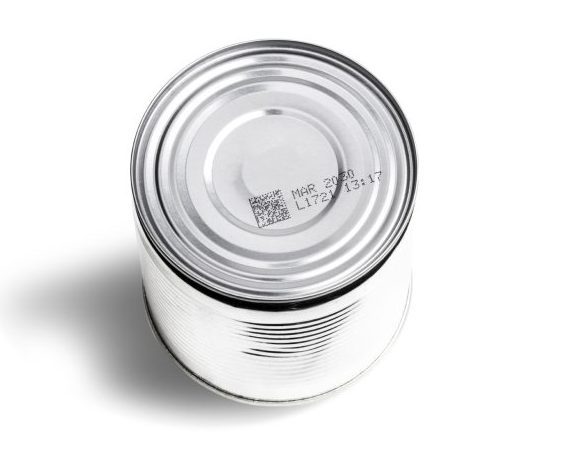
Fibre lasers produce permanent marks on steel and stainless steel when parameters are set for the finish. CIJ suits coated or sheet steel and fast-moving parts. Confirm any post-mark treatment, such as passivation, plating or painting, before choosing a method.
2. Aluminium coding and marking
Aluminium is one of the most common metals we code and mark. Fibre lasers give permanent identification on bare aluminium. CIJ is widely used on aluminium cans, lids and extrusions, with inks chosen for adhesion and contrast. Anodised or coated aluminium may suit CO2 or fibre depending on the finish. Tell us the alloy and finish and we will trial it.
Highly reflective or precious metals can be marked in some cases but need testing. Send us a sample.
3. Iron and cast iron
Iron and cast iron parts have rough, porous or oxidised surfaces that affect contrast and adhesion, so we test them before recommending a method. Send a representative part.
4. Copper and brass
These softer, more reflective metals are demanding for lasers, so we trial them before recommending settings. CIJ is an option for non-permanent or surface coding.
5. Coding and marking on coated metal
CO2 lasers remove the coating layer to reveal a clear, permanent mark, which is why they are used so often in the extrusion industry. CIJ with a suitable ink offers a fast, non-contact alternative.
Metal Marking Applications
| Industry | Typical parts | Typical need |
|---|---|---|
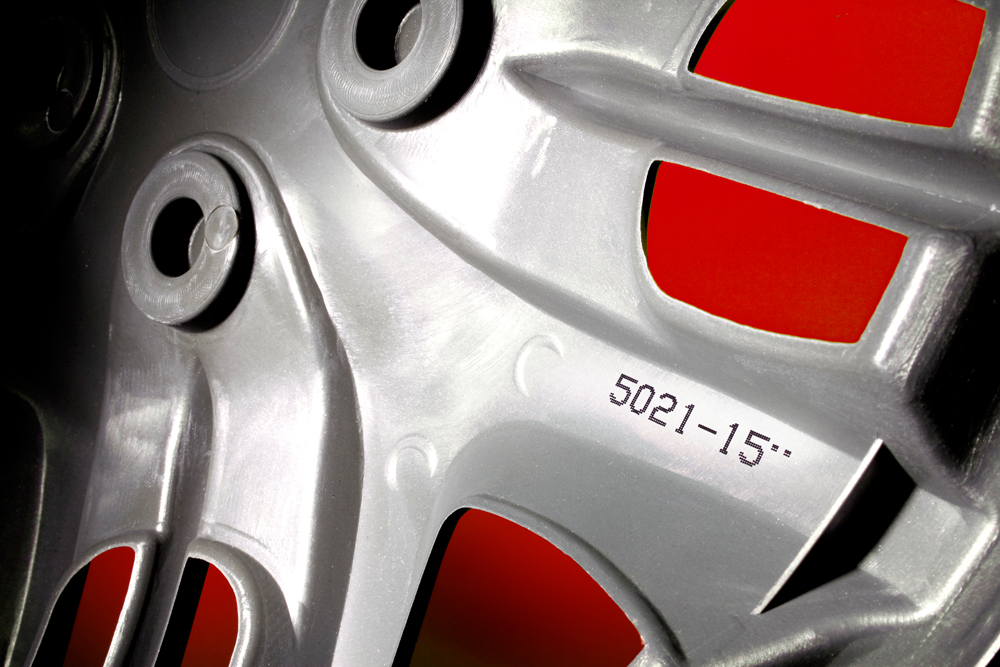 Automotive | Brake pads, sheet, components | Part numbers, serialisation, traceability |
 Construction | Roofing, sheets, tubes | Batch and product identification |
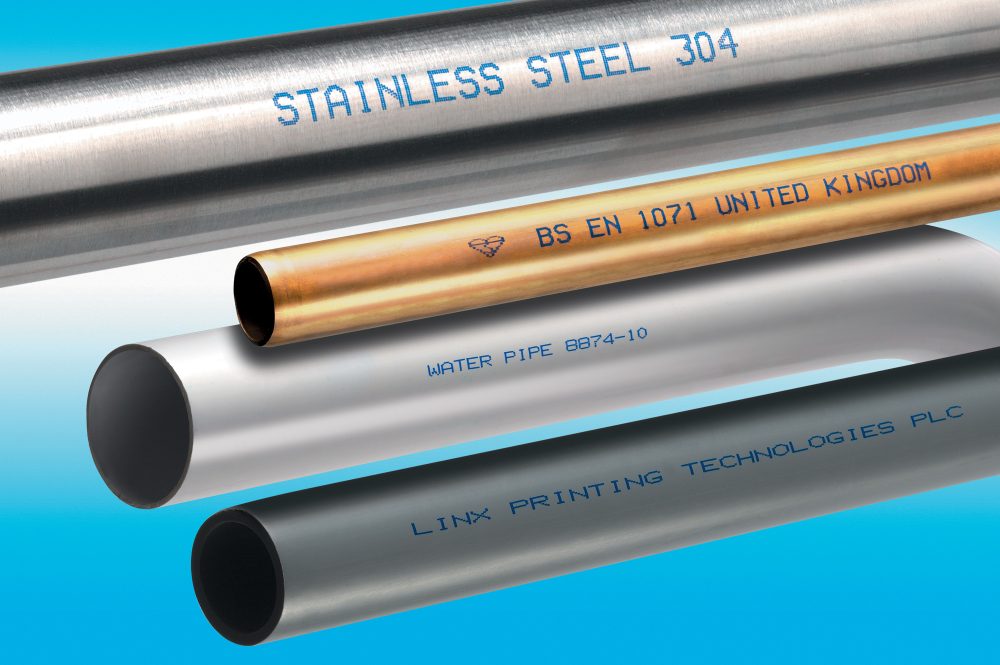 Extrusion | Profiles, pipes | Coded identification on coated and bare profiles |
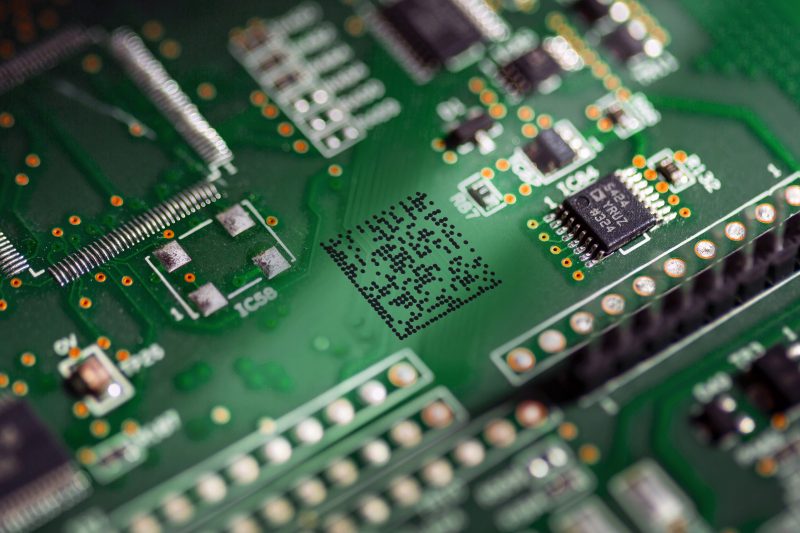 Electronics | Housings, components | Small, precise codes |
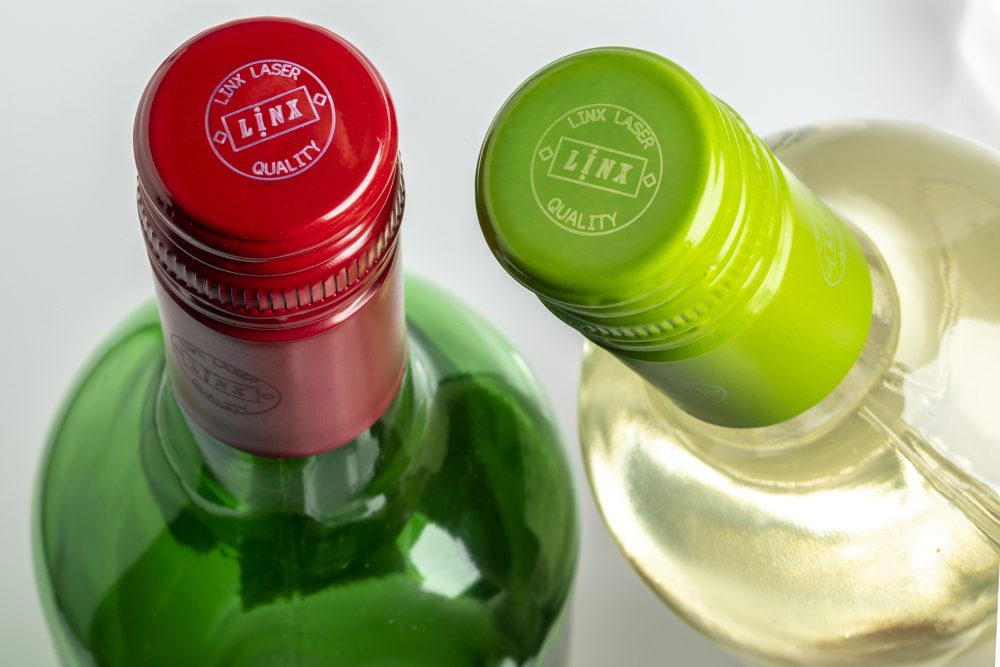 Beverage and can coding | Cans, screw caps | High-speed date and batch codes |
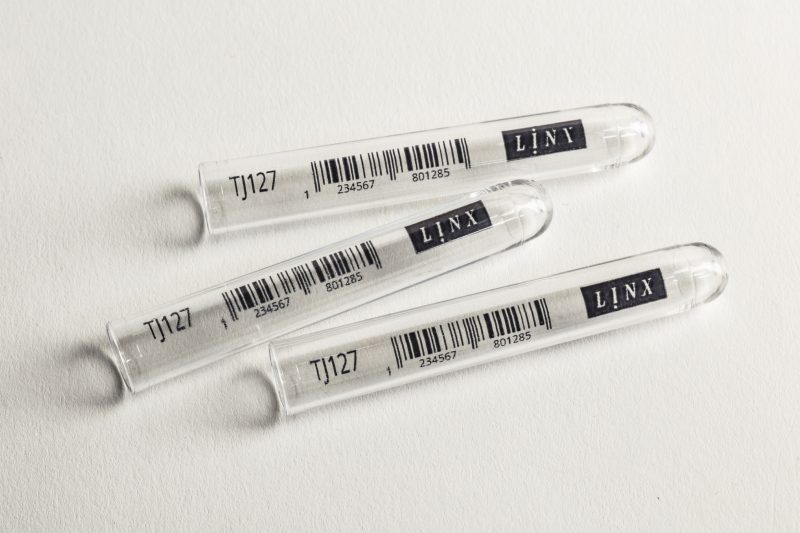 Pharmaceutical | Pots, lids | Traceable identification |
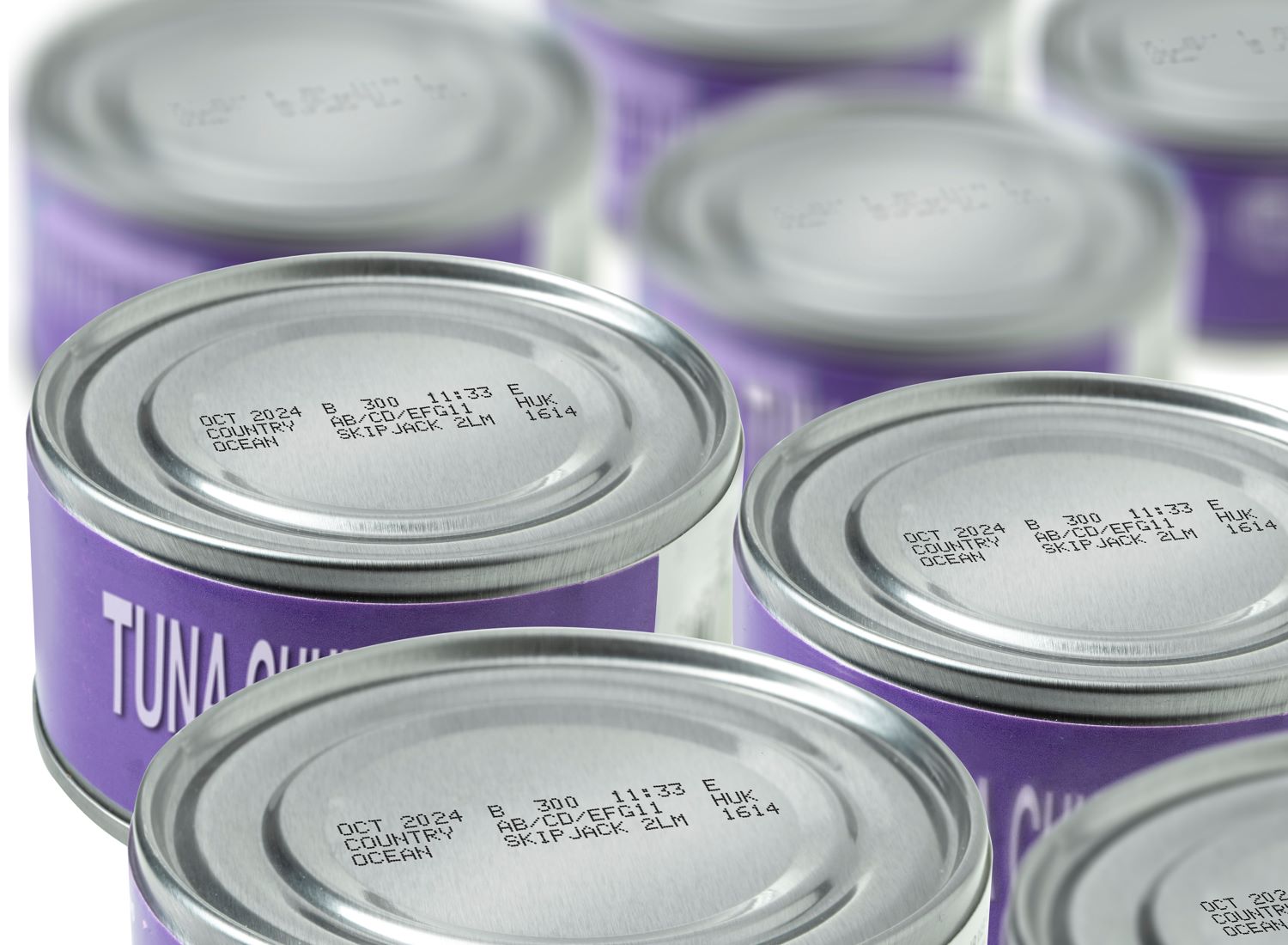 Food | Lids, metal packaging | Date and batch coding |
Reliable Marking in Demanding Metalworking Environments
Metal parts often move, rotate and pass through wet, dusty or oily processes. Linx marking systems are designed to integrate with your line:
- Environment: IP65-rated CIJ casings for wet or dusty areas.
- Access: right-angle printheads for restricted positions.
- Operation: touch-screen interface designed for use in workshop conditions.
- Integration: our installation team assesses your process and installs systems safely to suit your line.
- Laser planning: fume extraction, enclosure and laser safety are specified at survey stage.
- Connectivity: Linx PrinterNet supports remote monitoring and management.
After installation, we support you with service agreements, training, and inks, solvents and parts.
Resources
LMA Services Case Study
Inks Brochure
Get your Metal Parts Marked before You Buy
Tell us about your metal, your code and your line. A UK specialist will recommend a suitable technology and arrange a free print sample. We can also arrange a site survey and no-obligation quote.
FAQs on Metal Part Marking
It depends on the metal, finish and code. Fibre lasers give permanent marks on bare metal. CO2 lasers suit coated metal. CIJ inkjet suits curved, moving or hard-to-reach parts at speed. A sample on your part confirms the best fit.
It depends on the metal, the finish and what happens to the part after marking. Lasers give permanent marks without consumables. Inkjet is fast, flexible on curved or awkward parts and quick to change between codes. The comparison table above shows the trade-offs, and a print sample on your part settles it.
Yes. Fibre lasers are widely used for both. Contrast and mark type depend on the alloy, surface finish and laser settings, so we trial your parts.
Yes. CIJ prints without touching the part and uses inks formulated for metal. Adhesion on oily or lubricated surfaces depends on the ink and surface preparation, so test before specifying.
Laser marking alters the part surface, so it is permanent. Inkjet applies ink to the surface, and durability depends on the ink and the processes the part passes through.
Yes. Both laser and inkjet can produce Data Matrix codes. Readability depends on contrast, size, surface and verification, so we assess samples against your requirement.
No. Label printers print onto labels that are applied to a product. Metal part marking machines mark the part directly during production.