
Continuous Inkjet Printer Applications: Industry Insights
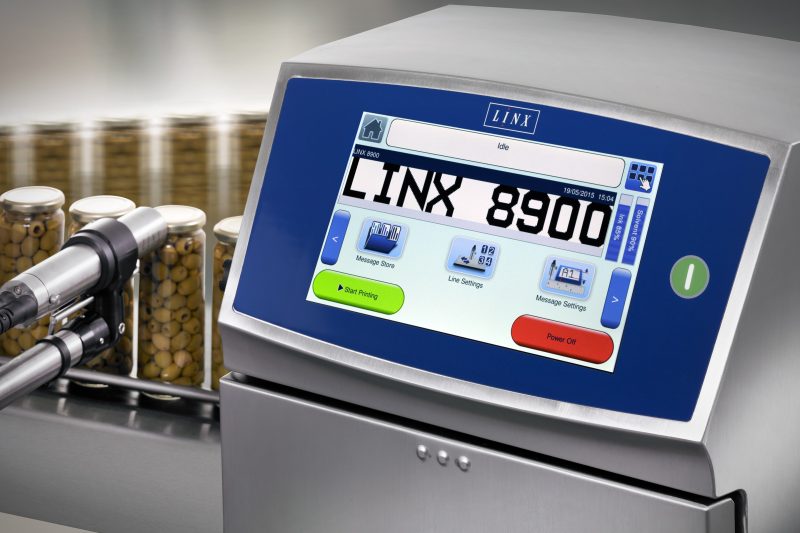
Continuous Inkjet (CIJ) printing is one of the most widely used industrial coding and marking technologies in the world. Designed for high-speed, nonstop production environments, CIJ printers apply variable data such as batch numbers, expiry dates, barcodes, and logos onto a wide range of products and packaging types.
What makes CIJ so popular is its versatility, speed, and ability to print on almost any substrate including plastics, metals, glass, paper, rubber, and even curved or uneven surfaces. In this blog, we’ll explore how CIJ printers are used across different industries, what benefits they bring, and why manufacturers continue to rely on them.
How Continuous Inkjet Printing Works
CIJ printers work by pushing liquid ink through a tiny nozzle, creating a continuous stream of droplets. Selected droplets are charged and deflected using an electric field to form characters and symbols on the product surface. The unused droplets are recycled back into the system — making CIJ efficient and reliable for 24/7 production lines.
Key Industries Using Continuous Inkjet Printers
Food & Beverage
The food and beverage sector relies heavily on CIJ printing for date coding and traceability. Typical applications include:
- Expiry dates and use-by dates
- Batch and lot numbers
- Barcodes
- Variable product information
- Brand or regulatory markings
CIJ is ideal for challenging surfaces like:
- Plastic bottles
- Cans
- Pouches
- Cartons
- Bottle caps
- Glass jars
Since many packaging lines run at very high speeds, CIJ printers support fast throughput without compromising print clarity — even on wet, chilled, or oily surfaces.
Pharmaceuticals & Healthcare
Traceability, compliance, and accuracy are critical in pharmaceutical production. CIJ printers help manufacturers meet regulatory coding requirements such as:
- Batch identification
- Manufacturing and expiry dates
- Serialization codes
- Barcodes and 2D codes
With the ability to print small, high-contrast characters, CIJ is commonly used on:
- Blister packs
- Ampoules
- Syringes
- Cartons
- Vials
- Foil packaging
Specialized inks — such as fast-drying, solvent-resistant, and low-migration inks — ensure codes remain legible throughout the supply chain.
Industrial Manufacturing & Engineering
In heavy industrial environments, CIJ printers are used for product identification, quality tracking, and compliance marking. Typical components include:
- Automotive parts
- Electrical components
- Metal housings
- Rubber and plastic parts
- Pipes and cables
CIJ printers excel in tough conditions thanks to:
- Durable inks
- High-speed coding capability
- The ability to mark uneven and curved surfaces
This ensures components can be traced from production through installation and beyond.
Cosmetics & Personal Care
Packaging in this sector often comes in small, curved, glossy, or delicate formats — exactly where CIJ printers shine. Common uses include printing on:
- Tubes
- Bottles
- Compacts
- Sachets
- Caps and lids
Manufacturers benefit from clean, high-quality codes that match the premium appearance of the product.
Packaging & Logistics
CIJ coding is also widely used for secondary packaging and logistics marking, such as:
- Carton date codes
- Batch identifiers
- Handling instructions
- Simple barcodes
Since CIJ printers integrate easily with conveyors and automated lines, they support seamless product movement through distribution networks.
Why Industries Prefer Continuous Inkjet Printing
1. Works on Almost Any Material
Glass, metal, plastic, cardboard, wood, rubber — CIJ printers handle them all.
2. Extremely Fast Coding
Ideal for high-speed production lines, including bottling, canning, and packaging environments.
3. Non-Contact Printing
Perfect for delicate or oddly shaped products.
4. Wide Ink Variety
Including high-contrast, pigment-based, fast-drying, and specialty inks.
5. Reliable for 24/7 Operations
Designed for continuous coding with minimal disruption.
6. Real-World Application Examples
Here are a few everyday places you’ll see CIJ printing at work:
- The expiry date on your soft drink bottle
- Batch numbers on biscuit packets
- Manufacturing codes on automotive parts
- Lot codes on medicine blister packs
- Cable length markings on electrical wires
These codes help ensure product safety, quality control, and supply chain transparency.
The Future of CIJ Printing
As industries move toward greater automation and smarter manufacturing, CIJ printers continue to evolve with:
- Improved connectivity and integration
- Advanced monitoring and diagnostics
- Eco-friendly ink options
- Higher precision printing
- Smarter user interfaces
Their role in ensuring traceability, compliance, and brand protection remains essential, especially as regulations tighten and consumer safety becomes even more important.
Take Actions Now:
- Request a Print Sample to see the solution in action
- Download Product Brochure for detailed specifications
- Talk to an Expert to find the right coding solution for your retail operations